REVIEW · AKUREYRI
Akureyri: 3-Hour Classic Whale Watching Tour by Ship
Book on GetYourGuide →Operated by Whale Watching Akureyri · Bookable on GetYourGuide
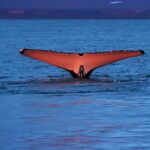
Winter fog and whale tails make quite a combo. This 3-hour Akureyri tour takes you into Eyjafjörður, Iceland’s longest glacier fjord, to search for humpbacks and other marine wildlife while you cruise past dramatic water and ice-cut scenery. A lot of the magic is that you’re not just watching from a deck—you’re learning how whales behave and where they surface.
I love the practical setup: a specially modified, high-speed sightseeing boat with heated indoor space, big viewing windows, and the option to move between indoor/outdoor spots fast when a whale is spotted. I also like the “respect first” approach—guides on the water (I’ve seen names like Giselle, Johann, Jacob, and David) focus on spotting efficiently while keeping distance, so the animals can keep doing their thing.
One possible drawback: sightings are never guaranteed, and winter conditions can add friction—there’s at least one real-world example of an icy dock making the walk to another port a bit longer than expected. If you’re very sensitive to cold or wind, plan to dress like you mean it.
In This Review
- Key Things I’d Circle on Your Itinerary
- Oddeyrarbót Pier: Where Your Whale Search Starts
- Inside a High-Speed Whale Watching Boat (and How to Get the Best Views)
- Chasing Humpbacks in Eyjafjörður: What the Guide Actually Helps You See
- Thermal Overalls, Hot Drinks, and Staying Comfortable in Real Iceland Weather
- Online Whale Diary + Wi‑Fi: Turning a Cruise Into Live Tracking
- Responsible Whalewatching Isn’t Just a Poster Claim
- How the Timing Works: Making the Most of 2.5 to 3.5 Hours
- Price and Value: What $108 Buys You in Akureyri
- Who Should Book This Tour (and Who Might Think Twice)
- Should You Book This Akureyri Whale Watching Classic?
- FAQ
- Where is the meeting point?
- How long is the cruise?
- Do I get pickup or drop-off?
- Is there a guide on board?
- Are thermal overalls included?
- Is Wi‑Fi included?
- Can I buy food and drinks during the tour?
- What wildlife might I see?
- What happens if no whales or dolphins are seen?
- What should I bring for the tour?
Key Things I’d Circle on Your Itinerary
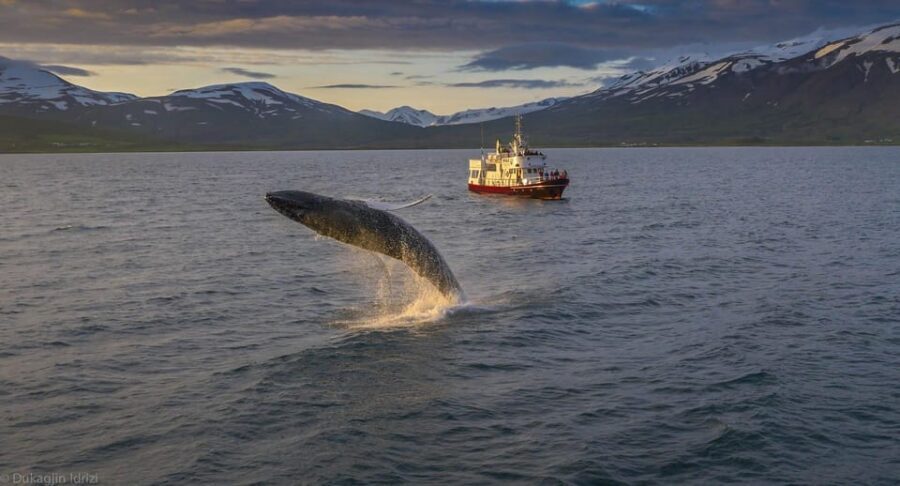
- High-speed whale boat with cinema-style viewing platforms and plenty of seats both inside and out
- Heated indoor area plus large viewing windows, so you can warm up without giving up the hunt
- Thermal overalls provided (including children’s sizes) for proper cold-weather comfort
- Humpback-focused spotting in Eyjafjörður with a naturalist guide and onboard commentary
- Online whale diary + Wi‑Fi, so you can track conditions and share what you see
Oddeyrarbót Pier: Where Your Whale Search Starts
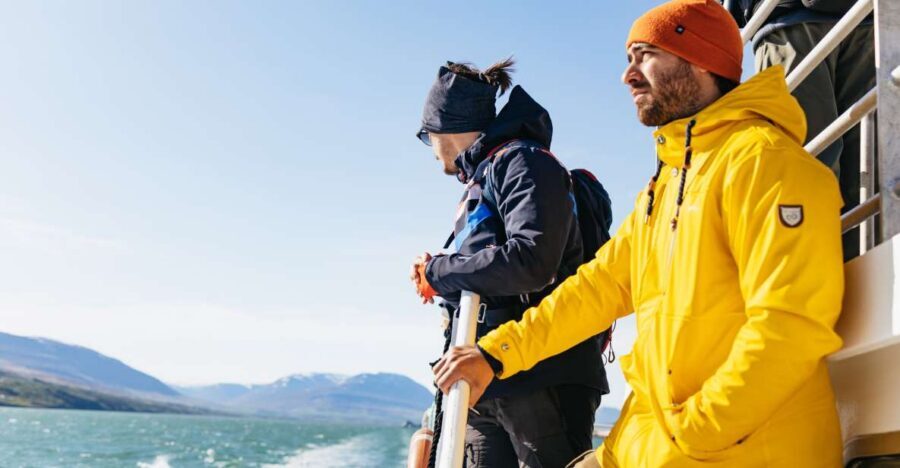
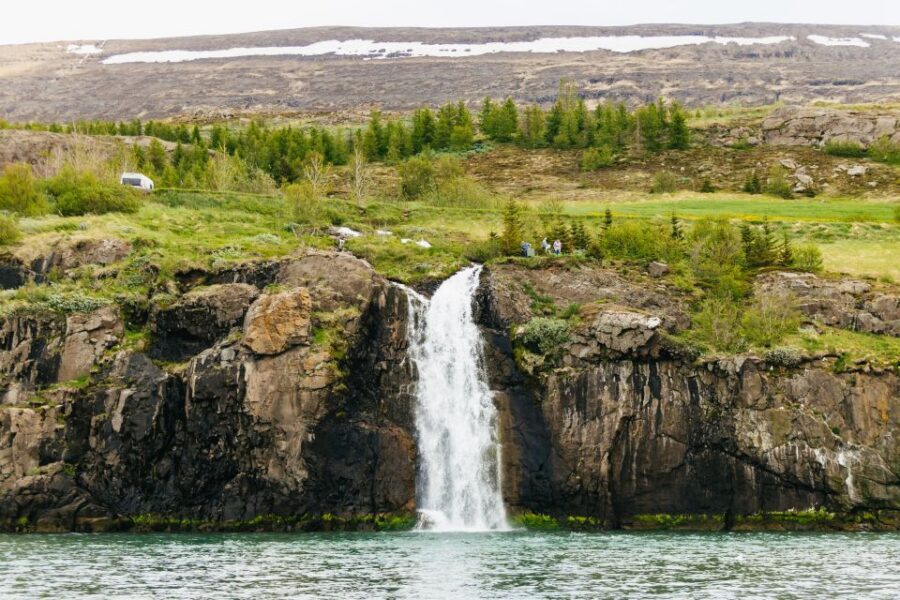
Your tour begins at Oddeyrarbót pier, right next to the Hof Cultural Center in Akureyri. This is close to the waterfront vibe—simple to find once you’re in town, and easy to pair with other Akureyri activities before or after.
Do one thing before you go: check how your shoes grip. On at least one departure, the tourist dock was iced over and people described a roughly 15-minute walk to a different port. You can’t control the weather, but you can control traction and how fast you’re ready to get aboard.
For what to wear, the basics are correct: comfortable shoes and weather-appropriate layers. If you’re visiting in winter, think gloves, a hat that covers ears, and something wind-resistant. The boat moves quickly, and wind chill on open water is real.
You can also read our reviews of more whale watching tours in Akureyri
Inside a High-Speed Whale Watching Boat (and How to Get the Best Views)
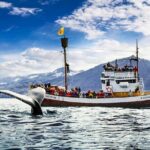
This isn’t a slow ferry. The boat is described as the only specially modified, high-speed whale watching ship in Iceland, built for fast scouting and repositioning when sightings happen.
What you’ll feel onboard is a mix of speed and comfort:
- heated indoor space for breaks
- ample outdoor seating for watching for blows and tail-lifts
- large viewing windows to keep the wind off when conditions turn rough
You’ll also want to think about where you stand or sit. One clear tip that shows up repeatedly is that being toward the front (bow area) can improve viewing when the crew maneuvers the boat closer. That said, the front can also be windier and louder, so you’ll need to balance peak sight lines with comfort.
If you get motion sickness, don’t panic—some trips have included motion-sickness tablets. Still, the best move is prevention: plan your layers, eat lightly, and keep your eyes on the horizon when possible.
Chasing Humpbacks in Eyjafjörður: What the Guide Actually Helps You See
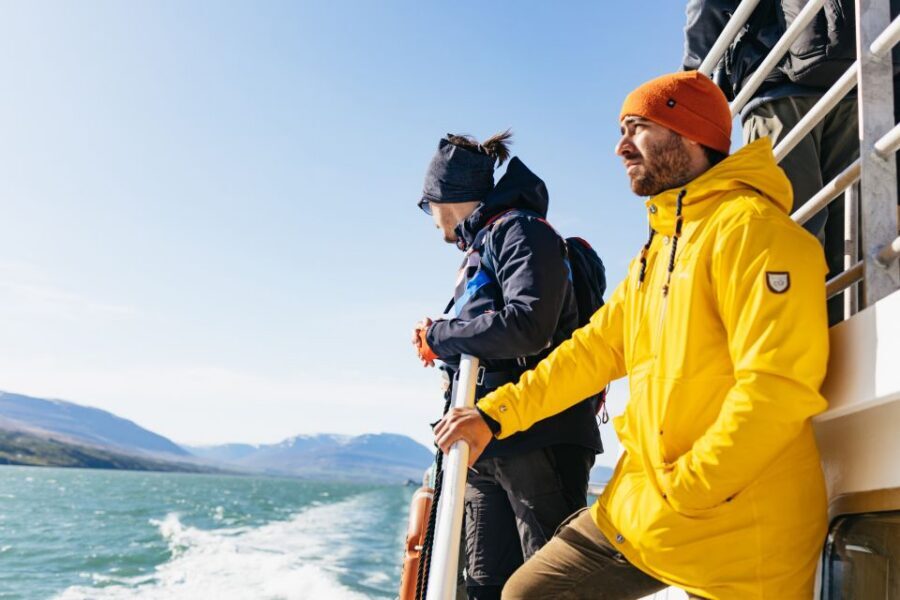
Eyjafjörður is the big draw, and the search is centered on humpback whales. Your naturalist guide and crew act like a live detection team: once they spot whales, they tell you where to look and what you should expect next.
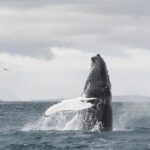
This is where the “classic” part matters. This isn’t only about passing a whale at a distance. On successful outings, the boat spends meaningful time around feeding or active areas, which is how you can get multiple surfaces in a single session. You might even see spectacular behavior like breaching—one example included humpbacks that breached twice.
You can also get other cetaceans beyond humpbacks. Based on what’s been reported, you may spot dolphins and even orcas on some departures, and there are mentions of other whales such as minke and bottle-nosed whales. Just remember the key reality: cetacean abundance is unpredictable and depends on food and conditions, so treat the day as a search, not a guaranteed show.
What makes the guide’s job valuable is the translation. You’re not just seeing movement—you’re learning the why behind it: how whales feed, how they surface, and how their behavior changes with water temperature and prey. When that guide is strong—names like Giselle, Johann, Jacob, and David show up in reported experiences—it turns “I saw a whale” into “I understood what I just witnessed.”
Thermal Overalls, Hot Drinks, and Staying Comfortable in Real Iceland Weather
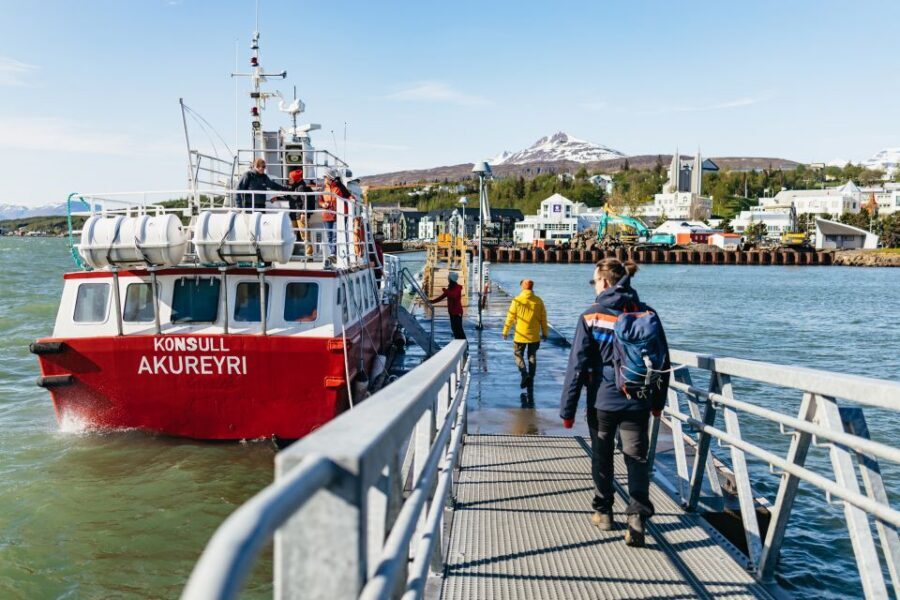
The cold is part of the deal in North Iceland. The good news: thermal overalls are included, and children’s sizes are available. That’s a big practical win because you’re not forced to buy specialist outerwear before you even get there.
Inside, there’s heated space to warm up. Outside, the boat still gives you plenty of time to look for blows, so you’re not stuck swapping comfort for sightings. A frequent pattern is that once the search becomes active, people stop thinking about the cold and focus on scanning—because the payoff is right there.
Hot drinks are also part of the onboard experience on many trips, including coffee and hot chocolate. If your day starts cold and winds up moving fast, that little break can make the tour feel gentler.
A small but useful detail: wear sunglasses if you can. Spray and glare show up on fast boats, especially when you’re hunting for distant spouts.
Online Whale Diary + Wi‑Fi: Turning a Cruise Into Live Tracking
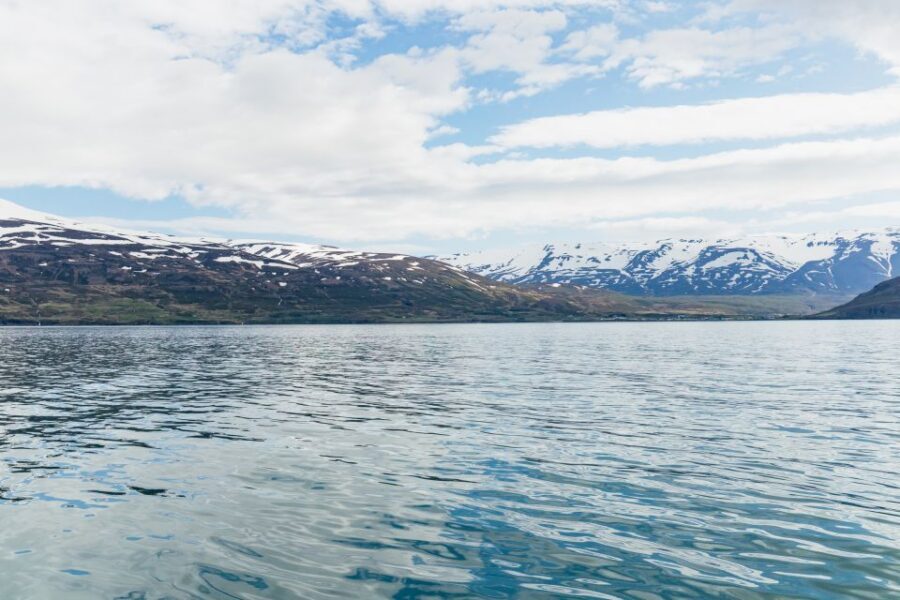
One modern perk is complimentary Wi‑Fi on board. That matters more than it sounds, because your time on the water can include waiting between sightings. With Wi‑Fi, you can check messages, share updates, or look up what you’ve been told while it’s still fresh.
There’s also an online whale diary concept tied to monitoring conditions and sightings. In plain terms, it’s a way to keep you informed about what the crew is watching for and how likely the next window is.
And if you’re the kind of person who cares about getting usable photos without juggling your camera in wind, there’s a plus here too: crew photos are taken when possible. They’re not the same as your own shots, but they can help you get at least a couple clear images even if you’re busy scanning.
You can also read our reviews of more tours and experiences in Akureyri

Responsible Whalewatching Isn’t Just a Poster Claim
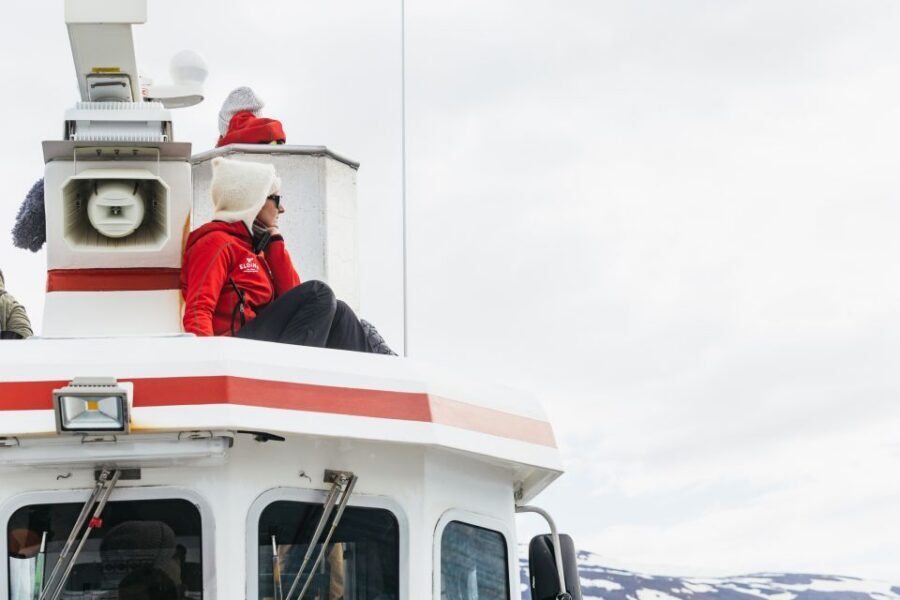
This operator is described as environmentally certified, and the practical impact shows up in how the crew behaves around whales. Multiple reports mention a respectful approach—keeping distance, using minimal noise, and not lingering too long in ways that would push animals to leave.
Here’s why you should care as a traveler: the calmer the approach, the more likely whales keep feeding, surfacing repeatedly, and showing off. One example noted that the whales didn’t seem bothered, which helped lead to frequent viewing rather than a quick pass-by.
You’ll still hear plenty of wildlife facts, but the tone is usually grounded: observe, don’t chase, and follow the guide’s instructions quickly when a whale is sighted. That combination tends to give you both a good experience and a better chance at multiple encounters.
How the Timing Works: Making the Most of 2.5 to 3.5 Hours
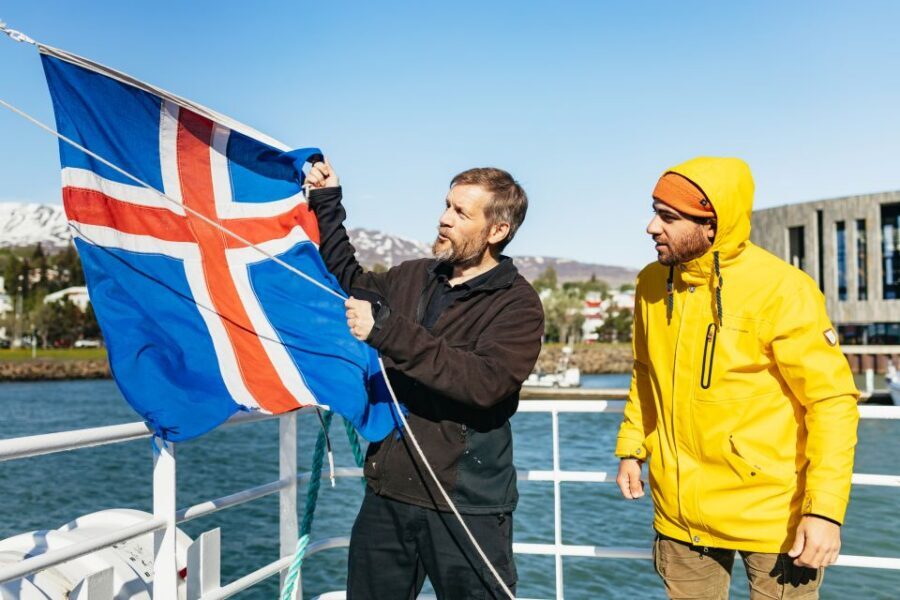
Your cruise runs about 2.5 to 3.5 hours, with a listed duration of 3 hours. That time block is long enough to do more than a single scouting sprint, but short enough that you’re still doing a focused activity day, not burning half of your daylight.
What you should expect during that window:
- travel out into the fjord area while the guide sets context
- a period of scanning and repositioning as conditions change
- when whales show, the crew maneuvers to give you repeated viewing
- time on the way back, including more spotting sometimes
A key lesson from reported experiences: patience pays. People described not seeing whales right away, then getting strong results once the crew found an active feeding zone. On some departures, the search ran a bit longer than planned because the operator wanted to keep people satisfied rather than rush back.
If you go in thinking it’s only about speed and hoping for the first blow, you’ll feel frustrated. If you go in ready to scan and trust the crew’s search pattern, the trip becomes a proper wildlife session.
Price and Value: What $108 Buys You in Akureyri
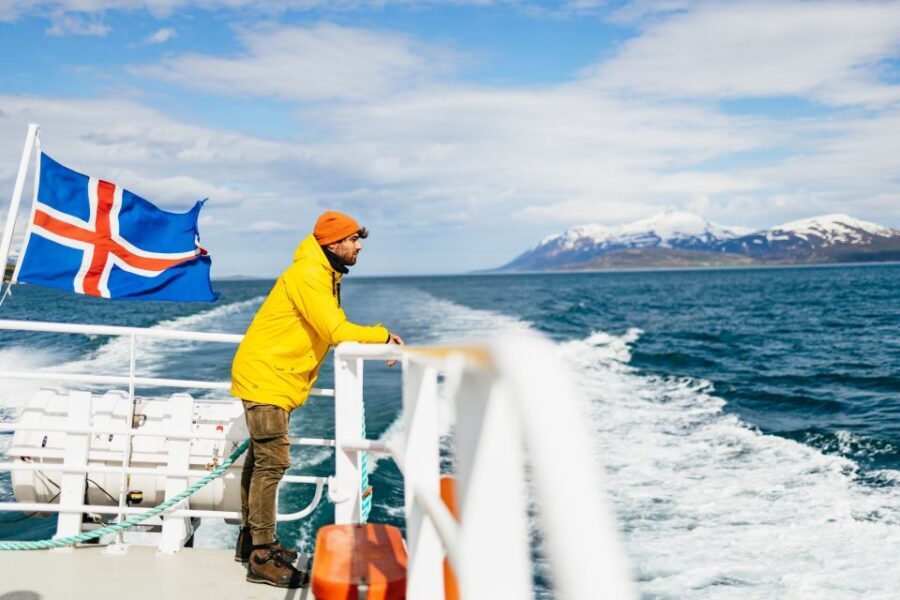
At $108 per person, this is not a budget add-on—but it does feel positioned as a real guided wildlife experience, not a quick sightseeing lap.
What you’re getting for the money:
- a naturalist guide and active spotting support
- thermal overalls included
- a heated onboard setup with big windows
- Wi‑Fi onboard
- crew photography when possible
- a company approach focused on whale-friendly viewing
Also, the “value” isn’t only the whale. Even when sightings vary, you still get a winter-to-summer fjord ride with a trained team on the water and commentary that helps you interpret what you’re seeing.
There’s also a meaningful backup plan: if no whales or dolphins are seen, you’ll be offered a complimentary ticket for the classic whale watching tour, valid for 2 years in Reykjavik and Akureyri. That’s a safety net that changes the risk math, especially if you’re visiting for a limited time in North Iceland.
Who Should Book This Tour (and Who Might Think Twice)
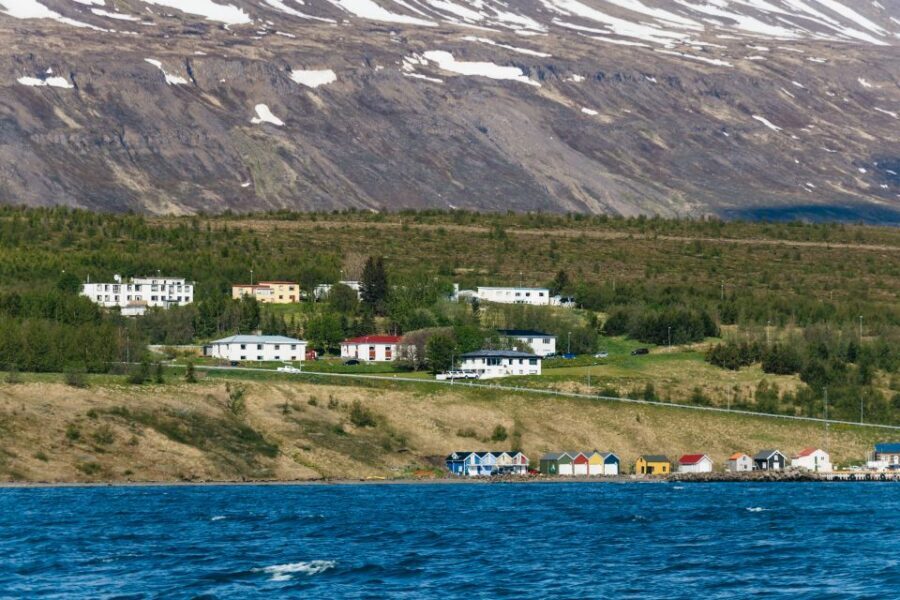
I’d steer you toward this tour if you:
- want a high-chance wildlife experience with real guidance
- don’t mind cold weather as long as you’re properly layered
- like the idea of learning whale behavior, not just spotting a spout
It also works well for families because thermal overalls are available in children sizes and there’s heated indoor space for breaks.
You might think twice if:
- you’re extremely heat-sensitive and can’t tolerate wind exposure on a fast boat
- you’re so prone to motion sickness that you need very calm water (though some comfort options exist)
- you hate the idea of unpredictability (whales are nature, not a scheduled theater show)
Should You Book This Akureyri Whale Watching Classic?
Yes, if you want a guided whale-watching experience that’s built for real scanning and comfortable cold-weather viewing. This is the right call when you value responsible distance, trained spotting, and a setup that keeps you warm while still letting you chase the action.
Book it especially if your time in Akureyri is tight. The meeting point is straightforward, the cruise is a manageable length, and the onboard comforts (heated cabin, thermal gear, Wi‑Fi) make it easier to stay focused even when the fjord is gray.
If you’re unsure, pick a day when you can dress for wind and give yourself a flexible mindset. In whale watching, that combination is what turns a search into a story you’ll actually remember.
FAQ
Where is the meeting point?
Meet your guide at Oddeyrarbót pier, next to the Hof Cultural Center in Akureyri.
How long is the cruise?
The cruise lasts 2.5 to 3.5 hours, with a listed duration of 3 hours.
Do I get pickup or drop-off?
No. Pickup and drop-off are not included.
Is there a guide on board?
Yes. You’ll have a naturalist guide and a live English-speaking guide.
Are thermal overalls included?
Yes. Thermal overalls are included, and children sizes are available.
Is Wi‑Fi included?
Yes. Complimentary Wi‑Fi is available on board.
Can I buy food and drinks during the tour?
Food and drinks are not included, but you can purchase drinks and snacks onboard.
What wildlife might I see?
The main focus is humpback whales. You might also see dolphins and, on some departures, orcas and other marine life like minke or bottle-nosed whales.
What happens if no whales or dolphins are seen?
If no whales or dolphins are seen, you’ll be offered a complimentary ticket for the classic whale watching tour, valid for 2 years in Reykjavik and Akureyri.
What should I bring for the tour?
Bring comfortable shoes and comfortable clothes, plus weather-appropriate clothing for Icelandic conditions.