REVIEW · REYKJAVIK
Iceland: Northern Lights Bus Tour from Reykjavik
Book on GetYourGuide →Operated by Northern Lights Bus · Bookable on GetYourGuide
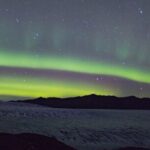
The sky does the talking. A Northern Lights bus tour from Reykjavik is one of the smartest ways to hunt the Aurora Borealis because you trade city glow for darker viewing spots and you go with a guide who keeps the whole group focused on what matters. I like that the plan is built around meteorologists’ predictions, plus you get stops to step outside and actually look up.
My other favorite part is the free retry tour if you don’t see the lights on your first attempt. That reduces the usual stress of booking an aurora night in Iceland, where the weather can change the rules fast. The main drawback to know upfront: seeing the aurora is never guaranteed, so you need to treat this as a hunt, not a promise—and dress for real winter cold.
In This Review
- Key Highlights That Matter
- Northern Lights Bus Tour From Reykjavik: Why Leaving the City Matters
- The 4-Hour Rhythm: What Happens From Pickup to Sky-Spotting
- Where You’ll Look for the Aurora Borealis (And Why the Stop Plan Shifts)
- Your Guide’s Role: Science Talk, Sky Scanning, and Keeping People Calm
- Photo Stops and Phone Camera Help: Getting Beyond Seeing It Once
- When the Aurora Doesn’t Show: How the Free Retry Changes Your Odds
- Value Check: Is $73 a Good Price for a Northern Lights Hunt?
- What to Pack for a 4-Hour Cold-Sky Night
- Who This Tour Is Best For (And Who It Might Not Suit)
- Should You Book This Northern Lights Bus Tour?
- FAQ
- How long is the Northern Lights bus tour from Reykjavik?
- What does the tour cost?
- Is seeing the aurora guaranteed?
- What happens if I don’t see the Northern Lights on the first tour?
- Does pickup happen from Reykjavik hotels?
- What language is the guide?
- Are there photo stops during the tour?
- What should I bring?
- Is the tour suitable for children?
- What if I leave Iceland before the next scheduled tour?
Key Highlights That Matter
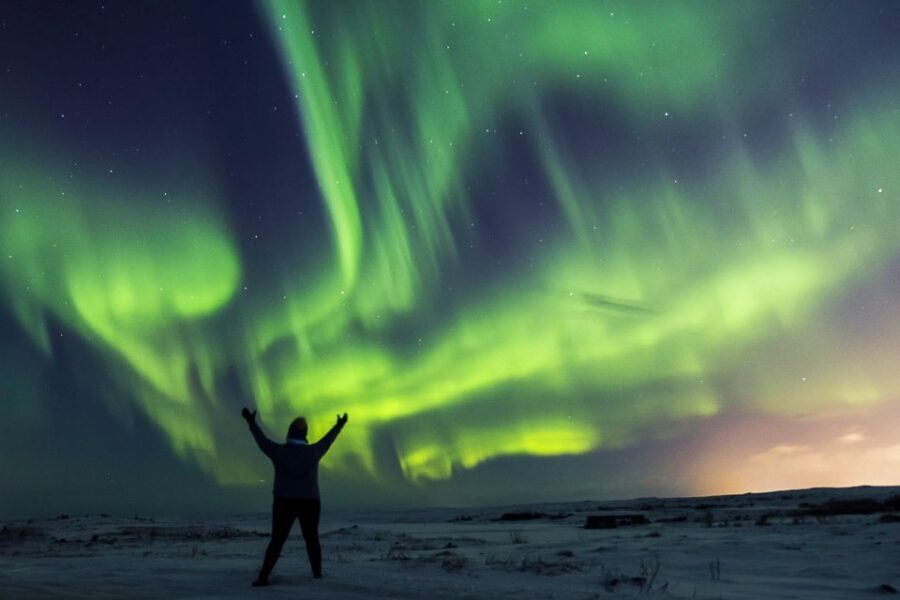
- Reykjavik light pollution out of the way for darker sky viewing
- Guide-led spotting and explanations while you wait and photograph
- Outside photo stops so you can try for both eyes-on and camera shots
- Free follow-up tour if the aurora doesn’t show the first night
- Warm, organized bus setup with guidance when conditions shift
Northern Lights Bus Tour From Reykjavik: Why Leaving the City Matters
Reykjavik is beautiful, but it’s also bright. Streetlights and building glow wash out the faint edges of the aurora, which is why this tour starts by heading away from the city center. You’re not just getting “transport.” You’re getting better odds because the route aims for areas with no artificial light, where your eyes can pick up the aurora faster and your camera has a better chance too.
The other reason I like a bus tour here is that the aurora hunt is chaotic by nature. The sky can look clear and still hide the lights behind clouds, or the lights can arrive early and get strong before your DIY plan even gets you to a good spot. With a guide driving the search, you’re reacting to conditions in real time instead of guessing from Reykjavik’s sidewalks.
You’ll also see that the goal isn’t one perfect lookout. The tour changes location day to day, depending on the night’s forecast. That flexibility is a big deal when your time is limited and the aurora window is short.
You can also read our reviews of more tours and experiences in Reykjavik.

The 4-Hour Rhythm: What Happens From Pickup to Sky-Spotting
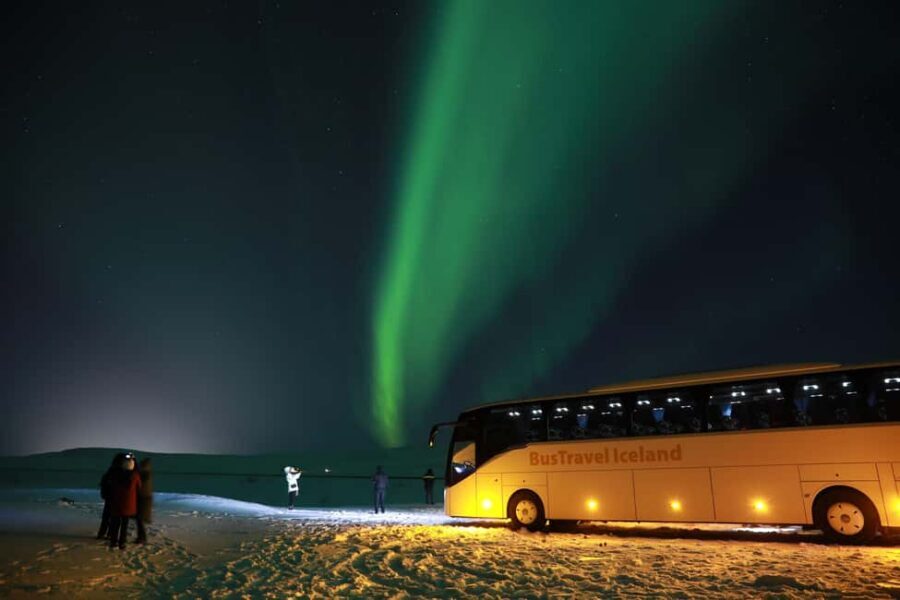
This experience is about 4 hours long, and starting times vary based on availability. Even with that short window, the tour is structured enough that you’re not stuck doing nothing. The evening format matters: you’re leaving during the hours when aurora activity can show up, then you’re out long enough to let the sky work its magic—or to learn quickly that it might not be that night.
Pickup is optional. If you book it, the tour includes pickup at selected hotels and guesthouses and also at authorized bus stops in central Reykjavik. If you’re meeting the group on your own, you’ll be directed to a meeting point that can vary by option.
Once you’re out in the dark, the rhythm tends to look like this: drive to a predicted-best area, stop for people to step outside and look up, pause long enough to photograph, then move if conditions change. In the best nights, the aurora can appear quickly. On other nights, the group waits, scans the sky, and stays ready—because the aurora doesn’t always follow a clock.
That mix of movement and patience is exactly what you want on a short Iceland winter trip.
Where You’ll Look for the Aurora Borealis (And Why the Stop Plan Shifts)
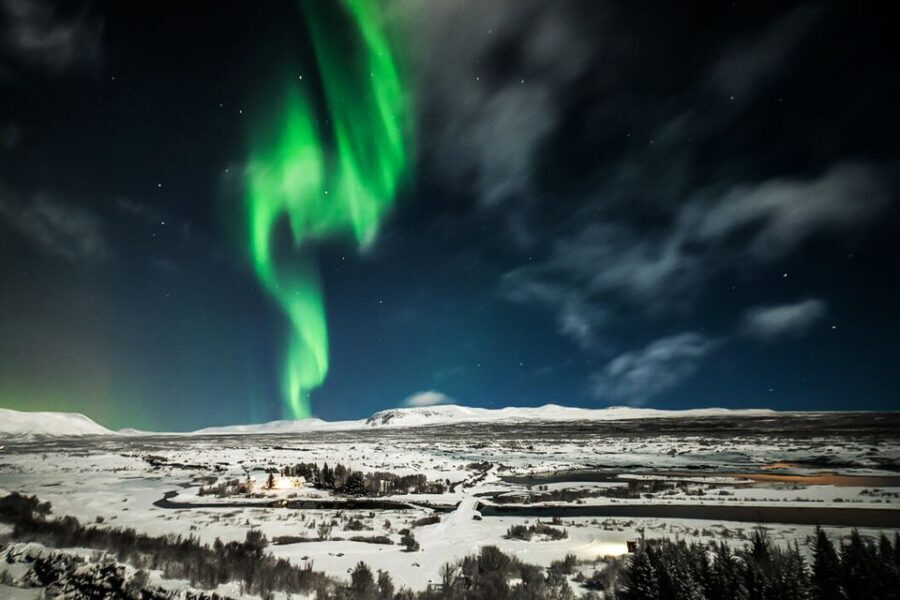
The tour is weather-dependent, which means you should expect the exact locations to vary. The upside is that you’re not betting everything on one fixed viewpoint. Instead, you’ll travel in the direction that meteorologists predict will give the best chance of seeing the lights.
You’ll also notice the tour is designed around the practical reality of aurora hunting: “best” can mean clearer skies, darker surroundings, or a spot where the aurora is visible from where you’re standing. If heavy cloud rolls in, the guide can change course. That kind of on-the-fly decision-making is one of the main reasons people choose a guided hunt over DIY driving.
From what guides have done for previous groups, you may end up with a night that includes more than one viewing spot—especially if cloud cover blocks the first area. Some guides have been praised for getting people to the lights even after starting with the sky not cooperating, which usually comes down to stubborn persistence plus smart re-positioning.
Also, you get stops that make it easier to photograph. The tour isn’t just “look for 10 seconds.” You’ll have time to get outside, find your frame, and try.
Your Guide’s Role: Science Talk, Sky Scanning, and Keeping People Calm
A good Northern Lights guide isn’t only a driver. They’re your aurora translator. You’ll hear explanations of how the lights happen: gaseous particles in Earth’s atmosphere colliding with charged particles released from the Sun’s atmosphere. You don’t need to memorize the physics, but understanding the basics helps you see what you’re looking for and why it can appear, fade, and reappear.
Guides also help with the most important human part of the experience: staying focused. Winter nights can feel long, and in a group setting people sometimes lose patience or get anxious. Several guides have been singled out for keeping the mood up while sharing useful info—names that come up include Sunny, Jessica, Petra, Daniel, Zack, David, Geri, and Lucas. Some have also been described as funny and encouraging, which matters because confidence helps you keep your eyes on the sky.
What I find especially valuable is that guides don’t just say, Look up. They explain what’s going on and what to watch for as conditions change. That turns a passive wait into an active experience.
And if you’re the type who wants context, you may also hear references to how different cultures explained auroras in the past, not just the scientific cause.
Photo Stops and Phone Camera Help: Getting Beyond Seeing It Once
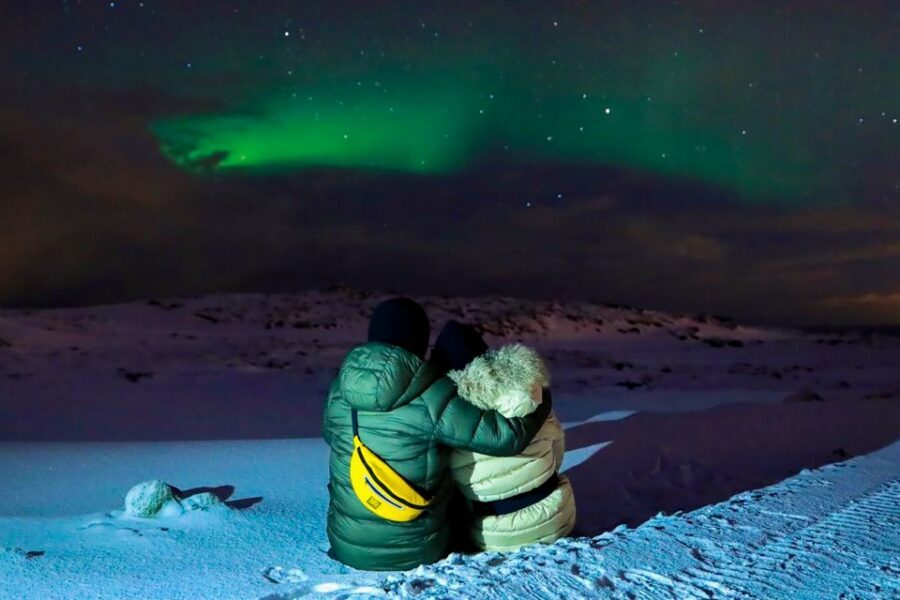
You’ll have stops for you to go outside and take photographs. That’s huge, because the aurora is fast-moving and sometimes subtle at first. If you’re relying on memory, you lose half the experience. With photo stops, you can try to capture both the moment and the patterns you see with your eyes.
The tour is also well suited for phone cameras. In previous groups, guides like Daniel have been praised for teaching people how to set up their phone cameras so you can get better results. Even if your phone settings are already decent, the value here is having someone guide you through what actually matters for aurora shots.
A key practical point: you’re standing outside in cold air, sometimes for long stretches. Guides who add small comforts can make a big difference, and hot drinks have been mentioned as part of the experience—some groups reported hot chocolate or spiced hot chocolate during the wait. Whether you get it depends on the night and setup, but the general idea is the same: keep you warm enough to stay outside looking.
If you want photos, bring patience. If you want the lights, bring focus. This tour gives you both, as long as you dress right.


When the Aurora Doesn’t Show: How the Free Retry Changes Your Odds
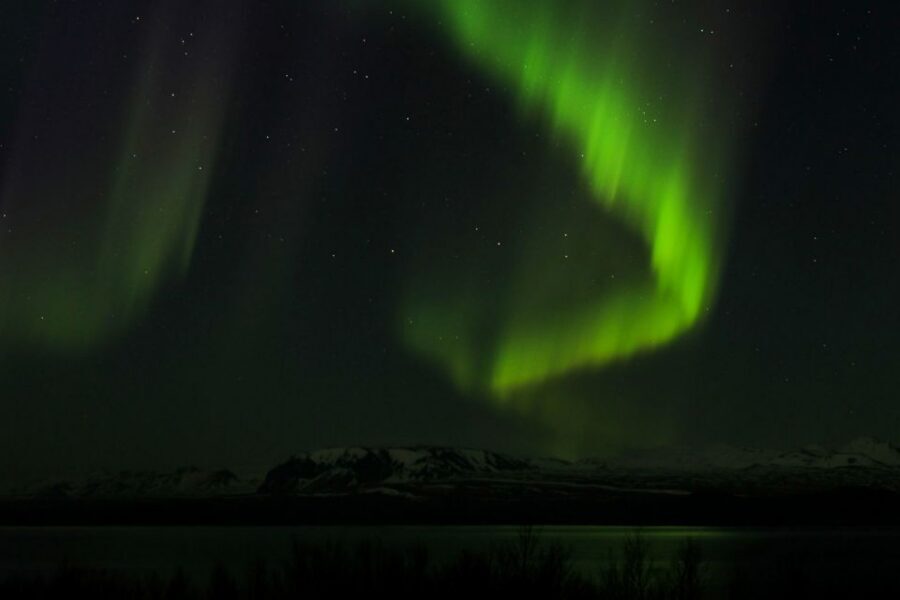
The phrase seeing the Northern Lights is not guaranteed is not just fine print. It’s the truth of Iceland in winter. Clouds, wind, and timing all play roles you can’t control.
What you can control is whether you’re left scrambling after a disappointment. This tour helps with that by offering a free follow-up Northern Lights bus tour if you don’t see the aurora on your first attempt. That matters because the aurora hunt often takes more than one try.
If you end up leaving Iceland before the next scheduled tour, you may be offered an open ticket for the next 3 years to use when you return. That’s especially helpful if you’re on a tight itinerary and can’t guarantee you’ll stay another night.
In real life, the free retry often becomes the difference between a trip that feels like a miss and a trip that feels complete. People have described going out more than once, then seeing the lights on the later attempt. That matches how aurora seasons work: sometimes you get lucky fast, sometimes it takes a second night for the sky to cooperate.
Value Check: Is $73 a Good Price for a Northern Lights Hunt?
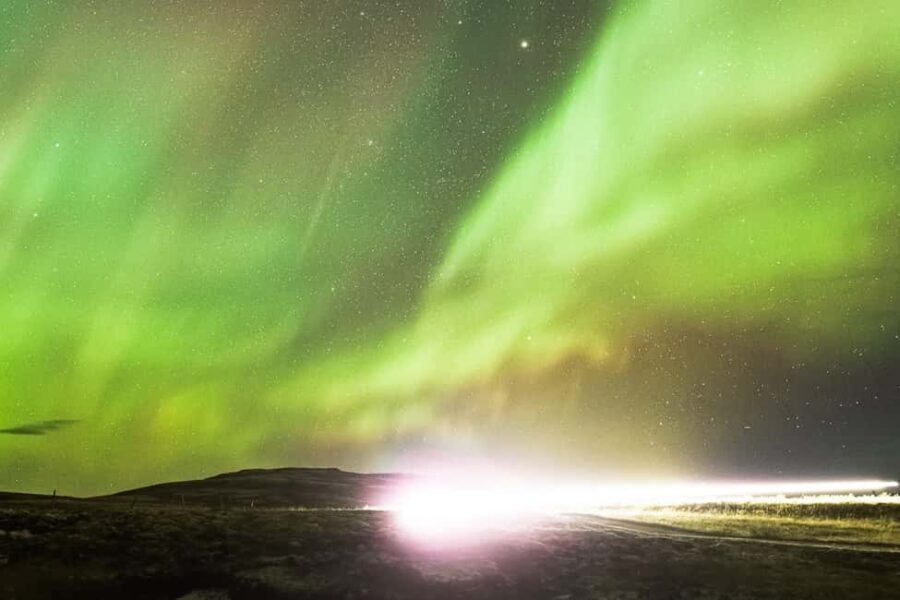
At $73 per person, this tour sits in the “not cheap, but fair” category. Here’s why it can be good value.
First, you’re paying for transport from Reykjavik to darker areas. If you were to DIY this, you’d likely spend time figuring out routes, searching for viewpoints, and burning gas while the sky doesn’t play along. Second, you’re paying for a professional guide who helps you interpret what you’re seeing and who coordinates viewing stops and re-positioning when conditions change.
Third, the free retry is a major value driver. If the aurora doesn’t show the first night, you aren’t stuck chalking it up as bad luck and buying another separate tour at full cost. Even if you only end up going once, you still benefit from that safety net.
The best way to think about the price is this: you’re buying a structured aurora hunt with planning, flexibility, and support. In Iceland winter, that kind of organization is often the difference between “we tried” and “we actually saw.”
What to Pack for a 4-Hour Cold-Sky Night
Dress like you’re going to a snow field. You’ll want multiple layers, warm clothing, and comfortable shoes. The tour involves standing outside for sky checks and photo stops, and you’ll likely be out during dark winter temperatures.
A few practical reminders that make the difference:
- Wear layers you can adjust if you get warm on the move.
- Choose shoes that handle cold ground comfortably.
- Bring gloves and something warm for your head; you’ll use them even if you think you’ll be moving around.
Also, plan on staying outside long enough for your eyes to adjust. That means you don’t want an outfit that looks good in Reykjavik but gets miserable after 45 minutes outdoors.
If you’re camera-focused, cold affects phone batteries too. Keep your phone secure and close to your body between shots.
Who This Tour Is Best For (And Who It Might Not Suit)
This is a strong choice if you want structure and guidance. You’ll like it if:
- You’re short on time in Reykjavik and want one organized aurora night.
- You want to learn the basics of aurora science while you hunt.
- You care about getting photo opportunities with coaching.
- You want the comfort of a free retry if the sky doesn’t cooperate.
It’s not suitable for children under 6, according to the tour info. If you’re traveling with very young kids, you may want to look for an age-appropriate option instead.
If you love total DIY freedom and you’re comfortable driving to remote areas yourself, this might feel less necessary. But given the weather-dependent nature of aurora viewing, many people find the guided search worth it.
Should You Book This Northern Lights Bus Tour?
Yes, I’d book it if you want the best mix of odds, education, and comfort in a short Reykjavik stay. The big reasons are simple: you leave city light behind, you get guide-led spotting and photo stops, and you have a free follow-up tour if the aurora doesn’t show the first night.
Book with realistic expectations, though. You’re buying a well-run hunt, not a guaranteed light show. If you’re prepared for cold weather, bring warm layers, and treat it like a night out rather than a strict appointment, you’ll get a lot out of it even when the sky is moody.
FAQ
How long is the Northern Lights bus tour from Reykjavik?
The tour duration is 4 hours.
What does the tour cost?
It’s $73 per person.
Is seeing the aurora guaranteed?
No. Seeing the Northern Lights is not guaranteed, even when the tour operates.
What happens if I don’t see the Northern Lights on the first tour?
You’re invited to join another Northern Lights tour free of charge if the lights don’t appear. The tour includes a free follow-up Northern Lights bus tour.
Does pickup happen from Reykjavik hotels?
Pickup is optional. It’s included at selected hotels and guesthouses and also at authorized bus stops in central Reykjavik.
What language is the guide?
The tour guide provides information in English.
Are there photo stops during the tour?
Yes. The itinerary includes stops where you can go outside and take photographs.
What should I bring?
Bring comfortable shoes and warm clothing. The tour can include long periods in cold winter conditions, so dress in multiple layers.
Is the tour suitable for children?
It is not suitable for children under 6 years.
What if I leave Iceland before the next scheduled tour?
If you are leaving Iceland before the next scheduled tour, the provider will offer an open ticket for the next 3 years for when you return.