Snæfellsnes hits hard in one day. This full-day small-group ride from Reykjavik strings together classic Iceland scenes in a tight route: Snæfellsjökull (from Jules Verne’s Journey to the Centre of the Earth) and the moody Kirkjufell Mountain are the big draws, with guided stops along black-sand coasts and fishing villages. I like that it’s capped at 15 people, which keeps the experience feeling personal instead of rushed.
One more thing I really like: you get actual time on foot at key spots—Ytri Tunga, Hellnar, Arnarstapi, and Djúpalónssandur—so you’re not just looking out the window. The main drawback to plan for is the long day and lots of driving, plus rapid weather changes that can shrink visibility fast.
- Max 15 group size: small enough for a more personal pace and easier questions.
- Guided geology and wildlife along the way: you’ll get context, not just scenery.
- Seal-beach start at Ytri Tunga: a quick wildlife chance early on.
- Village time in Hellnar and Arnarstapi: proper stops, not drive-bys.
- Snæfellsjökull glacier visit: the famous “Journey to the Centre of the Earth” setting in real life.
- Kirkjufell photo windows: iconic views, often with tight timing.
In This Review
- How the Reykjavik to Snæfellsnes Trip Actually Feels (12 hours, not 9)
- Meeting Point, Pickup, and the Small-Group Advantage
- First Stop: Ytri Tunga Beach for Seals and Fast Sea Air
- Hellnar Lunch Break: Fishing-Village Pace and Real Food Options
- Arnarstapi Coast: Cliff Walk Energy Without Overplanning
- Djúpalónssandur Black Sand: Volcanic Coasts and a Puffin Chance
- Snæfellsjökull Glacier: The Famous Setting Comes Alive
- Kirkjufell Mountain: Iconic Views With Real-Time Timing
- Guides Like Dori, Dylan, and Inga: Why the Human Part Matters
- Price and Value: What $145 Gets You (and What It Doesn’t)
- What to Pack for Fast-Changing Snæfellsnes Weather
- Who Should Book This Snæfellsnes Tour (and Who Might Not)
- Should You Book This Tour?
- FAQ
- What time does the tour start from Reykjavik?
- Where is the meeting point and where do we end up?
- Is hotel pickup available?
- What group size is this tour?
- Are food and drinks included?
- How long is the tour?
- Is the tour guided and in what language?
- Is the tour carbon neutral?
- What happens if weather is poor?
How the Reykjavik to Snæfellsnes Trip Actually Feels (12 hours, not 9)
This is a whole-day excursion. The start is 8:00 am from BSÍ Bus Terminal Reykjavík, and you’re back at the meeting point by the end. It’s built for seeing a lot of the Snæfellsnes Peninsula in one shot, using a comfortable coach and a guided route.
What you’ll feel most is the rhythm: travel time, short landings, then walking time where it matters. Some stops are intentionally brief, because the peninsula is large and the day is finite. A few guides also keep things moving briskly to fit in the glacier and Kirkjufell, so if you hate being on a schedule, this tour may feel like a sprint.
The flip side is you’re not stuck on one view. You’ll move between different coastlines—black sand, cliffs, craters—and the big “wow” landmarks, which is exactly what makes Snæfellsnes worth a full-day visit.
Meeting Point, Pickup, and the Small-Group Advantage
You’ll meet at BSÍ Bus Terminal Reykjavík (Vatnsmýrarvegur 10, 101 Reykjavík). If you want pickup, it’s offered from your accommodation or a nearby bus stop, and the vehicles are marked with the Reykjavik Excursions logo. They ask you to arrive 30 minutes early to your pickup point, which is a smart move in Reykjavik weather.
The group size matters here. With a maximum of 15 travelers, you get a better chance to ask questions and actually hear explanations over the wind and engine noise. In practice, smaller groups also make it easier to coordinate short walks and photo stops without everyone getting split up.
If you’re traveling solo, this is also one of the better options. You’ll still meet people, but the experience doesn’t turn into a chaotic cattle call.
First Stop: Ytri Tunga Beach for Seals and Fast Sea Air
The day kicks off at Ytri Tunga Beach for about 30 minutes. This is a great way to start because it puts you right into Iceland nature before the main driving begins. This part of the peninsula is known for seal sightings, and it’s one of those places where you may see them lounging on the shore if conditions are right.
The practical reality: 30 minutes can feel short, but it’s enough time to step out, scan the sand and surf, and decide where to focus your photos. Dress for wind. Even if the sun shows up, the coast can chill you fast.
If seals are active, it’s an easy win. If not, you still get a real coastal moment to wake up your eyes for what’s coming later.
Hellnar Lunch Break: Fishing-Village Pace and Real Food Options
Next comes Hellnar for about 45 minutes. This is the kind of stop that breaks the day. You’ll get the look and feel of a small fishing village rather than just a viewpoint pull-off.
Lunch is on you (own expense), but this is one of the stops where I’d plan around a proper meal instead of grabbing a snack. People specifically call out the vegetable soup as a not-to-miss option, and the local food here is part of the appeal.
Drawback to note: 45 minutes is enough to eat, but it’s not a long sit-down lunch. If you want slow travel, bring patience and keep it simple. The good news is you’ll be warmed up and refueled before the next coastal walk.
Arnarstapi Coast: Cliff Walk Energy Without Overplanning
From Hellnar, you head to Arnarstapi for about 45 minutes. This is where the coastline gets dramatic: rocky edges, sea views, and that “Iceland is built from chunks of time” feeling.
Expect a coastal stroll. You’ll be walking at least a bit and you’ll likely spend time photographing the rock formations and sea cliffs. It’s also a nice contrast to Hellnar—less about village comfort and more about the coastline’s scale and texture.
Possible drawback: if weather turns ugly, the wind can make cliff walks tiring. For that reason, I’d wear shoes with grip and keep your hat and layers tight. You don’t want to fight the elements while you’re trying to enjoy the views.
Djúpalónssandur Black Sand: Volcanic Coasts and a Puffin Chance
Then you’ll reach Djúpalónssandur Beach for around 40 minutes. This is one of the peninsula’s best-known black-sand areas, with volcanic textures and towering cliffs nearby.
What makes this stop special is that it’s not just a beach. It’s part of a larger volcanic-coast feeling: dark sand, rough rocks, and a shoreline shaped by the ocean’s grinding. You also have a chance to spot seabirds, including puffins when conditions cooperate—this is the kind of “maybe you get lucky” moment that adds spice to the day.
Timing note: 40 minutes means you’ll get to walk and explore a bit, but you won’t have time for a long expedition. If you want a lot of time on the beach, you’ll need a different itinerary. Here, think of it as a focused walk with a photo moment at the best angles.
Also, plan for weather and sun changes. Iceland can flip a scene in minutes, and black sand makes temperature feel different as the wind shifts.
Snæfellsjökull Glacier: The Famous Setting Comes Alive
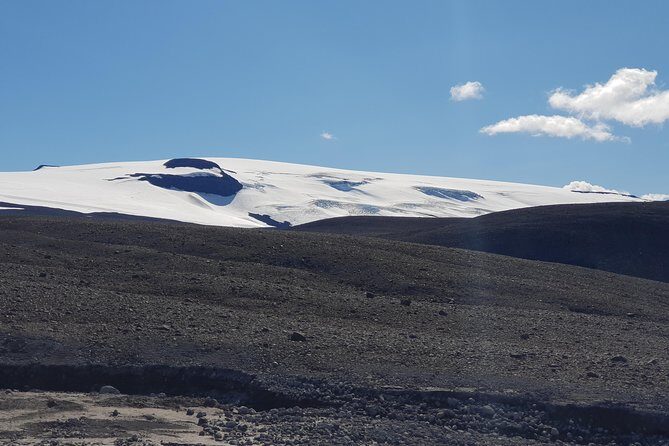
The centerpiece is the chance to see Snæfellsjökull Glacier. This mountain-glacier is the reason the area became famous in the world’s imagination through Jules Verne’s Journey to the Centre of the Earth. Standing near it, you’ll quickly understand why writers loved this setting: it looks like a natural portal, part ice, part mountain, part mystery.
During this stop, your guide will explain the ecosystem and the natural history of the glacier region. Even if you’ve read the book before, the guided context changes how you see the place. It’s not just scenery. It’s a living system that’s adapted to cold, wind, and harsh conditions.
Weather matters a lot here. If visibility is good, the glacier feels huge and dramatic. If you get fog or low cloud, you can still appreciate the area, but you may not get the clear landmark shots you want. That’s why the tour notes good weather is important, and why it can be canceled and rescheduled if conditions are poor.
Kirkjufell Mountain: Iconic Views With Real-Time Timing
Finally, you’ll head to Kirkjufell Mountain for the big-picture finish. This is the iconic peak that shows up on Iceland photo feeds for a reason: the shape is unmistakable, and it often looks extra dramatic against sea and sky.
Expect time to take photos and soak in the viewpoint. People sometimes wish for more time here—especially if the waterfall side is calling your name—but the tour has to balance glacier time, coastal stops, and the drive back to Reykjavik.
This is also one of those spots where weather can make or break your experience. Clear skies can turn it into a poster. Fog can reduce it to silhouettes. Either way, it’s a satisfying end because it ties together the day’s themes: geology, coastlines, and Iceland’s “made of weather” drama.
Guides Like Dori, Dylan, and Inga: Why the Human Part Matters
A huge part of the value here is the guide. In the feedback I’m drawing from, guides such as Dori, Dylan, and Inga are specifically praised for keeping things interesting and informative while handling a long route.
You’ll also notice a pattern in what people love: the guide doesn’t just list places; they explain what you’re seeing and why it matters. That’s especially helpful on a route like Snæfellsnes, where the scenery can look similar to the untrained eye—until someone points out what’s different.
If you’re the type who likes to ask questions, this small-group setup helps a lot. If you prefer quiet time, you can still enjoy the stops, but the narration will be there as a constant companion.
Price and Value: What $145 Gets You (and What It Doesn’t)
At $145 per person, you’re paying for a lot of moving parts: guided transport by coach, pickup options, a small-group cap, and a carbon-neutral approach in cooperation with Vaxa Technologies. Food and drinks aren’t included, which is fair. Iceland meals vary, and giving you control is usually better than forcing a specific lunch spot.
Is it good value? For many people, yes—because you’re bundling: Reykjavik-to-peninsula travel, expert interpretation, and several major landmarks with walking time. If you rented a car, you’d still pay for gas, parking, and possibly tours for logistics and route planning.
One practical consideration: it’s a long day, so you’re paying for convenience as much as sightseeing. If you feel worn out easily by driving and tight windows, a different format (shorter tour or more nights on the peninsula) might suit you better.
What to Pack for Fast-Changing Snæfellsnes Weather
Bring the basics and assume you’ll use them. Even on good days, you can get wind and quick shifts in visibility. Dress in layers and plan for rain that might arrive without warning.
Shoes matter. You’ll walk on coasts and uneven rock and you’ll want grip. A hat and gloves can help more than you think when the wind off the ocean picks up.
For day comfort, consider that restrooms can be limited between stops. There’s no way around the fact that you’re doing many landings in one day, so it helps to use bathroom options when you can and not wait until the last minute.
If photography is a priority, keep expectations flexible. In Iceland, “light and weather” are part of the schedule.
Who Should Book This Snæfellsnes Tour (and Who Might Not)
This works best if you want a one-day introduction to the peninsula without planning a driving route yourself. It’s also a solid pick if you like guided geology and wildlife context, not just quick photo stops.
You’ll probably enjoy it if:
- you want Snæfellsjökull and Kirkjufell in one day
- you’re comfortable with a long day and lots of road time
- you like walking short to moderate distances at multiple coast stops
You might choose something else if:
- you hate tight schedules and prefer long hangs at viewpoints
- you’re very sensitive to wind and cold (cliff walks can be rough)
- you need lots of time at one landmark instead of seeing many
Should You Book This Tour?
Yes, if you’re on a Reykjavik-first trip and you want the highlights of Snæfellsnes without the stress of driving. The small group size, guided storytelling, and real walking time at places like Hellnar, Arnarstapi, and Djúpalónssandur make it a strong value for a full-day itinerary. Just go in knowing it’s packed: lots of driving, quick photo windows, and weather that can change the vibe in minutes.
If you’re flexible with weather and you want variety in one day, this is a very practical way to do it.
FAQ
What time does the tour start from Reykjavik?
It starts at 8:00 am from BSÍ Bus Terminal Reykjavík.
Where is the meeting point and where do we end up?
You start at BSÍ Bus Terminal Reykjavík and the tour ends back at the same meeting point.
Is hotel pickup available?
Pickup from your accommodation or a bus stop is offered on request.
What group size is this tour?
It has a maximum of 15 travelers.
Are food and drinks included?
No. Lunch and other food and drinks are not included, including your meal time in Hellnar.
How long is the tour?
The duration is approximately 12 hours.
Is the tour guided and in what language?
Yes, it’s guided, and it’s offered in English.
Is the tour carbon neutral?
The tour is described as carbon neutral in cooperation with Vaxa Technologies.
What happens if weather is poor?
This experience requires good weather. If it’s canceled due to poor weather, you’ll be offered a different date or a full refund.