Four days, and Iceland changes every hour. This trek puts you on the Laugavegur Trail through lava fields, obsidian deserts, volcano country, and then into Þórsmörk’s birch forest—ending with a proper finish and a ride back toward Reykjavík. You also get a real highlight early on: a soak in the Landmannalaugar hot springs after hiking.
I love the way this trip handles logistics. With luggage transportation between camps and minibus transfers, you hike with less weight and spend more time on the trail itself. And the experience quality often comes down to the guide, with names like Daniela popping up in feedback for energy, safety-minded direction, and keeping the group moving together.
One thing to consider: this is a weather-dependent trek in remote terrain, and the essential rain gear and sleeping setup cost extra if you don’t already own it. Plan on bringing or renting the right items, or your days can feel a lot longer than they need to be.
In This Review
- Key highlights before you decide
- Why the Laugavegur Trail feels like a geology course with boots
- Getting there: Reykjavík pickup and the 7:00 a.m. start
- Day 1 at Landmannalaugar: lava textures, Brennisteinsalda, and hot springs
- Day 2 across the obsidian desert to Jökultungur and a river crossing
- Day 3 volcanos, Mælifellssandur, and the Markarfljótsgljúfur gorge
- Day 4 into Þórsmörk: Almenningar gorge, birch forest change, and the finish
- Price and value: what $2,090.44 really covers (and what it doesn’t)
- Gear choices that stop you from having a miserable day
- Guides, group size, and pace: the difference between fun and stress
- Weather is the rule here: how to think about cancellation risk
- Who should book this Laugavegur 4-day trek
- Should you book this 4-day trek or look elsewhere?
- FAQ
- What is the duration of the 4 Days Laugavegur Trekking Tour?
- Where do the hikes start and finish?
- How much hiking is there each day?
- What fitness level is required?
- What’s included in the price?
- What hiking gear is not included?
- Is pickup available in Reykjavík?
- Are there pickup points outside Reykjavík?
- What is the maximum group size?
- What happens if the trek is canceled due to weather?
- How far in advance can I cancel for a full refund?
Key highlights before you decide
- Landmannalaugar geology day 1: lava fields, a canyon walk, and a hot-springs reset
- Obsidian desert to Jökultungur on day 2: long mileage plus big highland views
- A river crossing on foot: exactly the kind of Iceland moment that makes the trek memorable
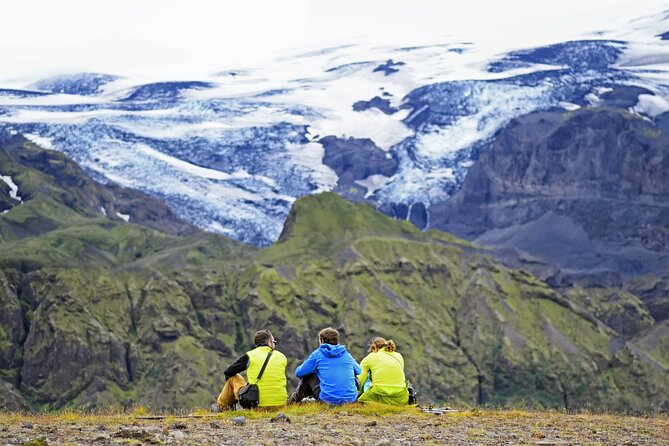
- Volcano viewpoints and a deep gorge: pass spots like Mýrdalsjökull & Eyjafjallajökull views and Markarfljótsgljúfur
- Þórsmörk finish: the scenery shifts into dense birch forest before you’re done
- Mostly logistics handled: minibus rides, tent camping setup, meals, and luggage transport
Why the Laugavegur Trail feels like a geology course with boots
The Laugavegur is popular for a reason: it’s not one “pretty view,” it’s a whole sequence of changing ground, color, and weather. One day you’re walking through rhyolite mountains and lava textures. Another day you cross an obsidian desert area. Then the trail swings toward volcanic zones and glacial systems before finishing in Þórsmörk, where the vibe turns from exposed highlands to sheltered vegetation.
What makes this 4-day format appealing is that you get enough time to feel those transitions without trying to cram too much into each day. You’re hiking several hours per day, but it’s still paced so you can actually enjoy your surroundings instead of just moving through them.
And because the trip includes tent camping plus meals, you’re not wrestling with “What do I cook tonight?” questions in the middle of nowhere. You get to focus on one job: hike well, stay warm, and keep moving safely.
Getting there: Reykjavík pickup and the 7:00 a.m. start
This trek starts early. Your day begins with pickup options in Reykjavík between 7:00 and 7:30 a.m. (City Hall on Vonarstræti, Hallgrímskirkja Church, or the Reykjavík Campsite). Outside Reykjavík, there are also pickup points around the Selfoss and Hella areas (with a note that departure may wait up to about 30 minutes).
Why the early start matters: you’re going to spend a long day on uneven terrain, and you want light when you begin hiking each day. In Iceland, weather can shift fast, and that first stretch on the trail tends to set your mood for the rest of the day. Starting at the planned time helps you avoid feeling rushed later.
Also, this tour uses a mobile ticket and is offered in English, which keeps your group experience smoother if you’re not planning to juggle printed vouchers.
Day 1 at Landmannalaugar: lava textures, Brennisteinsalda, and hot springs
Day 1 starts at Landmannalaugar, the classic launch point of the Laugavegur Trail. Before you even get into your main walking hours, you’re set up for the kind of scenery Iceland does best: geology that looks painted.
The walking portion is about 8 km with roughly 4 hours on foot, including 470 m of ascent. You’ll explore the Laugahraun lava field and Vonugil canyon—a mix of open ground and carved terrain that changes how your footing feels as you go.
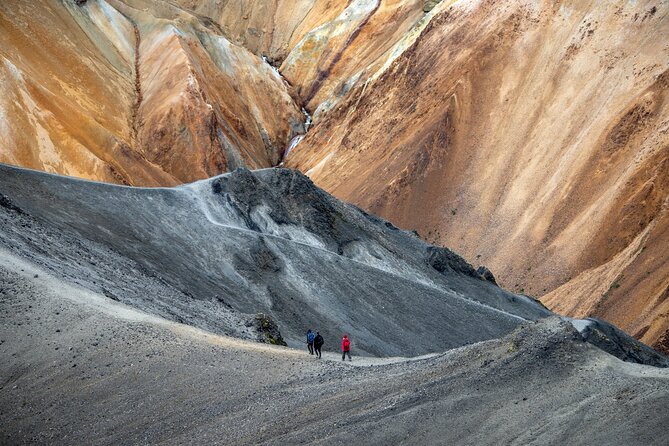
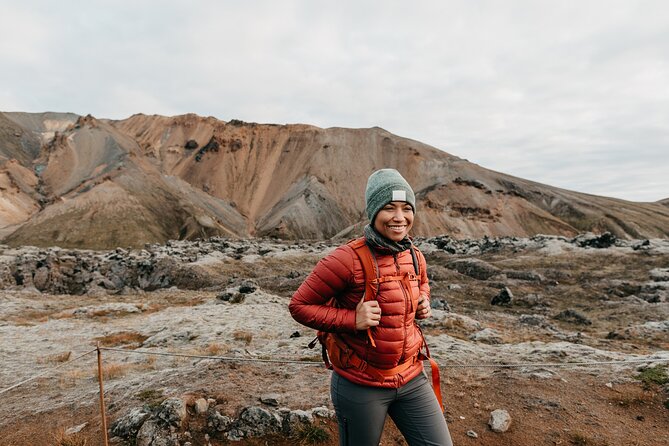
Then the color show arrives. You’ll admire the bright rhyolite mountains and see the famous Mt. Brennisteinsalda, known for its multicolored slopes. After that, there’s optional time to wander toward Graenagil and even climb Blahnukur if conditions and schedule allow. That optional piece is worth caring about because it’s where you can stretch your legs further for better views—just don’t treat it like a given.
The big payoff comes at the end of the hiking day: dinner with your group and time to soak in the Landmannalaugar hot springs. That hot-water reset can make the next morning easier, especially if you’re feeling sore from day 1’s ascent.
Day 2 across the obsidian desert to Jökultungur and a river crossing
Day 2 is the long one. You’ll hike around 24 km and plan for 7–8 hours, with about 900 m of ascent. This is the day where you’ll feel the trail turn from “wow, scenery” into “okay, this is real hiking.”
The route starts with a hearty breakfast, then heads across the Hrafntinnusker black obsidian desert. Walking on obsidian terrain is visually striking, but it also tends to be a mental switch: you’re not just admiring the ground, you’re navigating it. That means strong focus on footing.
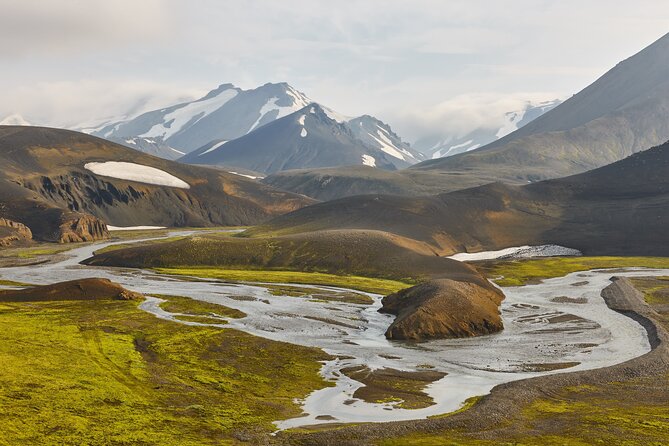
After the desert stretch, you’ll explore Reykjafjöll, again rhyolite country with striking colors. Then you push up toward Jökultungur, where the views over the highlands and Álfavatn lake reward the effort.
A detail that I think you should plan for mentally: you’ll make a river crossing on foot. Iceland river crossings can range from manageable to intense depending on conditions, footwear, and water level. Since waterproof pants and proper boots aren’t included, you’ll want to make sure your kit can handle wet hiking days.
By evening, you’ll relax, eat dinner, and take in those Iceland Highlands views. Day 2 often determines how much you enjoy the rest of the trek, simply because it sets the fitness tone.
Day 3 volcanos, Mælifellssandur, and the Markarfljótsgljúfur gorge
Day 3 is shorter than day 2 in distance—about 15 km—with roughly 6–7 hours of walking. Descent is minimal (around 40 m), which usually means your legs don’t feel the same “downhill tax” as on some other multi-day routes.
You’ll travel via Mælifellssandur, passing Stórasúla and Hattafell volcano areas. You’re looking for viewpoints here, especially for the glacier backdrop: you’ll get views toward Mýrdalsjökull and Eyjafjallajökull. It’s the kind of contrast that helps you understand what you’re walking over—glacial forces on one side, volcanic shapes on the other.
Then comes Botnar, described as a green oasis. Whether you’re calling it lush or just a welcome change, that shift matters on day 3 because the trail has already taken you through hard-looking terrain. Seeing a “different” type of ground and vegetation helps your brain reset.
You’ll also see Markarfljótsgljúfur, a deep gorge plunging about 200 m below, formed by glacial water. This is one of those stops that makes you slow down—mainly because the scale is hard to grasp when you’re in the middle of hiking mode.
Day 3 ends with dinner and time with your group. If you’re the type who learns best by talking while eating, this is a good night. You’ll be tired enough to relax, but not so exhausted that conversation dies.
Day 4 into Þórsmörk: Almenningar gorge, birch forest change, and the finish
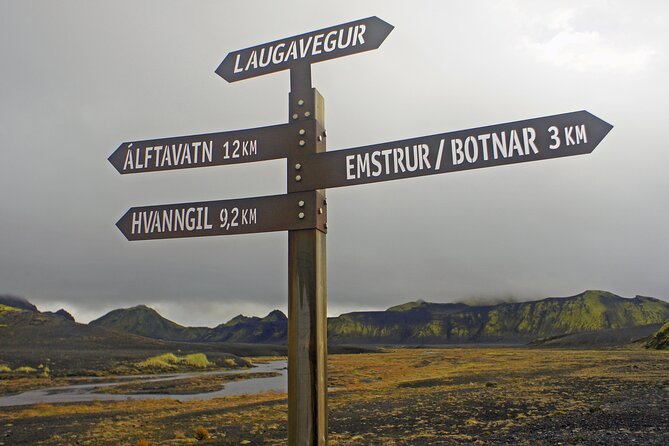
Day 4 is about arrival energy. You’ll hike again around 15 km for 6–7 hours, with descent around 300 m. After breakfast, you depart Emstrur and head toward Þórsmörk.
The start route goes through Almenningar gorge near Mount Einhyrningur, and you’ll get views of glaciers ahead. This is a smart day to keep an eye on the sky. If the clouds are moving, you might get quick bursts of glacier visibility, then it disappears again.
Then the trail does its most satisfying trick: the environment changes into dense birch forest once you enter Þórsmörk. The scenery stops feeling like “open highlands” and starts feeling like “a place you could actually rest.” That’s why Þórsmörk is the classic finish point on the Laugavegur.
You complete the trek on day 4, and on the ride back to Reykjavík you may catch a glimpse of Seljalandsfoss. You’ll arrive back in Reykjavík around 21:30, with drop-off at the BSI bus stop.
Price and value: what $2,090.44 really covers (and what it doesn’t)
At $2,090.44 per person, this trek sits in the higher range, and you should judge it by logistics and included comfort—not just the trail mileage.
What you get included:
- Minibus transportation (including pickups from Reykjavík and outside it, plus the day-to-day transfers)
- Accommodation in private tents (and large assembly tents for dinners)
- Breakfasts (3), lunches (4), dinners (3)
- Luggage transportation between camping spots
That bundle is the core value. On multi-day Iceland hikes, transportation and meals are not small things. This route removes a lot of planning stress: you don’t need to worry about moving heavy bags from camp to camp, and you’re not scrambling for food logistics while you’re already tired.
What costs extra if you don’t own it:
- Sleeping bag (listed price in KR)
- Hiking poles
- Hiking boots
- Special food
- Single tent option
- Waterproof jacket and waterproof pants
Here’s the practical way to think about it: if you already have proper waterproof gear and boots, you’ll likely feel the value more. If you don’t, the trip can get more expensive quickly because wet-weather clothing is basically non-negotiable on this kind of route.
Gear choices that stop you from having a miserable day
This trek is described as needing moderate physical fitness, which is helpful—but your comfort will depend more on gear than you might expect.
Plan around rain and wet ground. You’ll face a river crossing on foot on day 2 and spend several days in exposed terrain. If you’re missing waterproof pants or a waterproof jacket, you’ll get cold faster, and cold turns “manageable hiking” into “just endure it.”
Also, pack for real hiking feet. Boots are not included, and you’ll want something stable for uneven trail sections. Hiking poles are also offered as add-ons because they can help on ascents and descents when the footing gets slick.
If you want the comfort of a single tent, there’s a listed extra. Whether you need it is personal, but it’s a useful option if sleep matters to you for recovery.
Guides, group size, and pace: the difference between fun and stress
This is sold for English and lists a maximum of 14 travelers. That’s a reasonable group size for a trek like this, because you can keep a sense of togetherness without feeling like you’re herding a crowd across mountains.
In the feedback I’ve seen, guide quality shows up again and again, with Daniela and Ioanna specifically mentioned for energy, safety focus, and keeping the group positive. That matters because the Laugavegur isn’t a treadmill route. Conditions change, and someone has to manage pacing and decision-making.
One note to take seriously: if your biggest worry is “Will I get left behind?”, ask the operator how they handle slower hikers and group spacing. One report I saw described a situation with 16 people where a single guide felt stretched, so it’s smart to confirm current group handling before you book if you’re near the edge of your hiking comfort level.
And for your own pace: don’t treat the day mileage as your only number. Ascent and weather are the real time changers. If you go into day 2 expecting a walk in the park, Iceland will correct that plan fast.
Weather is the rule here: how to think about cancellation risk
The trek requires good weather. If it’s canceled due to poor conditions, you’ll be offered a different date or a full refund.
This is the kind of tour where you shouldn’t plan your whole Iceland schedule like everything is guaranteed. Keep one or two flexible days around the trek if you can. Even if your dates don’t change, weather affects how your day feels on the trail, especially during river crossings and exposed sections.
Who should book this Laugavegur 4-day trek
Book this if:
- You want the classic Laugavegur sequence from Landmannalaugar to Þórsmörk
- You like big geology and want the trail to teach you by what you walk over
- You’d rather focus on hiking and scenery than logistics and cooking
- You’re ready for at least one long day (day 2)
Think twice (or confirm gear and pacing) if:
- You don’t have waterproof clothing and proper boots
- You dislike long hiking days around 7–8 hours
- You feel anxious about group pace in uneven terrain
- You need very quiet, private sleeping situations and might be sensitive to communal tent-camp life
Should you book this 4-day trek or look elsewhere?
I’d book it if your priority is an organized, meal-supported way to do the Laugavegur Trail without carrying the full weight of logistics. The included minibus rides, tent camping, food, and luggage transport make the trek feel doable, even when the trail itself is not easy.
I’d hesitate only if you’re missing key gear and would have to rely on last-minute rentals, or if your fitness isn’t ready for a 24 km day with significant ascent. This trek rewards preparation.
If you’re the kind of hiker who likes real challenge plus real scenery, this 4-day version is a smart length: long enough for the trail’s variety, short enough to still feel fresh by the end.
FAQ
What is the duration of the 4 Days Laugavegur Trekking Tour?
It’s listed as 4 days (approx.).
Where do the hikes start and finish?
The trek starts at Landmannalaugar and finishes in Þórsmörk, with a return to Reykjavík on day 4.
How much hiking is there each day?
You’ll hike about 4 hours on day 1 (8 km), 7–8 hours on day 2 (24 km), 6–7 hours on day 3 (15 km), and 6–7 hours on day 4 (15 km).
What fitness level is required?
The tour says travelers should have moderate physical fitness.
What’s included in the price?
Included items are minibus transportation, accommodation in private tents and large assembly tents for dinners, luggage transportation between camping spots, and meals: 3 breakfasts, 4 lunches, and 3 dinners.
What hiking gear is not included?
Not included are a sleeping bag, hiking poles, hiking boots, special food, single tent (as an extra option), waterproof jacket, and waterproof pants.
Is pickup available in Reykjavík?
Yes. Pickup is offered in Reykjavík between 7:00–7:30 a.m. at Ráðhúsið (City Hall), Hallgrímskirkja Church, or the Reykjavík Campsite.
Are there pickup points outside Reykjavík?
Yes. There are pickup options at Selfoss N1 Gas Station (8:15) and Hella bus stop at Olís Gas Station (9:00).
What is the maximum group size?
The tour lists a maximum of 14 travelers.
What happens if the trek is canceled due to weather?
The experience requires good weather. If it’s canceled due to poor weather, you’ll be offered a different date or a full refund.
How far in advance can I cancel for a full refund?
You can cancel up to 6 days in advance for a full refund, with the policy based on local start time.