REVIEW · VIK
Black Sand Beach Horse Riding Tour from Vik
Book on Viator →Operated by Vik Horse Adventure · Bookable on Viator
Riding Icelandic horses on black sand is a movie scene in real life. You’re based in Vík í Mýrdal at Víkurfjara beach, where the guides lead you onto volcanic-black sand while you learn how these tough little horses work and why they’re famous for a smooth gait. Two things I love: the sturdy Icelandic horses that feel steady for first-timers, and the guided setup that turns a quick ride into a meaningful slice of local life.
One thing to plan around: wind can shut down beach riding at the last minute, and the stable puts safety first—sometimes you won’t ride, even if you show up ready to go.
In This Review
- Small group energy, friendly coaching, and real safety habits
- Víkurfjara: the black-sand stage you’ll ride on
- Entering the stable: your quick start before the sand
- The one-hour itinerary: what you’ll do at each moment
- Stop 1: Vik Horse Adventure
- About riding time and pace
- Horses that feel cared for (and why that matters)
- What you should wear and bring for a black-sand ride
- Who this tour fits—and the limits that keep it safe
- Guides make the difference: from instructions to photo help
- Weather reality at Vík: how wind affects your chances
- Price check: is $133.02 worth it?
- Should you book the Black Sand Beach Horse Riding Tour from Vík?
- FAQ
- How long is the horseback riding tour?
- Where does the tour start and end?
- Is a helmet included?
- Are shoes included with the tour?
- What are the minimum age and weight limits?
- Are pregnant travelers allowed to ride?
- What group size can I expect?
- Is the tour offered in English?
- What fitness level do I need?
- What happens if the tour can’t run due to weather?
Small group energy, friendly coaching, and real safety habits
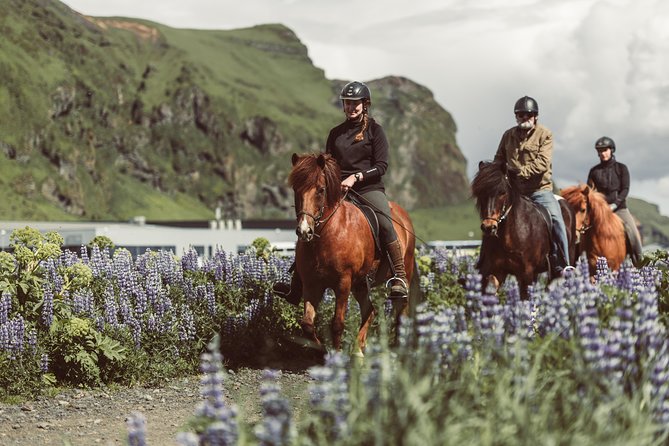
This is a guided tour with a maximum of 10 riders, so the vibe stays personal instead of chaotic. You’ll start and finish at the stable, get helmet rental included, and get real help on mounting and control—plus you’re not left to figure it out yourself. In one standout moment, a guide named Yohanna impressed people with her patient, informative style while keeping everything moving smoothly.
The ride is about an hour total, and it’s the kind of outing where you’re not just chasing a photo—you’re actually out there on the beach, watching the coastline from the saddle.
Víkurfjara: the black-sand stage you’ll ride on
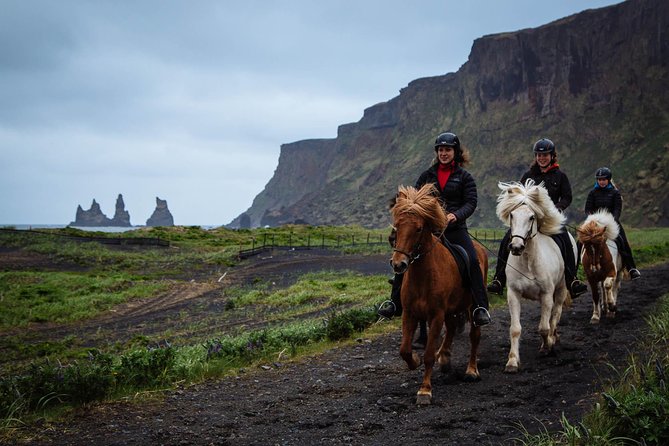
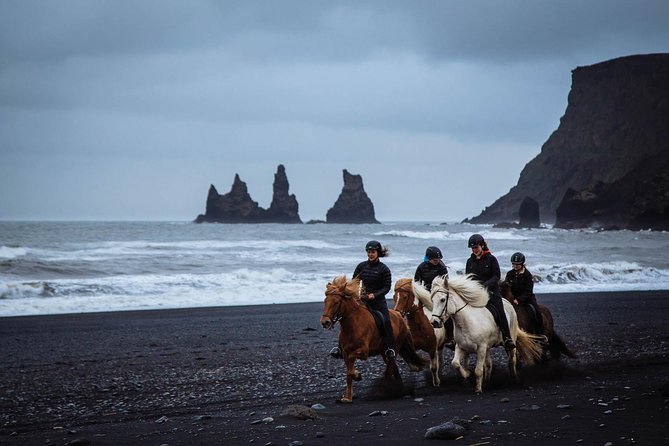
Víkurfjara is the star. This is the black-sand beach area tied to Vík í Mýrdal, and the tour is designed specifically for the view you only get from horseback. From the horse, you get a steady sense of scale: the ocean comes in waves, the sand looks darker and deeper up close, and the shoreline curves in a way that’s hard to appreciate from a viewpoint.
There’s also a practical upside to riding here: the route is built for a group, so you’re not navigating footing, wind, or timing yourself. You follow the guides, you stay with your mount, and the experience flows.
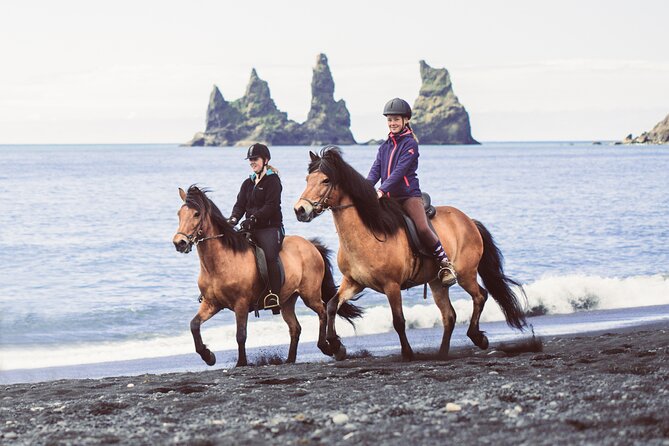
And yes, you’ll get pictures. The tour includes photo stops on the beach, and the guides help capture you on horseback rather than hoping you’ll manage it all with cold hands and a wobbling camera.
You can also read our reviews of more tours and experiences in Vik.
Entering the stable: your quick start before the sand
The stable is where you begin and end, so it acts like a reset point. Expect a short intro before you’re put on your horse—enough to help most people feel comfortable even if they’ve never ridden before. In past rides like this, the guides usually go over basic handling, safety rules, and how to respond if the horse shifts pace or direction.
Helmets are included, and that’s not a small detail in Iceland. Beaches can be windy, reins and posture matter more on uneven ground, and a helmet removes a chunk of worry before you even mount.
What I like about this kind of farm-run setup is that it’s not pretending you’re in a horse-themed gym class. It’s real farm routines, real horse care, and a calm pace that lets you focus on the experience instead of being overwhelmed.
The one-hour itinerary: what you’ll do at each moment
Stop 1: Vik Horse Adventure
Stop 1 is the whole experience. You’ll check in at the stable, get fitted with a helmet, and mount your Icelandic horse. Then the route leads out along Vík’s black sand beaches at Víkurfjara, with the guides walking with and around the group the whole time.
Here’s the rhythm I’d expect from this style of tour:
- Setup and instruction: quick coaching so you know what your job is on the horse.
- Guided walk along the sand: the main ride time, designed for a safe, steady pace.
- Beach photo moments: brief stops so you can get those classic Iceland black-sand shots with you on the horse.
- Optional speed for some riders: depending on conditions and rider experience, you may get a short chance to try a faster gait such as tölt, which is often described as a smooth run/jog feel.
Multiple people noted that the horses are calm and well behaved, which is exactly what you want when you’re learning. One rider even shared that this was their first time getting on a horse, and they felt safe enough to manage it without stress.
About riding time and pace
Even when riders want more excitement, the tour is built as beginner-friendly. That means the walking portion dominates. Some guests reported they were able to trot or try a bit of tölt toward the end, but it’s still a short segment, not a nonstop speed fest.
If you’re an experienced rider looking for a faster, freer ride across open terrain, you might find this tour a bit restrained. That doesn’t make it bad—it just means it’s designed for comfort and safety on a rocky, uneven black-sand beach.
Horses that feel cared for (and why that matters)
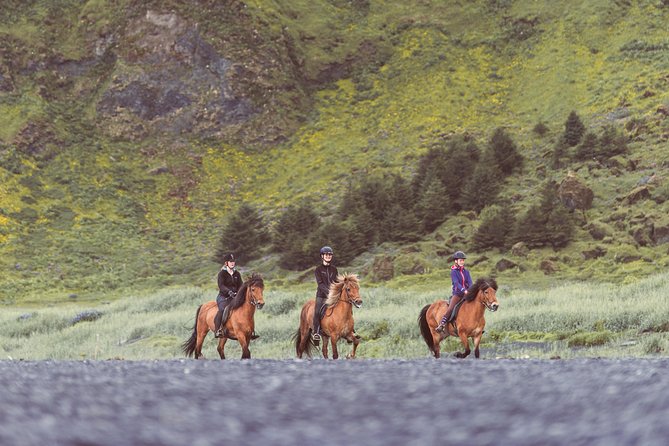
This is the part that shows up again and again in how people describe the experience. The stable is small, and it feels family-run and attentive. People repeatedly mentioned that the horses were extremely calm, had their own personalities, and that the guides clearly care about how the animals are kept.
You can also feel the “fit” between horses and riders. One reviewer mentioned being told they were too heavy for a smaller Icelandic horse but respected the decision because it suggested the stable wouldn’t force an animal into a poor situation. That kind of restraint matters to me, and it should matter to you.
Also: Icelandic horses are smaller than what many people picture. That can be reassuring if you’re nervous, but it’s also worth knowing if your expectations are based on big, tall breeds.
If you’re choosing between horseback riding as a thrill ride versus horseback riding as a relationship-with-the-horse experience, this one leans toward the second.
What you should wear and bring for a black-sand ride
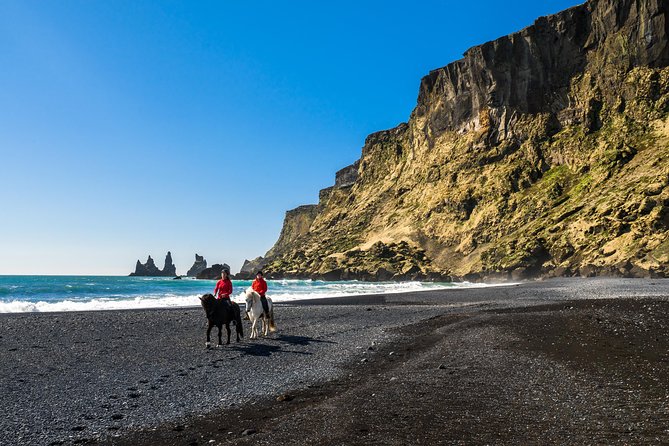
You’ll ride on rocky black sand and through wind that can change fast. The tour includes helmets, but it does not include shoes.
So plan your outfit around three things: grip, warmth, and weather protection. Closed-toe footwear with a solid sole helps on sand and uneven ground. Warm layers matter because even in mild weather, the beach wind can feel sharp once you’re standing still for a photo.
If you’re prone to cold hands, bring gloves. If you rely on your phone for photos, consider a way to keep it protected from wind-driven sand.
One more note: the tour mentions the ride requires moderate physical fitness. That usually means you should be comfortable standing, mounting, and staying balanced while your horse moves at a walking pace on uneven ground.
Who this tour fits—and the limits that keep it safe
This tour has clear rules, and they’re there for a reason.
- Minimum age: 10 years
- Maximum weight: 100 kg / 220 lb
- No pregnant travelers
- Weight check: the stable reserves the right to ask riders to step on a scale
If you’re close to the weight limit, don’t assume it’s flexible. Icelandic horses are sturdy, but their sizes and tack setups aren’t infinite.
Also, the tour is capped at 10 travelers, and the small group matters. It means the guides can stay focused on each rider, help with positioning, and keep an eye on safety without turning the ride into a line.
This is a great option if:
- You’re traveling with mixed skill levels
- You want a memorable Iceland moment without a technical riding challenge
- You’re okay with a calm, guided beach route as the main point
It may be less ideal if:
- You’re an advanced rider hoping for a long stretch at a fast gait
- You want a high-control, independent ride (you won’t have that here)
Guides make the difference: from instructions to photo help
A good guide can turn “sit on a horse” into “feel confident on a horse.” In this tour style, guides do a lot of the invisible work: they manage group spacing on sand, read the horses’ movements, and guide you so you’re not fighting the ride.
The name Yohanna comes up as a highlight—people described her as informative and patient. The broader theme is that the team keeps things friendly but serious about safety.
Photo assistance is another key value. Riders reported the guides helped take photos on the beach with the horses posed and behaving well. That’s not guaranteed with every tour, and it matters if you want real, shareable shots without guessing angles while you’re trying to keep balance.
Weather reality at Vík: how wind affects your chances
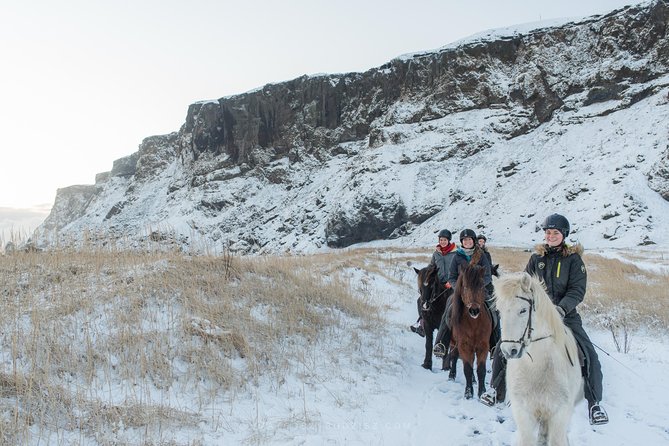
Iceland weather is not a suggestion. It’s a boss fight.
Some rides are cancelled due to high winds on the beach, and the stable treats safety as the top priority. In at least one case, guests still had options to visit and spend time with the horses even when the ride itself was cancelled, which is a nice consolation if you’re in town for a limited window.
My advice: pick your day carefully. If you’re planning multiple activities, keep your schedule flexible and don’t stack the most wind-sensitive plans back-to-back.
Also, if you go on a windy day, dress like you mean it. Warm layers and gloves turn a chilly walk on black sand into an experience you can actually enjoy instead of one you just tolerate.
Price check: is $133.02 worth it?
At $133.02 per person for about an hour, this is not a budget activity. But it also isn’t a random photo op.
You’re paying for:
- Helmet rental included
- A guided ride on Víkurfjara specifically (not “we’ll walk around and see what happens”)
- A small-group cap (max 10) that supports safer handling
- Care for horses that multiple guests describe as calm and well maintained
- A route that includes beach photo time
In practice, value comes from the combo: you get the black sand setting plus guided handling, in a format built for beginners. If you’re the kind of traveler who wants “a highlight that feels authentic and safe,” this price can make sense.
If you mainly want speed or lots of riding time, you might compare against other stables that offer more intense options. But for most people in Vík, this one hits the sweet spot between Icelandic horse charm and manageable time.
One practical tip: the tour often gets booked in advance (around 41 days on average). If you have a specific window in mind, don’t wait for the last minute.
Should you book the Black Sand Beach Horse Riding Tour from Vík?
Book it if you want a classic Vík experience that feels guided, safe, and genuinely tied to the horses and the local beach—not just a quick ride for bragging rights. It’s especially worth it if you’re a first-timer or you want a calm pace while enjoying the view from the saddle.
Skip—or plan carefully if—wind is likely during your dates and you can’t be flexible. The tour depends on good weather, and last-minute cancellations do happen when the beach gets too windy.
My final take: if you’re in Vík and you want to see Víkurfjara from horseback, do it. Even short riding time can turn into a memorable highlight when the guides are attentive and the horses are treated well.
FAQ
How long is the horseback riding tour?
The tour is about 1 hour.
Where does the tour start and end?
The tour starts at and ends back at the meeting point at C283+MJ Vik, Iceland.
Is a helmet included?
Yes, helmet rental is included.
Are shoes included with the tour?
No, shoes are not included.
What are the minimum age and weight limits?
The minimum age is 10 years, and the maximum weight limit is 100 kg / 220 lb.
Are pregnant travelers allowed to ride?
No, pregnant travelers are not allowed to ride.
What group size can I expect?
This activity has a maximum of 10 travelers.
Is the tour offered in English?
Yes, the tour is offered in English.
What fitness level do I need?
You should have a moderate physical fitness level.
What happens if the tour can’t run due to weather?
This experience requires good weather. If it’s cancelled due to poor weather, you’ll be offered a different date or a full refund.