REVIEW · MYVATN
From Mývatn Lake: Askja Volcano & Wilderness Super Jeep Tour
Book on GetYourGuide →Operated by Geo Travel · Bookable on GetYourGuide
Askja sounds like a place you should only see in photos. Yet a day in the Icelandic Highlands can feel surprisingly close-up when you’re bouncing in a Super Jeep and stepping onto real volcanic ground toward Víti Crater. I love the mix of remote driving and short hikes, and I also like that the caldera route includes both the geothermal lake area and the hot spring. The one big catch: when wind and snow roll in, visibility can drop fast and walking gets harder than you’d expect.
From Mývatn, this is a 12-hour small-group outing (max 10) that trades big-tour bus energy for a more personal pace. You’ll be out in wide open country with stops along the way, guided in English by local leadership. If you’re not comfortable hiking on slippery ground or you’re traveling without your own snacks and water, plan for disappointment.
In This Review
- Key Things to Know Before You Go
- Why Askja Feels Like the Highlands in One Day
- The Super Jeep From Mývatn: More Than Just Transport
- Herðubreiðarlindir Lava Fields and the 1775 Outlaw Hut Ruins
- Reaching Askja Caldera: The 1875 Eruption Story You Can See
- Hiking to Víti Crater and Askja Lake: Heat, Footing, and Time
- Weather Reality Check: When the Highlands Take Control
- Guide Matters: Local Leadership and What You’ll Feel on the Day
- Price and Value: Does $483 Make Sense?
- What to Bring for a 12-Hour Askja Day
- Who This Tour Suits Best (and Who Should Skip It)
- Should You Book This Askja Super Jeep Tour?
- FAQ
- How long is the Askja Volcano & Wilderness Super Jeep tour?
- Where do I meet for the tour?
- Is food included?
- How many people are in the group?
- Is this tour suitable for children or mobility impairments?
- Can I cancel for a full refund?
Key Things to Know Before You Go
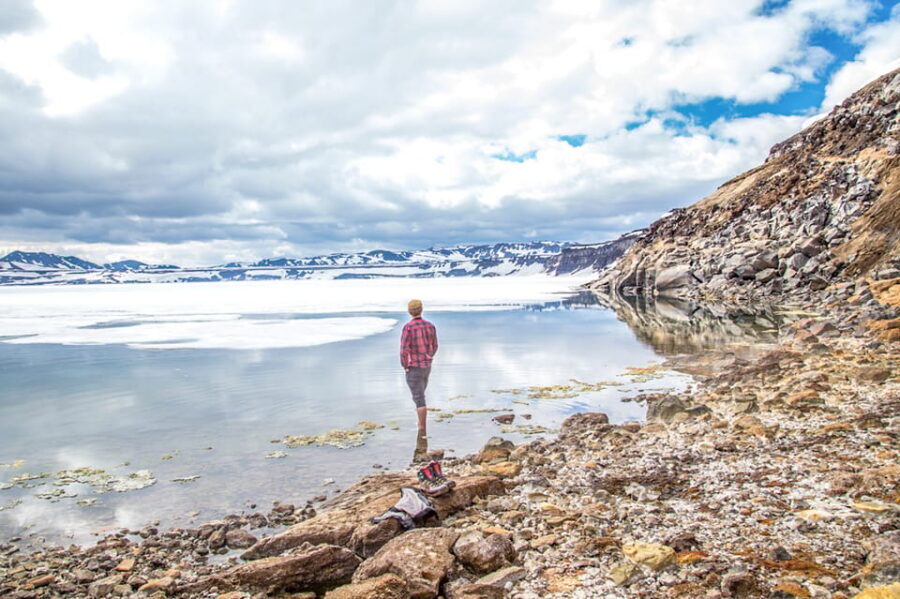
- Super Jeep access gets you far into the Highlands without turning the whole day into a long slog on foot.
- Askja Caldera + Víti Crater give you two very different geothermal moods: grey volcanic basins and a steaming hot spring area around 20–26°C.
- Herðubreiðarlindir stops add variety, from lava terrain to the ruins of a hut linked to an outlaw who spent winter 1775.
- Weather can make or break the day—mist can hide the caldera, and snow can change safe footing.
- Bring food and drinks because this is an all-day trip and meals are not included.
Why Askja Feels Like the Highlands in One Day
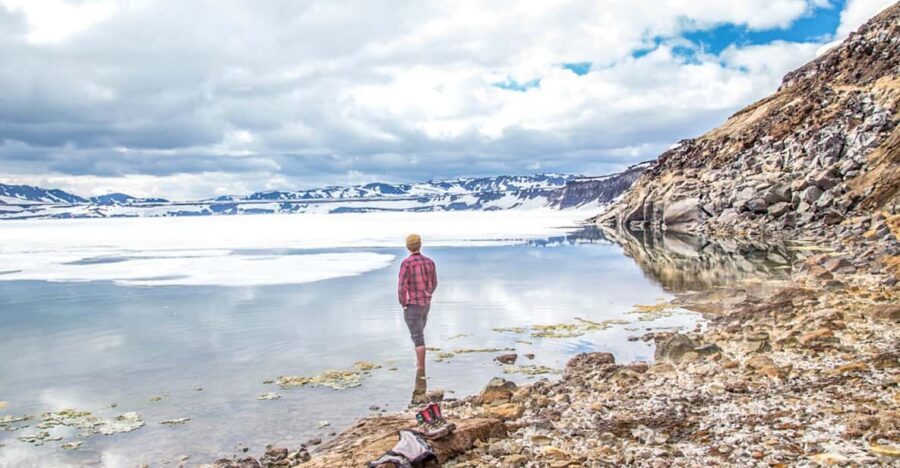
Askja is one of those Iceland names that has weight. The caldera complex formed after powerful eruptions in 1875, and the ground around it looks shaped for geology class—only you’re standing there in wind, not reading about it. What makes this tour interesting is the combination of travel style and timing: you don’t just arrive, look, and leave. You get the slow build of the Highlands, then you move closer to the crater zones on foot.
I like that the tour focuses on geothermal reality, not just sightseeing. You’re heading to places where hot water and volcanic rock shape what you see and what you feel underfoot. And you also get the larger context: the drive passes through the flat-topped Herðubreiðarlindir area and other volcanic terrain that helps Askja make more sense.
One consideration: with a destination like this, the weather isn’t background noise. It’s a main character. If conditions are poor, visibility may be limited, and that changes the experience from dramatic crater views to more subdued grey lake and cloud-covered rock.
You can also read our reviews of more tours and experiences in Myvatn.

The Super Jeep From Mývatn: More Than Just Transport
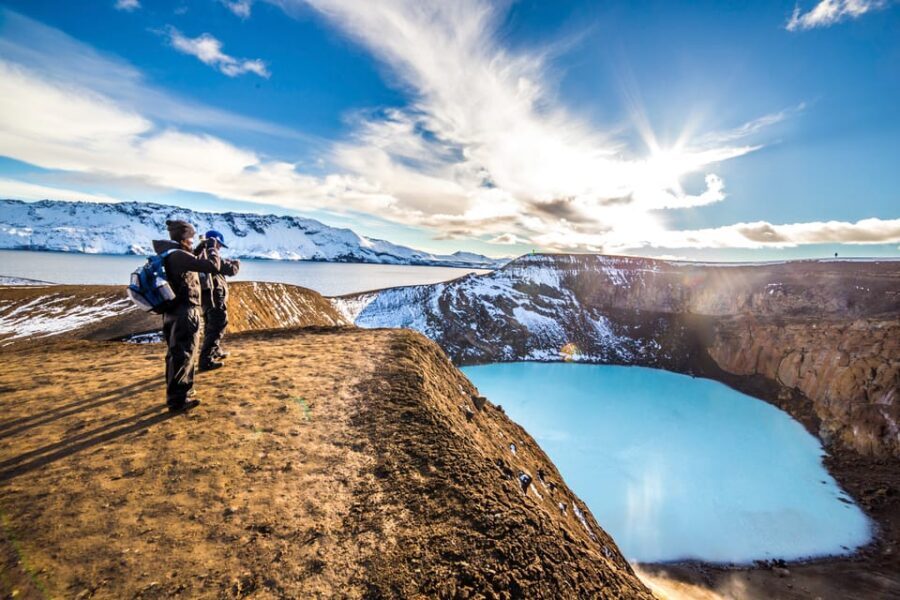
The ride from the Lake Mývatn area to central Highlands is a big part of why this tour exists. A standard car can only do so much on rugged, remote routes. Here, a Super Jeep is doing the heavy lifting so you can spend energy on the places that matter—walking to key geothermal points and taking in what the Highlands look like when you’re actually away from roads.
You’ll depart from the parking at Berjaya Hotel in Mývatn, then head into wide open country with opportunities for flexible stops along the way. That flexibility matters because the Highlands aren’t a theme park. If the terrain or conditions allow a short stop for photos or a quick look, you can benefit. If not, you’re still moving forward toward the caldera.
Because the group is limited to 10 participants, the pace tends to feel more relaxed than cattle-car tours. That’s also where the guide role becomes important. A strong local guide isn’t just pointing out scenery. They’re timing your approach so you’re not stuck waiting around in the worst of it, and they’re managing which areas are reasonable to walk when the ground is mixed with snow and ice.
Herðubreiðarlindir Lava Fields and the 1775 Outlaw Hut Ruins
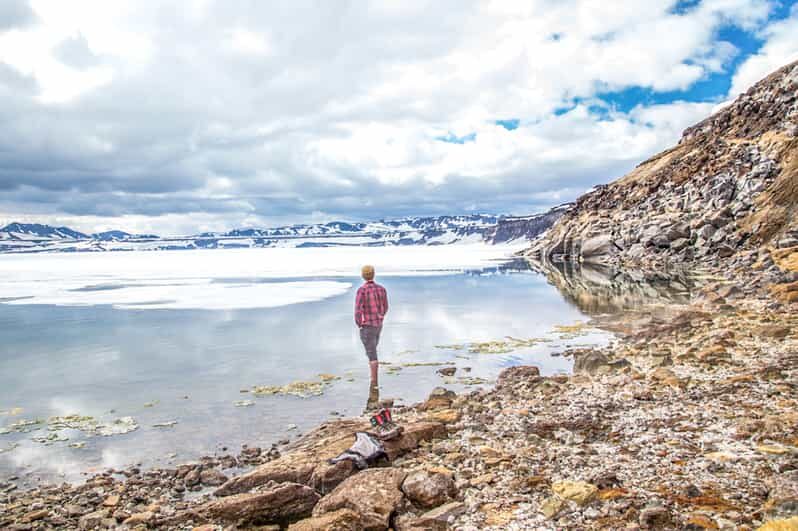
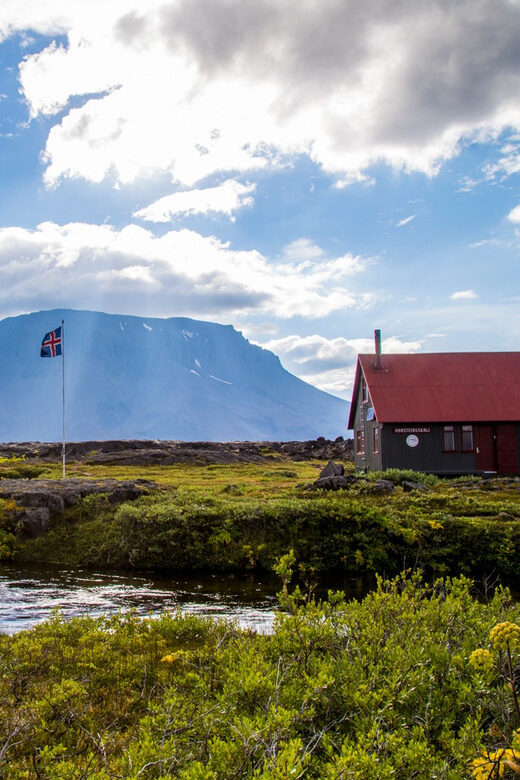
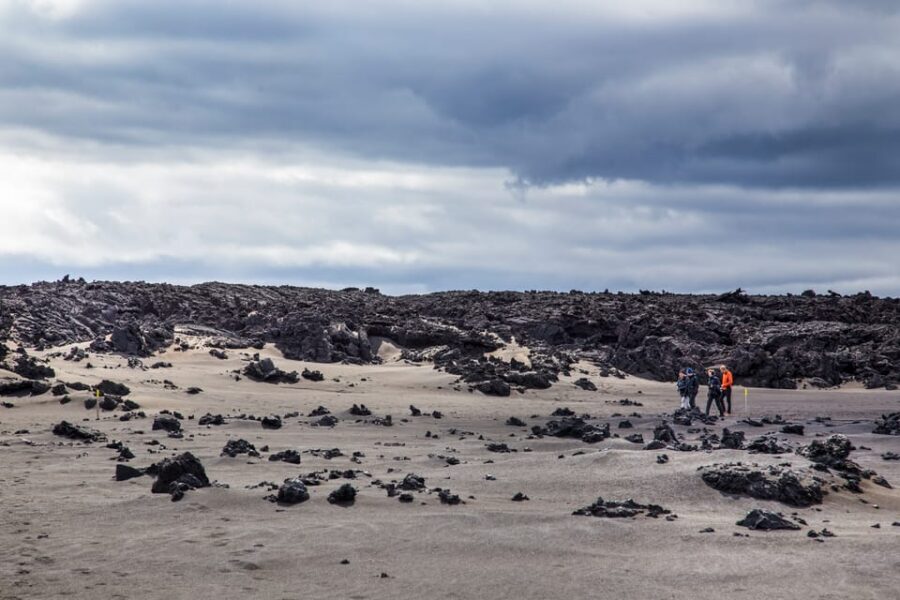
On the way to Askja, you’ll pass through the area around Herðubreiðarlindir, known for its distinctive flat-topped volcano profile. Even if you focus mostly on the caldera, these stops add context. You’re seeing the Highlands as a continuous system of volcanic surfaces and living edges—lava fields where survival is real and plant life finds ways to take hold.
There’s also a human story here. The tour includes a look at ruins of a hut connected to an outlaw who spent the winter of 1775. It’s not a full museum visit. It’s more like a time marker in a harsh place: proof that people tried to ride out winter in a landscape that doesn’t forgive mistakes easily.
This section of the day is worth paying attention to because it changes your mindset. When you see the lava terrain up close and then learn that people once hid there for survival, Askja stops being just a crater on a map. It becomes a place with both natural and human history layered into the same ground.
Reaching Askja Caldera: The 1875 Eruption Story You Can See
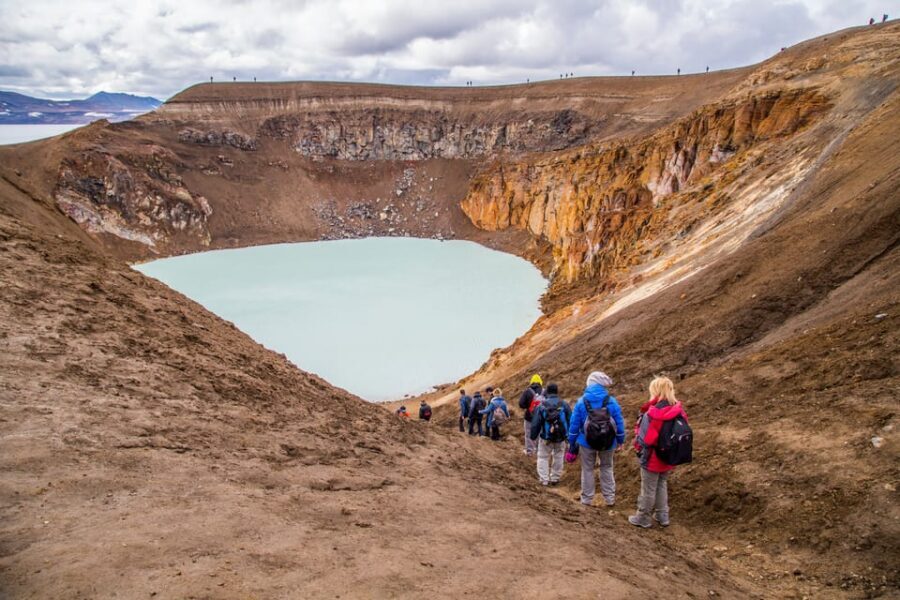
When you finally reach the caldera complex of Askja, it’s the kind of sight that makes you slow down—whether you’re seeing it clearly or through mist. The caldera exists because of the violent eruptions in 1875, and the terrain around it reflects that scale. You’ll be in a volcanic basin setting where the “shape” of Iceland is obvious: flat areas broken by crater walls, geothermal zones, and rock that looks both old and freshly present.
This is also where your expectations need adjusting. The goal isn’t always perfect postcard views. The real prize is getting to the geothermal area and doing the walking parts with guidance. On clear days, you get strong views and the lake-basin drama. On bad visibility days, you may mostly see grey water and clouded rock. That can still be interesting—just less cinematic.
Practical takeaway: if fog and wind are moving in, don’t assume the day is over. Ask your guide how conditions are changing and whether the safest route still lets you get to the main geothermal stops. A good plan is a plan that adapts.
Hiking to Víti Crater and Askja Lake: Heat, Footing, and Time
The core on-foot experience focuses on two targets inside the caldera region: Askja Lake and the Víti Crater hot spring area. You’ll hike to the banks of the geothermal lake in the caldera, then visit Víti crater. The hot spring water temperature is around 20°C to 26°C, which is a standout detail because it turns geothermal sights into a physical experience—warm enough to notice, not just a cold postcard subject.
What makes this part special is the mix of textures and temperatures. Volcanic ground can feel sharp and hostile, yet the hot water draws attention to the opposite: heat trapped in rock and water systems beneath your feet. If you’ve only ever thought of volcanoes as distant hazards, this is where they become something more intimate.
The hike is also where conditions matter most. The provided info doesn’t promise easy terrain. And one recurring reality from past participants is that snow can linger on the walkways, making it harder to reach the points you came for. Even a small amount of snow can turn rock edges slippery and paths unpredictable, especially when the wind is strong.
You’re on a 12-hour tour total, so your time on foot is limited. Your guide should be planning so you can still hit the key geothermal stops. If you’re the type who likes to linger, plan to move steadily and trust the schedule.
Weather Reality Check: When the Highlands Take Control
The Highlands have a reputation for quick changes, and this tour lives right on that edge. When conditions are extreme—snow, heavy wind, low visibility—Askja may look muted. In some cases, crater areas can fade into mist. That’s not a tour failure; it’s the environment doing what it does.
So how do you handle this risk? Treat your booking as a bet against the forecast, and prepare your mindset for two possible outcomes:
- A clear day with strong views and better contrast between black lava rock and grey-blue geothermal water.
- A worse day where you mainly focus on getting to the geothermal areas safely and experiencing the heat and rock up close, even if it’s harder to see the big panorama.
Also, pay attention to guidance style. The best outcome happens when the guide actively explains risk and adjusts the route. If you feel unclear about what’s safe to do during snowy conditions, speak up before you step onto tricky ground. It’s your body and your time out there.
Guide Matters: Local Leadership and What You’ll Feel on the Day
This tour runs with live English guides and is small-group by design. That alone improves your odds of getting useful answers fast—where to step, what to watch for, and what the route is trying to accomplish. One of the most praised elements is the guide experience; for example, Runar was specifically mentioned as excellent, and that’s a strong clue that guide quality can genuinely shape how enjoyable (or stressful) the day feels.
The difference shows up when you hit the caldera zone. That terrain can be confusing when visibility drops. A good guide helps you keep your bearings and stick to the safest plan. When conditions are rough, leadership isn’t optional. It affects pace, where you walk, and how confidently you can enjoy the geothermal stops once you get there.
Price and Value: Does $483 Make Sense?
At $483 per person for a 12-hour Super Jeep tour, you’re paying for a lot of effort that’s hard to reproduce on your own. You’re buying:
- Special vehicle access for remote Highlands travel
- Local guidance in an area where conditions can change quickly
- Park or facility fees (included)
- A full-day format with time for both driving and hikes
So is it worth it? It can be, especially if you want Askja without building your own route plan, if you’re traveling in a season when road access isn’t straightforward, or if you want the reassurance that someone local is handling the logistics.
But here’s the honest part. If the weather turns and visibility drops, the day can feel expensive for what you can see. That’s not unique to this tour—it’s simply how Askja works. If the goal is dramatic views above all else, you’re taking on weather risk. If your goal is geothermal experience and Highlands driving with guided hiking, the value leans more favorable.
My advice: decide what matters more to you—views or access to geothermal stops. Then match your expectations to the reality of the Highlands.
What to Bring for a 12-Hour Askja Day
The essentials are simple, but they matter more than usual here. The tour info says to bring food and drinks. That’s not just a comfort thing; it’s practical for endurance when you’re out all day.
Beyond that, you should plan for cold wind and wet ground. Wear layers you can move in while still staying warm during stops. You’ll likely be walking on uneven surfaces near geothermal areas, and if snow is present, you’ll want grip and warm socks/insulation.
If you tend to get cold easily, treat this tour as if it will be colder than the forecast suggests. The Highlands don’t care about your optimism.
Who This Tour Suits Best (and Who Should Skip It)
This tour is not recommended for children under 10, and it’s not suitable for people with mobility impairments. That already tells you a lot about the hiking and terrain demands.
Who tends to love it:
- You’re comfortable hiking in rugged weather and don’t need perfect views to enjoy a geothermal day.
- You want remote Highlands access without doing your own driving.
- You like geology and want to see how volcanic history shows up in real places like Askja Caldera and Víti.
Who should reconsider:
- You’re highly view-dependent and easily disappointed by mist, snow, or grey scenery.
- You have limited tolerance for slippery footing or wind-chill conditions.
- You’re traveling without the right gear for full-day cold and wet.
The small group helps. You’re not fighting crowds, but you still need to be realistic about what kind of walking the day can include.
Should You Book This Askja Super Jeep Tour?
Book it if your heart is set on Askja Caldera and you’re willing to treat the Highlands like the wild place it is. The combination of Super Jeep access, guided geothermal stops, and hikes to Askja Lake and Víti Crater is a strong way to experience one of Iceland’s most dramatic volcanic zones in a single day.
Don’t book it if your top priority is consistent, crystal-clear crater photography. Weather can turn visibility into a foggy wait, and slippery snow can change how much ground you safely cover. In that scenario, the day’s value shifts from sights to the experience of getting there, meeting the geothermal warmth, and appreciating the geology even when it’s muted.
If you do book, do one thing that pays off: come prepared for an all-day cold hike. Bring food and drinks, wear grippy footwear, and ask your guide questions if conditions look questionable. When the guide is strong and the weather cooperates, this is one of those days that sticks.
FAQ
How long is the Askja Volcano & Wilderness Super Jeep tour?
The tour duration is listed as 12 hours.
Where do I meet for the tour?
Meet at the parking of Berjaya Hotel in Mývatn.
Is food included?
No. Food and drinks are not included, so you should bring them.
How many people are in the group?
It’s a small group limited to 10 participants.
Is this tour suitable for children or mobility impairments?
It is not suitable for children under 10, and it is not suitable for people with mobility impairments.
Can I cancel for a full refund?
Yes. Free cancellation is available up to 24 hours in advance for a full refund.