REVIEW · ICELAND
Hauganes: Whale Watching North Iceland
Book on GetYourGuide →Operated by Whale Watching Hauganes · Bookable on GetYourGuide
Watching whales in Iceland is a rare kind of luck. In Hauganes, though, it feels more planned than random, thanks to a longtime local operator focused on the Eyjafjörður Fjord feeding area and guides who know how to position your boat for results.
I especially liked two things. First, the setup gets you out fast and keeps you close to the action, so you spend more time actually watching whales and less time steaming long distances. Second, the comfort is real: warm coveralls, plus hot drinks and homemade treats that make cold weather feel manageable.
One consideration: this cruise is not a good pick if you’re prone to motion sickness. Even with warm gear, you’re still on the water for about 2.5 hours, with a portion of that time spent cruising and searching.
In This Review
- Key Points You Should Know Before You Go
- Why Hauganes Makes Whale Watching Feel Effortless
- The Boat Setup: Renovated Oak Fishing Boats and Real Warmth
- Tour Flow, Step by Step: Hauganes to One Hour with the Whales
- 1) Check-in and the harbor start
- 2) Short sightseeing cruise (about 30 minutes)
- 3) Welcome refreshments (about 15 minutes)
- 4) Whale watching (about 1 hour)
- 5) Head back to Hauganes
- Whale Spotting Odds and What Close-Up Really Means
- Respectful Viewing That Doesn’t Feel Like a Lecture
- Cinnamon Buns, Hot Chocolate, and Live Commentary: The Comfort Payoff
- Price and Value: Is $106 Worth It?
- Who This Tour Fits Best (and Who Should Skip)
- Should You Book Hauganes Whale Watching North Iceland?
- FAQ
- How long is the Hauganes whale watching tour?
- Where do I meet for the tour?
- What’s included in the ticket price?
- Do I need to book ahead?
- Is the tour suitable in winter?
- Is this tour okay if I get motion sickness?
Key Points You Should Know Before You Go
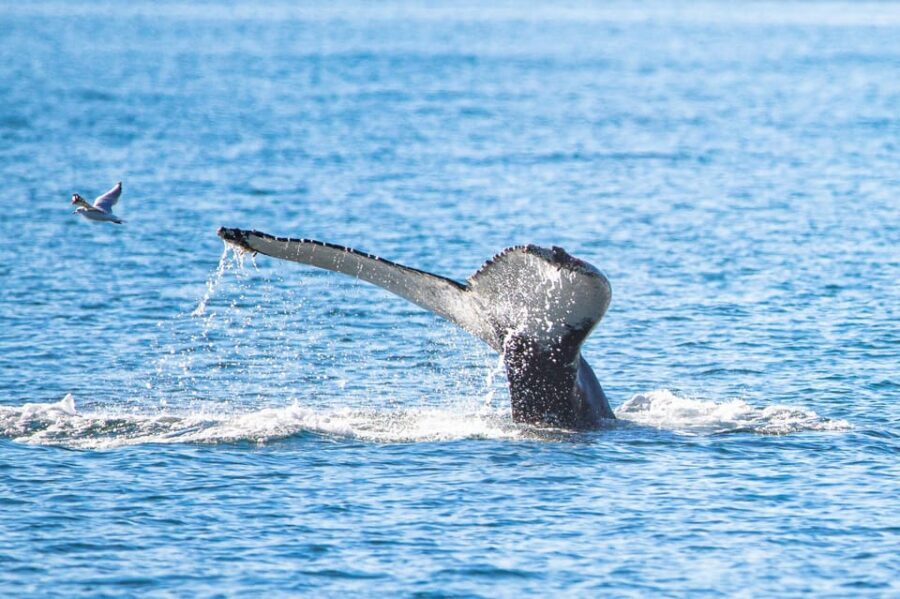
- Hauganes puts you near humpback feeding waters in Eyjafjörður Fjord, so the boat doesn’t waste a ton of time out searching
- Warm coveralls and blankets help you stay comfortable in winter and shoulder season conditions
- Whales are often close to the boat, with sightings reported on a very high share of departures
- Homemade cinnamon buns and hot chocolate/coffee are included and genuinely help during colder weather
- Respectful whale practices shape how the boat approaches and stays in the habitat zone
- Local, English live commentary keeps the time moving and adds context as you cruise
Why Hauganes Makes Whale Watching Feel Effortless
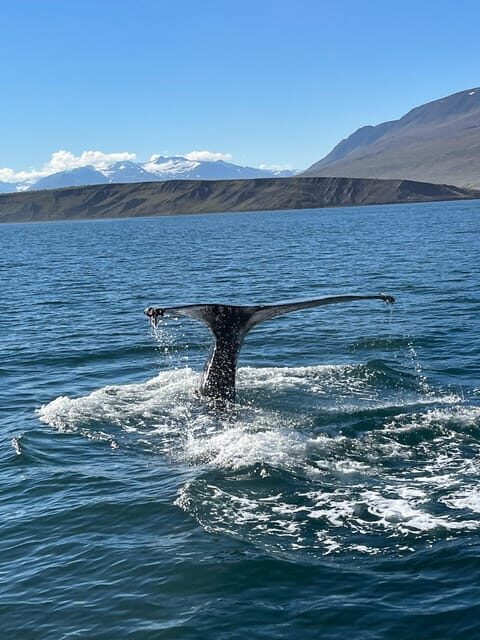
Hauganes is one of those small Icelandic bases that makes a big activity feel doable. You’re not starting from a far-flung port and then spending half your tour in transit. Instead, Hauganes sits a short distance from the main feeding grounds for humpback whales in Eyjafjörður Fjord, so your chances improve simply because you’re where the animals feed.
The harbor setting matters too. Before you even get on the boat, you get that clear “north Iceland” feeling: open water, mountain views, and a village that’s quiet enough to let you focus on the day’s goal. If you’re the kind of traveler who hates feeling rushed, this calm start is a good match.
You’ll also appreciate that the crew seems built around one thing: whale watching. This isn’t a generic sightseeing cruise that happens to include animals. It’s the core business, supported by a company that has been doing whale watching for decades in the fjord, and that experience shows in how they manage the timing and the boat’s approach.
What this means for you: if you’re short on time in North Iceland, this style of departure is a practical way to maximize actual whale time. And if you’re visiting in winter, starting from a village close to the action reduces the chance you’ll spend your best daylight hours in transport.
You can also read our reviews of more tours and experiences in Iceland.


The Boat Setup: Renovated Oak Fishing Boats and Real Warmth
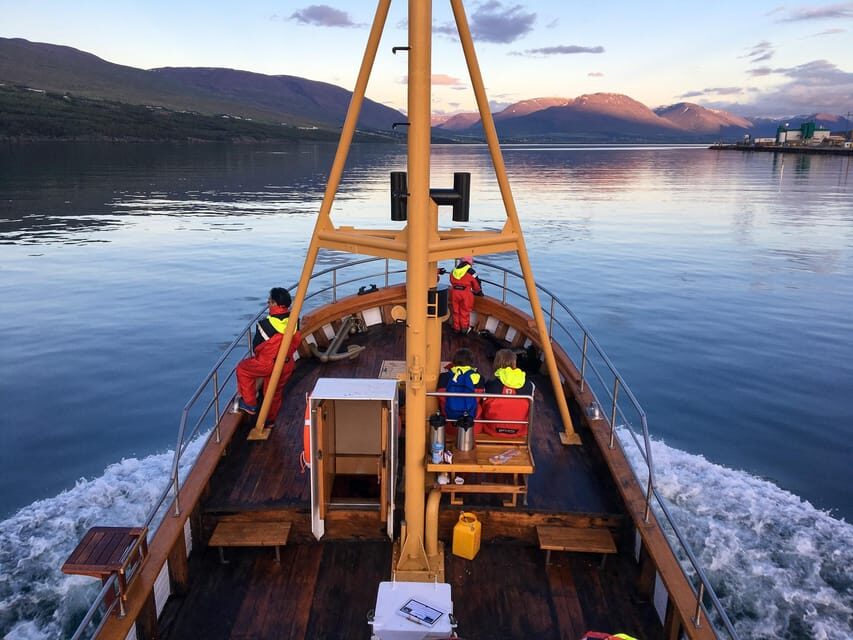
The cruise uses renovated oak fishing boats that have been optimized for whale watching, and the point of that detail isn’t just marketing. When you’re on the water in Iceland, comfort isn’t optional. It affects how long you can stay outside your seat watching calmly, instead of constantly shifting to fight cold.
You’ll get warm overalls, and there are blankets available onboard. That matters because the tour time is long enough that “I’ll be fine” can turn into “I regret this” if you’re underdressed. Overalls help keep wind off your legs and torso, and blankets give you a second layer if the air gets sharper.
Another factor that makes the boat experience feel more “controlled” is the way the crew sails. Instead of racing around, they move at a constant speed toward the whales’ habitat. That tends to reduce abrupt motion and can help you focus on watching, not bracing.
In addition, your guides make a deliberate effort to keep the experience comfortable from the start. They’re local, English-speaking, and used to working in these waters. That combination—warm gear, a fjord-focused boat, and guides who know the routine—turns whale watching from an icy gamble into a planned hunt.
What this means for you: if you’re worried about being cold or uncomfortable on a winter departure, this tour is set up to handle it better than many casual cruises. Just don’t ignore the one big warning: motion sickness can still be an issue.
Tour Flow, Step by Step: Hauganes to One Hour with the Whales
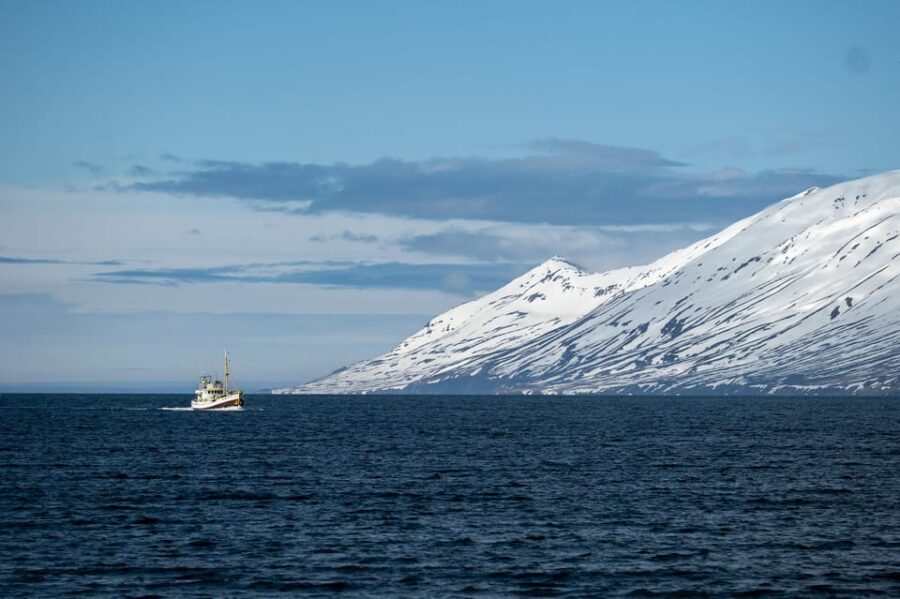
This tour runs about 2.5 hours total, with a structure that’s designed to get you into the whales zone efficiently and keep you watching once you’re there.
1) Check-in and the harbor start
You meet at Hafnargata 2 in Hauganes, at the main office by the harbor (a large white building). Plan to arrive a little early so you can get oriented, grab a spot, and get your overalls on comfortably.
2) Short sightseeing cruise (about 30 minutes)
Right away, you head out on the water. This isn’t just time to kill—it’s your first chance to scan the fjord, watch conditions, and get that rhythm of being on the sea in the north.
This stage also helps you get used to the boat movement while you’re still warm and ready. And because you’re close to the feeding waters area, you’re not drifting away from the day’s goal.





3) Welcome refreshments (about 15 minutes)
After the first leg, you get refreshments: coffee, hot chocolate, and homemade cinnamon buns. This isn’t a tiny gesture. On a cold day, warm drinks and a snack can change how the next hour feels. You’ll likely be glad you can slow down, warm your hands, and keep your energy up.
If you’re thinking about what to bring, this stop is part of the reason you don’t have to worry about heavy planning for food. The tour includes light refreshments.
4) Whale watching (about 1 hour)
Then the main event starts: whale watching with the guides working in a way that prioritizes whale comfort. They avoid loud noises and sharp movements when they’re close to the animals. The boat maintains a constant speed as they move toward the habitat, aiming not to disturb the wildlife.
In Eyjafjörður Fjord, humpback whales are a key target, and you may also see other species—tiny porpoises are specifically mentioned as coming up within a few feet of the boat on some departures. The variety is part of the appeal because it keeps the experience from being one-note.
Here’s one detail I think you’ll care about: sightings can happen quickly once you locate the whales. One winter departure included early spotting within about ten minutes, and the whales stayed near the boat for a long stretch of time. That’s the difference between a “brief sighting” and a genuinely satisfying viewing session.
There’s also a chance you’ll spot local scenery moments while you’re out. On one recent trip, the guide pointed out a waterfall connected to warm water flowing into the sea. It’s not something you should expect every time, but it’s the kind of added context that helps you feel like you’re with a guide, not just chasing sightings.
5) Head back to Hauganes
After the one-hour whale watching window, the return ride brings the tour to a close back at the meeting point at Hafnargata 2. If you want to keep your day flowing, this timing is also helpful: it’s long enough to be worth it, but not so long that it eats your entire afternoon.
Whale Spotting Odds and What Close-Up Really Means
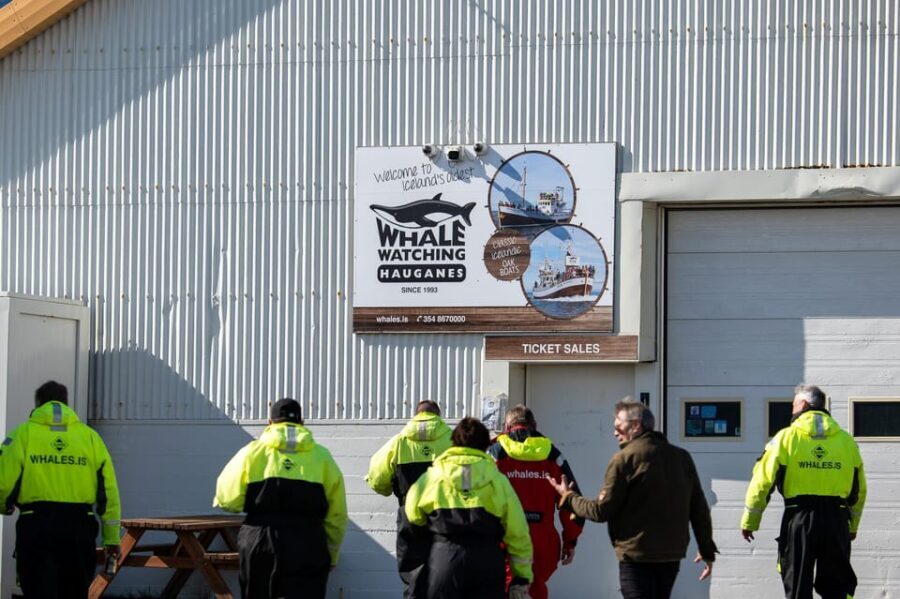
The tour highlights a strong track record: whales are spotted in 99% of departures. I treat “high success rate” as a serious value signal, not a promise. But when you’re paying for whale watching, you want evidence that the operation is active and dialed in.
What’s interesting is how that success likely comes from method, not luck. The guides are local and highly experienced, and they work to keep the boat in the habitat zone rather than running long distances. The tour also aims for a respectful approach—quiet behavior, fewer sudden moves, and controlled sailing—so the whales can keep doing whale things without being constantly disrupted.
When it works, it’s not just a distant silhouette. The way they describe whale behavior is that multiple species can surface close to the boat, including porpoises that can come up near the vessel. That’s the “close-up” experience you’d be hoping for when you choose a fjord-based operator rather than a far-out open sea trip.
There’s also an operational detail that shows up in real experiences: the crew may adjust course if whales are on the other side of the fjord. One winter booking shared that they turned to reach the other side when it mattered, and that decision made the trip come together. That’s exactly what you want in the real world—adaptation based on what’s happening out there.
What this means for you: if your goal is to actually see whales, this kind of focused search strategy is the difference between a frustrating outing and a memorable one. You’re not just paying for “the chance.” You’re paying for the work that boosts the chance.
Respectful Viewing That Doesn’t Feel Like a Lecture
Whale watching can go wrong fast if a company treats whales like a roadside attraction. Here, the experience is built around respect as an operating principle, not a vibe.
The crew makes a point of approaching at a constant speed toward the whales’ habitat. Once the whales are nearby, you’ll find they’re careful about noise and movement, keeping the interaction calm. That helps you feel good about what you’re seeing, and it also supports the viewing itself—whales that aren’t stressed can stay in the area longer.
There’s also a comfort layer to this. You’re given warm overalls and blankets, so you’re not forced to hunch against the cold for the entire session. That reduces the chance of everyone getting restless and fidgety, which can spill over into the boat atmosphere.
I like that this tour treats the whales as the boss. Your job is to watch quietly, stay seated, and let the guides handle positioning. If you go in expecting a quiet, respectful experience where the animals set the pace, you’ll likely enjoy it more.
Cinnamon Buns, Hot Chocolate, and Live Commentary: The Comfort Payoff
The included refreshments are one of those “small” features that ends up being big in practice. You’re on the water in Iceland weather, and even if the day starts mild, it can change quickly. Coffee, hot chocolate, and cinnamon buns help you keep warm without needing to pay extra or hunt for a café afterward.
It also makes the timing feel thoughtful. The refreshments happen after the initial cruise and before the whale watching window. That ordering is smart because it gets you warmed up before the most exciting hour, when you’ll probably want to stay focused on spotting instead of checking how cold you are.
Live commentary is another benefit. English narration helps you understand what you’re seeing and why the guide’s choices make sense. You don’t need deep marine biology knowledge to enjoy it, but it helps to have context while you watch spouts, breaks at the surface, and movement patterns.
And in winter, the warmth of the onboard setup is not a luxury. A winter departure can feel long and tough if you’re underdressed. With the overalls and blankets included, you’re set up to last the full viewing time.
Price and Value: Is $106 Worth It?
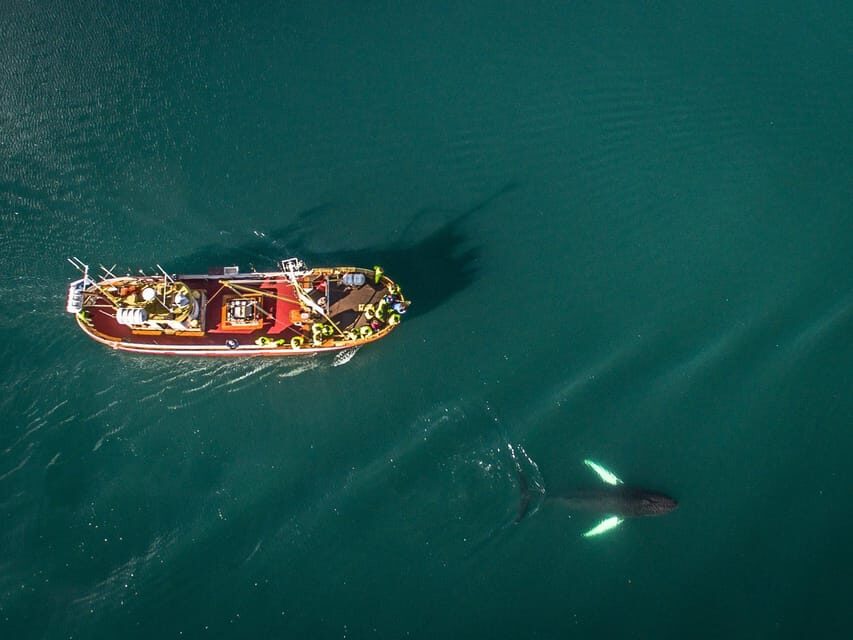
At $106 per person for about 2.5 hours, you’re paying for a specialized, time-efficient whale watching outing. Here’s what makes it feel like good value, compared with more generic cruises:
- You’re buying more whale time, not just boat time. The tour is designed to minimize long-distance sailing and maximize your time watching once whales are located.
- Warm gear is included. Overalls and blankets remove a common extra cost and stress point for cold-weather activities.
- Food and drinks are included. Hot chocolate, coffee, and homemade cinnamon buns can easily be what you’d otherwise pay for during a winter outing.
- High sighting success matters. A 99% spotting rate is a strong indicator that the operator puts effort into finding whales consistently.
What could affect whether it feels worth it for you? If you’re sensitive to motion, or you’re visiting on a day you absolutely can’t spare any uncertainty, then whale watching in general is still nature. It’s not a controlled show.
But if you’re choosing one whale watching outing in North Iceland, and you want a fjord-based operation with comfort built in, this looks priced for a reason: it’s geared to help you actually see whales.
Who This Tour Fits Best (and Who Should Skip)
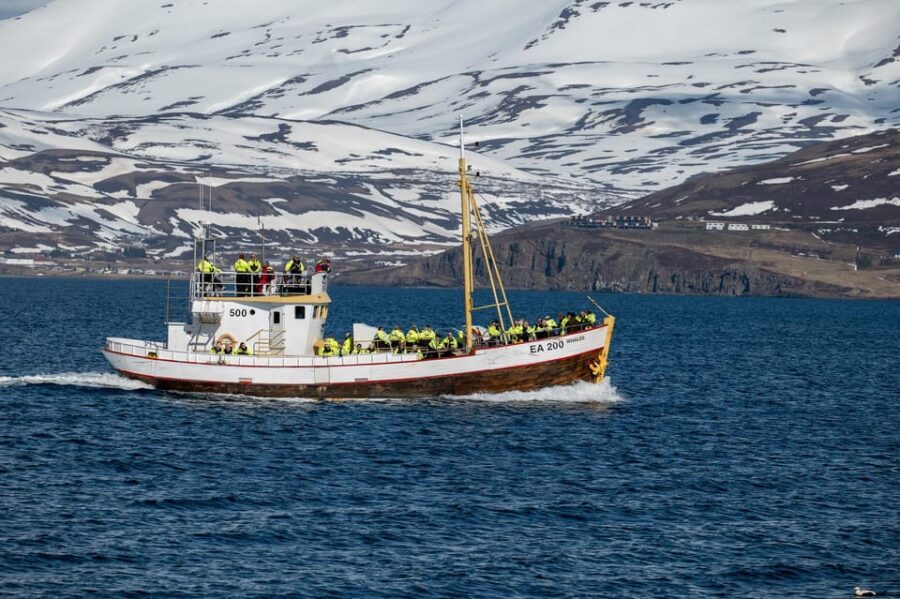
This is a good match if you:
- Want a winter-friendly whale watching experience with warm coveralls and blankets included
- Prefer a shorter, focused outing (2.5 hours) over an all-day tour
- Like the idea of seeing humpbacks in a fjord setting close to their feeding area
- Value live English commentary and onboard snacks that make the cold easier
It’s not a good match if:
- You’re prone to motion sickness. The tour itself doesn’t claim special anti-sickness measures beyond warm clothing.
One more “fit” note: if you’re the type who gets impatient with vague sightseeing, you’ll likely appreciate how targeted this cruise is. It’s built around reaching the whales’ habitat quickly and staying respectful once you’re there.
Should You Book Hauganes Whale Watching North Iceland?
If your goal is a practical, comfortable shot at real whale viewing in North Iceland, I’d book this. The reasons are straightforward: you start close to the feeding grounds, you get the gear to stay comfortable, and the operation reports a very high rate of whale sightings. The included cinnamon buns and hot drinks are the kind of detail that makes you relax instead of just endure the cold.
My only reason to hesitate is simple: motion sickness. If you know you react badly to boat movement, choose another activity or ask about alternatives before you commit.
Otherwise, this is exactly the kind of tour I like: a focused local operation where the schedule supports the outcome, not the other way around.
FAQ
How long is the Hauganes whale watching tour?
The tour lasts about 2.5 hours total, including time for a short sightseeing cruise, welcome refreshments, and about 1 hour of whale watching.
Where do I meet for the tour?
Meet at Hafnargata 2, 621 Hauganes, Iceland, at the main office building by the harbor.
What’s included in the ticket price?
The tour includes the whale-watching cruise, a guide with live commentary in English, light refreshments (coffee, hot chocolate, homemade cinnamon buns), and warm coveralls. No hotel pickup or drop-off is included.
Do I need to book ahead?
You should reserve a spot since durations depend on availability and there are starting times you need to check. The option to reserve now and pay later is offered.
Is the tour suitable in winter?
The tour runs in colder months too, and warm coveralls plus blankets are provided to help you stay comfortable in winter conditions.
Is this tour okay if I get motion sickness?
It is not suitable for people with motion sickness.