Reykjanes moves your feet and your mind. This private 4 to 5 hour tour from Keflavik Airport strings together five Reykjanes Peninsula stops that explain Iceland in plain language: plate tectonics, geothermal power, and the strange beauty of lava country. I especially like that you get airport pickup plus drop-off—ideal when your time is tight—and that the stops are short enough to keep momentum without feeling rushed.
Two other big wins: I like the way the day has built-in variety (bridge, lighthouse, hot springs, geothermal boardwalks, then a deep lake), and I like that you’re working with a real guide who can shape the day to your group and conditions. One possible drawback: at this latitude and near the coast, weather can turn fast, so you’ll want a rain layer and flexible expectations for sight lines.
In This Review
- Key points worth knowing before you go
- Reykjanes Peninsula: the quick lesson in how Iceland works
- Private pickup from Keflavik: a stress-free way to start
- Stop 1: Bridge Between Continents at Sandvík
- Stop 2: Reykjanes Lighthouse on Valahnúkur and Bæjarfell hill
- Stop 3: Gunnuhver Hot Springs and the boiling mud world
- Stop 4: Krysuvik and Seltún geothermal features via boardwalk
- Stop 5: Kleifarvatn Lake, deep water, and the monster tale
- Guides matter: pacing, answers, and handling weather
- What you’re really paying for: private value in Iceland timing
- Who this tour suits best
- Should you book the Private Reykjanes Peninsula Tour?
- FAQ
- How long is the Reykjanes Peninsula private tour?
- How many people can join this private tour?
- Where is the pickup location?
- What languages is the tour offered in?
- What stops are included?
- Are admission tickets included for the stops?
- What is included in the price?
- Is food included?
- What’s the cancellation policy?
- What should I bring for the tour?
Key points worth knowing before you go
- Private airport pickup with a name-sign meet and greet, then drop-off back to your hotel or to Keflavik
- Five focused stops in about 4 to 5 hours, making it a strong option for early arrivals or layovers
- Geology you can feel: the Mid-Atlantic Ridge setting shows up in bridges, fissures, steaming ground, and colored minerals
- Free admissions at the listed stops (Bridge Between Continents, Lighthouse, Gunnuhver, and Krysuvik/Kleifarvatn)
- Guides who pace well and adjust when weather blocks the plan (I’ve seen this handled well for families and mixed ages)
Reykjanes Peninsula: the quick lesson in how Iceland works
Most first-timers land in Iceland and think about glaciers and waterfalls. Reykjanes does something different. It’s right on the Mid-Atlantic Ridge, where the Eurasian and North American plates slowly pull apart. That means the ground here is shaped by rifts, fissures, and geothermal activity. You get the same Iceland drama, but in a tighter loop and with less “big crowd” energy.
This is the kind of place where the details matter. A footbridge isn’t just a photo stop—it’s a physical reminder that continents are moving. Steam isn’t just atmospheric—it’s tied to the way geothermal systems respond to pressure changes. Even the lake story has a reason you’ll want to remember once you’re standing there.
You can also read our reviews of more private tours in Reykjanes



Private pickup from Keflavik: a stress-free way to start
If your trip begins or ends at Keflavik Airport, this tour is built for you. You get a meet-and-greet airport pickup after you land, and you should look for a sign with your name. They ask you for your flight number so they can track arrival time—small detail, big relief when your flight is delayed.
The other practical piece: drop-off is flexible. You can go back to the airport or be dropped at your accommodation. That flexibility is what makes this tour feel efficient rather than hectic, especially if you’re doing a layover and don’t want to gamble on buses and timing.
One more thing I’d plan around: bring a rain coat. The route is outdoors-heavy, and the Reykjanes coast can be windy even when Reykjavik looks calm.
Stop 1: Bridge Between Continents at Sandvík
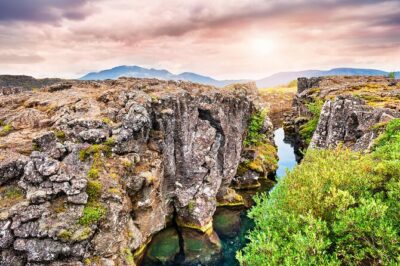
Your first real “whoa” moment is the Bridge Between Continents at Sandvík. It’s a small footbridge spanning a major fissure—meaning you’re literally walking across a boundary connected to how the plates are diverging. The bridge was built as a symbol of the connection between Europe and North America, and it’s the kind of site that makes the tectonic concept feel real fast.
If you want to add a personal souvenir, there’s also mention of crossing the continental divide on Leif the Lucky’s Bridge and picking up a personalized certificate at the Reykjanes information center and Reykjanes Geopark visitor center at Duus Cultural house. That’s not just for science fans. It’s a neat way to turn a short stop into a memory you can share.
Time on this stop is about 20 minutes, and that’s about right. You’ll spend the first minute locating the fissure views, the next few minutes walking and photographing, and then you’ll be ready to move on before the wind steals your patience.
Stop 2: Reykjanes Lighthouse on Valahnúkur and Bæjarfell hill
The lighthouse stop is more than a classic coastal photo. It has a history shaped by earthquakes and the ocean. The first lighthouse in Iceland was built on Valahnúkur in 1878, but by 1905 earthquakes and surf damage made it unstable enough that it risked falling into the sea.
So they built a new lighthouse on Bæjarfell hill in 1907–1908, and the old one was demolished with an explosion on April 16, 1908. That kind of timeline gives you a clearer picture of how dangerous this coastline can be—and why navigation mattered so much.
Here’s a technical detail I like because it helps you read the structure: the light signal is 69 meters above sea level, while the lighthouse itself is 26 meters. There’s also a radio beacon with a correction signal, plus carved rock and concrete designed by architect Frederik Kjørboe and engineer Thorvald Krabbe.
Admission at this stop is free, and the visit is set for about 20 minutes. You’ll likely spend that time on viewpoints and learning how a “simple” lighthouse becomes a story about engineering and survival.
Stop 3: Gunnuhver Hot Springs and the boiling mud world
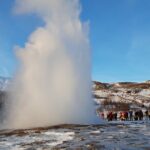
Next up is Gunnuhver Hot Springs, close to the lighthouse area. The name Gunnuhver comes from a female ghost, and the ground here lives up to the eerie reputation. The key visual is the mud pools forming where steam from boiling geothermal water rises, condenses, and mixes with surface water.
Chemistry shows up in the experience. Gases such as carbon dioxide and hydrogen sulfide make the water acidic, and the acid helps alter fresh lava rock into clay. Then you see the outcome: boiling ground, steaming rims, and that pale, mineral-streaked look that’s hard to get anywhere else.
One detail that adds meaning: steaming at Reykjanes increased markedly after 2006 due to a pressure drawdown in the geothermal reservoir when production started. And the Gunnuhver group is the site for Iceland’s largest mud pool at present—prominent and boiling, with a rim about 20 meters wide.
This stop is also about 20 minutes with free admission. It’s a short walk-and-look stop, but it tends to be one of the most memorable. If you’re sensitive to strong smells, you’ll want to plan your photos quickly and keep moving along the safe viewing areas your guide points out.





Stop 4: Krysuvik and Seltún geothermal features via boardwalk
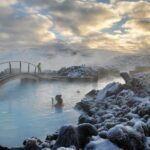
Krysuvik is a high-temperature geothermal area, and it’s set up for you to see multiple features without turning it into a hike. You’ll find a boardwalk that leads through the zone, plus nearby parking and walking paths.
Seltún is part of Krysuvik’s geothermal system and is known for mudpots and fumaroles, with colorful mineral deposits that show up as sediments from geothermal solutions. That color is what makes this stop feel different from Gunnuhver. Gunnuhver is more about boiling mud energy; Krysuvik gives you a wider mix of geothermal textures.
The included time is about 30 minutes, and admission at this stop is free. If conditions are okay, this is where you’ll enjoy taking your time—because there’s a real variety of sights within a manageable walk.
Stop 5: Kleifarvatn Lake, deep water, and the monster tale
Your last stop is Kleifarvatn Lake, between Sveifluháls and Vatnshlíð. It’s the largest lake on the Reykjanes Peninsula (about 10 km²) and one of the deepest lakes in southern Iceland (around 97 meters deep). Because its catchment area is small and surface discharge is limited, you’ll get a different feel than you would at larger “moving” lakes.
There’s also a modern change story. Since around 2000, the lake has diminished, likely because earthquakes opened up fissures at the bottom. In the 1960s, char fries from Lake Hlidarvatn were released and have thrived, so the lake isn’t just geology—it’s part ecology, part environment.
Temperature also matters here. Hot water from some hot springs runs into the lake in the southern part, but elsewhere it’s very cold. And if you enjoy local folklore, there’s a story about a worm-like monster the size of a medium-sized whale living in the lake. It’s the kind of tale that makes sense only after you’ve seen how unusual the volcanic surroundings look in real life.
Time on this stop is about 15 minutes with free admission. It’s short, but it works as a landing point: once you’ve walked from bridge to boiling earth to geothermal boards, the stillness of the lake feels like a reset.
Guides matter: pacing, answers, and handling weather
This tour shines when the guide is on their game—and the feedback for this experience is consistently about exactly that. I’ve seen this handled by guides like Mr. S and Agnes, and the pattern is clear: they don’t just list facts, they keep the day moving at the right speed.
One review highlight that matters to you: if you have a mixed group—elders, kids, or anyone who needs gentle pacing—this private setup can be tailored. A guide can choose shorter walks, adjust timing, and steer the day toward the parts that will land best for your group.
Weather is the other big factor. Reykjanes can block views with rain and low clouds, and that’s when guidance becomes useful. There’s at least one example of a guide working solutions when weather didn’t cooperate, and some groups even managed to add a volcano hike when conditions allowed. I wouldn’t assume extra hiking is guaranteed, but you can absolutely ask your guide what’s possible once you arrive and see the sky.
What you’re really paying for: private value in Iceland timing
The price is $1,275 per group up to 7 for about 4 to 5 hours. That’s not a budget number, but in Iceland, private tours can be cost-effective compared to renting a car plus dealing with parking, timing, and the stress of self-driving on unfamiliar roads.
Here’s the simple way to think about value:
- With 7 people, it can work out to roughly $182 per person.
- With 4 people, it’s about $319 per person.
- With 2 people, it becomes about $638 per person.
Your best “value match” is when you have enough people to spread the group cost, and you need the airport convenience. If you’re doing a layover or early arrival, the pickup and return drop-off can save you the headaches of transportation planning. If you’re tired after a flight, the private door-to-door feel is often worth more than the math.
Also remember: multiple stops on the itinerary have free admissions, so you’re mostly paying for transportation and expert guidance, not entrance fees.
Who this tour suits best
This is a strong fit if:
- You have a layover or early arrival and want a high-impact taste of Iceland without committing to a full day
- You want a private day that can handle different ages and energy levels
- You’re more interested in geology and geothermal Iceland than only classic waterfalls and city sights
- You’d rather have someone else manage timing, pickup, and stop order
It may feel less ideal if:
- You want long hiking time. This day is designed for short, high-value stops
- You’re chasing only indoor attractions or warm, sheltered experiences. Most of the magic here is outdoors
Should you book the Private Reykjanes Peninsula Tour?
Yes, if your priority is a smart, organized way to hit Reykjanes quickly—especially if you land at or depart from Keflavik and don’t want transportation stress.
I’d book it when your group includes people who would benefit from a real guide and good pacing. The combination of airport pickup, tectonic and geothermal learning, and free stop access makes it a practical choice rather than a sightseeing gamble.
If you’re the type who hates changing plans due to weather, still book it—but pack the right gear and expect that the guide will steer you toward what’s visible and safe that day.
FAQ
How long is the Reykjanes Peninsula private tour?
It’s listed as about 4 to 5 hours.
How many people can join this private tour?
It’s priced per group for up to 7 people.
Where is the pickup location?
Pickup is from Keflavik International Airport (Keflavikurflugvollur).
What languages is the tour offered in?
The tour is offered in English.
What stops are included?
The tour includes Bridge Between Continents, Reykjanes Lighthouse, Gunnuhver Hot Springs, Krysuvik, and Kleifarvatn Lake.
Are admission tickets included for the stops?
For the listed stops, admission tickets are marked free.
What is included in the price?
Included features are meet and greet airport pickup, sightseeing and guidance, and drop-off to your hotel or back to the airport.
Is food included?
No. Food and drinks are not included, unless specified.
What’s the cancellation policy?
You can cancel for a full refund up to 24 hours before the experience start time.
What should I bring for the tour?
Bring a rain coat in case of rain.