REVIEW · REYKJAVIK
Snæfellsnes in Spanish with lunch on a farm Minibus
Book on Viator →Operated by EastWest · Bookable on Viator
One day, eight kinds of wild. This Snæfellsnes tour from Reykjavík packs glacier-volcano views, seal beaches, black-church history in lava, and cliff hikes into a single 12-hour loop. What makes it fun is the mix of big-picture geology plus small, human details, from the stories around Snæfellsjökull to the way stops are timed to weather and light.
I especially like the farm lunch at Lýsuhóll, because it’s not just food—it’s also the chance to see and meet Icelandic horses in the stables. I also like how the guide turns the drive into something lively, with strong English and even humor or a bit of Icelandic thrown in by guides like Monica, Óscar, Leroy, Martín, and Carlos (names I saw repeatedly in feedback). One watch-out: this is a long day, and if you’re in a tighter minibus, the ride can feel cramped for some adults, plus cloudy weather can limit what you can really see.
In This Review
- Highlights at a Glance (So You Know What You’re Getting)
- From Reykjavík Into Snæfellsnes: How the Day Flows
- Snæfellsjökull Glacier-Volcano: Jules Verne Meets Real Geology
- Ytri Tunga Beach for Seals: A Short Stop with Big Payoff
- Lýsuhóll Farm Lunch and Icelandic Horses: The Most Human Moment
- Buðir Black Church (and Tar-Coated Wood) in a Lava Field
- Arnarstapi–Hellnar Coastal Hike: Basalt Shapes and Seabirds
- Djúpalónssandur Black Sand: Shipwreck Stones and Wage-Counting History
- Kirkjufell Mountain and the Orca/Seal Shore-Watching Stretch
- Selvallafoss Sheep Waterfall: The End-of-Day Views You’ll Remember
- Price and Value: Does $220.91 Make Sense for This Day?
- Who This Tour Suits Best (and Who Might Prefer Something Else)
- Should You Book This Snæfellsnes Day Trip?
- FAQ
- What language is this Snæfellsnes tour offered in?
- How long is the tour?
- What is the group size?
- Is pickup offered in Reykjavík?
- What transportation is used?
- Is WiFi available during the ride?
- What’s included for lunch?
- Which stops are part of the day?
- Does the tour require good weather?
- Is there a mobile ticket?
- Is there free admission at the stops?
Highlights at a Glance (So You Know What You’re Getting)
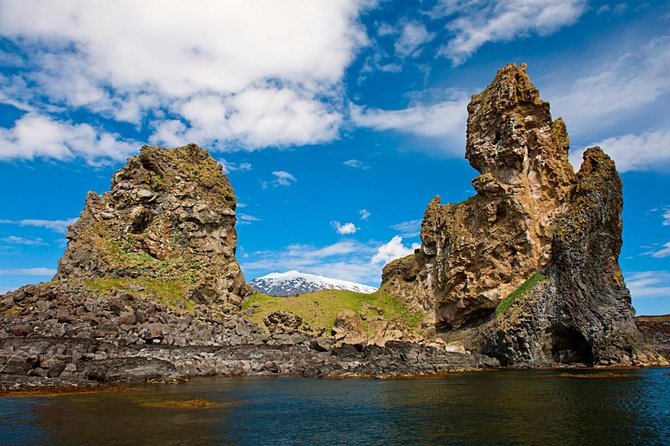
- Snæfellsjökull on an active volcano: Jules Verne vibes and that dramatic glacier-capped cone
- Ytri Tunga seals: a short stop where you can often spot a colony, especially in summer
- Lýsuhóll farm lunch + Icelandic horses: a real farm stop, not a quick photo pull-in
- Buðir black church in Búðahraun lava: tar-painted wood and a natural harbor setting
- Arnarstapi–Hellnar coast hike: basalt columns, arches, grottoes, and seabird spotting
- Kirkjufell and the orca/seal coast: frequent shore-watching areas with serious photo payoff
From Reykjavík Into Snæfellsnes: How the Day Flows
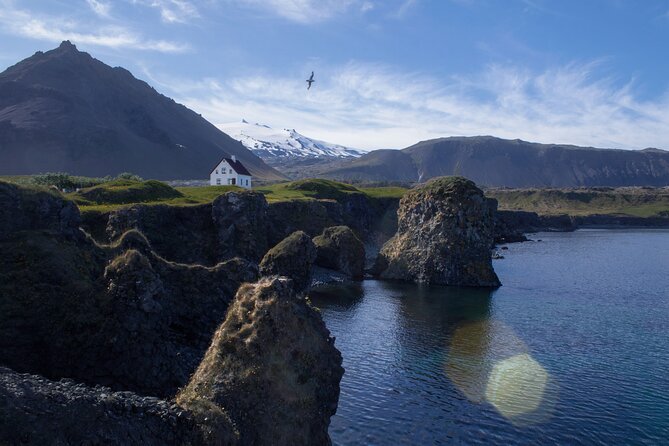
You start with pickup in Reykjavík, then head northwesterly toward the Snæfellsnes Peninsula, often called Miniature Iceland because it crams a lot of Iceland into a smaller area. The drive alone sets expectations: you’ll pass lunar-looking stretches, waterfalls, lakes, rivers, rocky coasts, and small fishing villages—enough variety that the day never feels like you’re “just traveling.”
You’re riding in a minibus with a max of 19 passengers, which matters. Small-group tours usually mean fewer people fighting for a window seat, fewer “too crowded to move” moments at stops, and more flexibility when conditions change. I also like the practical side: the cars have WiFi, so you can keep up with messages or navigation while your guide handles the route.
You can also read our reviews of more tours and experiences in Reykjavik.

Snæfellsjökull Glacier-Volcano: Jules Verne Meets Real Geology
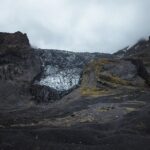
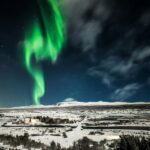
Early on, you aim for Snæfellsjökull, a glacier that sits atop an active stratovolcano. On clear days, the summit can be visible even from Reykjavík Bay, which is a fun idea to hold in your head as you leave the city. The place is famous for its connection to Jules Verne’s Journey to the Center of the Earth, but the real draw is how unreal the mountain looks against the sky.
You’ll also hear the local lore around energy centers and mystical powers. Even if you treat it as folklore, it works as a storytelling frame: the guide uses it to make the geology feel personal, not like a lecture. Practical note: if the weather turns socked-in, your views may be limited, so bundle patience into this stop and focus on what you can see—light, fog patterns, and texture in the snow and rock.
Ytri Tunga Beach for Seals: A Short Stop with Big Payoff
Next up is Ytri Tunga Beach, one of the best quick “wildlife with zero hiking” moments on the route. This is a seal colony area for much of the year, and it’s especially active in summer. The tour keeps it simple: about 30 minutes here, and admission is free.
What I like about Ytri Tunga is how it balances effort and reward. You’re not committing your whole day to wildlife luck. You can take photos, watch for movement at the shoreline, and still keep momentum for the rest of the peninsula. If it’s windy, dress for it—coastal weather can change fast even when the plan is straightforward.
Lýsuhóll Farm Lunch and Icelandic Horses: The Most Human Moment
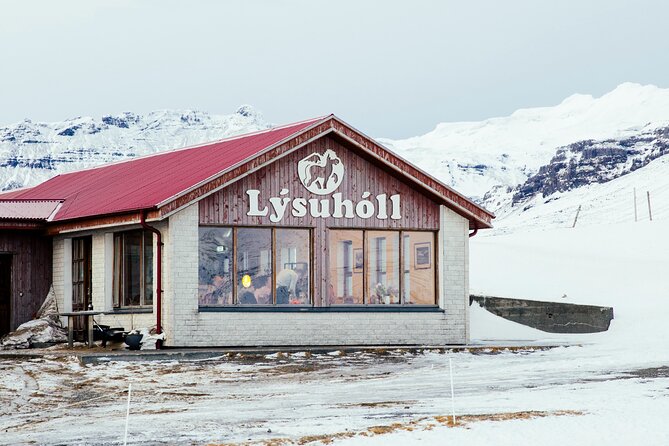
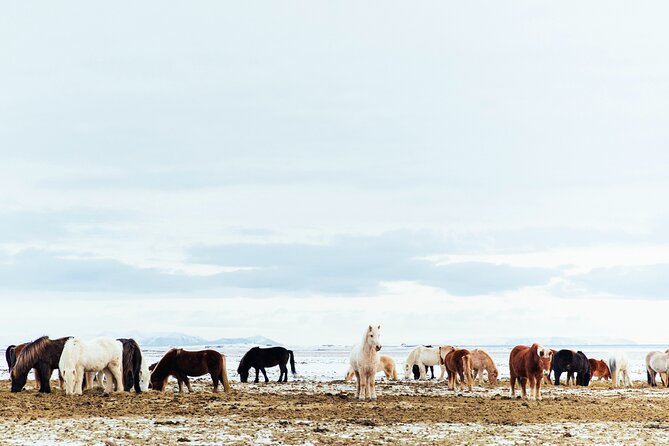
This is the stop that often makes people talk after the tour. At Lýsuhóll farm, you taste a homemade meal and visit the stables to meet Icelandic horses. It’s one of those rare tour components that feels like it has a purpose beyond ticking off landmarks.
Why this works for me: you get a break from constant sightseeing pressure. Instead of being “on” for photos every minute, you slow down for food and animal time. You’ll also see a different side of the peninsula—more working landscape, barns, and horses—so the day feels grounded rather than only dramatic.
Buðir Black Church (and Tar-Coated Wood) in a Lava Field
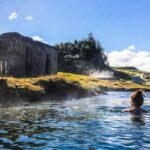
Then you head to Buðir, home of a curious black church painted with tar to protect the wooden structure from Iceland’s harsh weather. It sits inside the Búðahraun lava field, and the area’s natural harbor made it important commercially during Danish monopoly times in the 17th and 18th centuries.
This stop is only about 30 minutes, so don’t expect a long museum experience. Instead, it’s ideal for people who like atmosphere and clues—standing in a lava field, looking at the church, and imagining how sheltered waters once shaped daily life. If you’re visiting in bad weather, you’ll still get the “why it looks like this” story, which helps the stop feel meaningful even when the sky isn’t perfect.

Arnarstapi–Hellnar Coastal Hike: Basalt Shapes and Seabirds
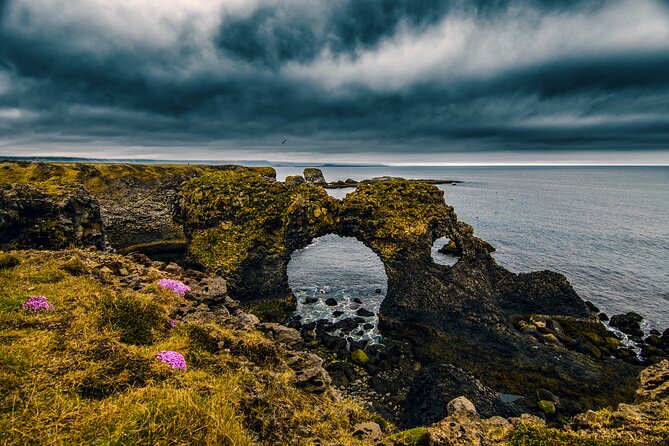
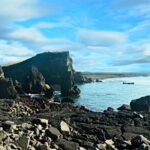
One of the best parts of the day is the Arnarstapi–Hellnar hike. The coast here is filled with rock formations—basalt columns, arches, grottoes, and canyons—and the sea air usually brings seabirds into the mix. The route also ends at a statue of Bardur, a half troll and half man figure from the sagas who chose the place to found his home.
You get about 30 minutes for this walk. It’s not a long trek, but it’s enough to stretch your legs and really see how the coast was built. The best times to spot birds can be when wind eases just a bit, so keep your eyes scanning the cliffs and waterline rather than staring down the path. If you’re prone to slipping on wet rock, wear shoes with good grip—coastal Iceland can be slick.
Djúpalónssandur Black Sand: Shipwreck Stones and Wage-Counting History
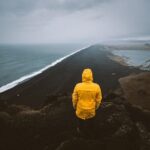
Djúpalónssandur is a black sand beach where the star attractions are weird—in a good way. You’ll see remains of a shipwreck from 1948, plus four smooth stones at the beach entrance. Those stones were used to measure how strong sailors were, with wages determined by strength categories.
Again, your time here is short (around 30 minutes), but this is the kind of stop that sticks because it’s specific. It’s not just a pretty shoreline; it’s a place with a story you can point to. If the wind is strong, you may want to keep your photos quick and stay warm. This stop is about observation, not marathon strolling.
Kirkjufell Mountain and the Orca/Seal Shore-Watching Stretch
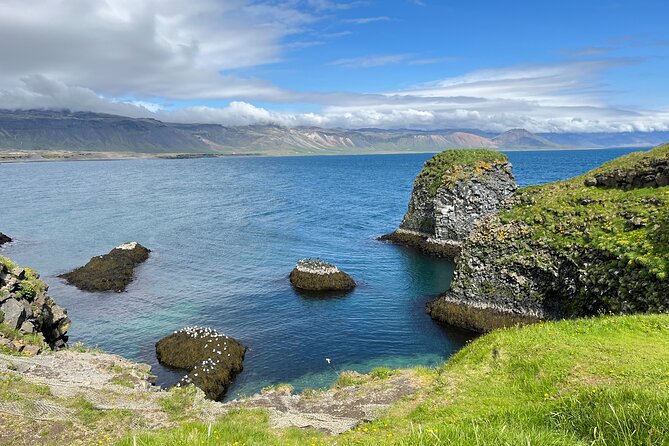
Kirkjufell is one of Iceland’s most photographed mountains, and it’s easy to see why. It’s surrounded by streams and waterfalls, and it’s been used visually as Arrowhead in Game of Thrones—so even if you’re not a fan, the mountain design will feel instantly familiar.
From here, you pass fishing villages Grunðarfjörður and Ólafsvík, known for orca and seal sightings from shore. This is one of the better sections of Iceland for shore spotting, but keep expectations realistic: you’re watching for animals in open water, so you might get a show or you might get only distant movement. Either way, the coastline views are strong, and the guide’s pacing helps you arrive at good sightlines.
Selvallafoss Sheep Waterfall: The End-of-Day Views You’ll Remember
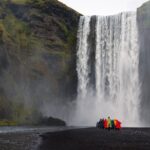
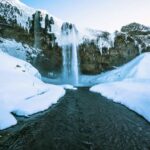
To finish, you visit Selvallafoss, also called Sheep Waterfall, partly because it’s often chosen by sheep for shelter. From there you get views of Selvallavatn lake and the huge lava field across the water. This last stop is where the day shifts from “do lots of things” into “stand, look, and absorb.”
It’s only about 30 minutes (plus travel time to wrap up), but it’s a good closing beat. When Iceland is gray or windy, a final scenic viewpoint still works because you can focus on the shapes—lava edges, water color, and the way fog sits over distance.
Price and Value: Does $220.91 Make Sense for This Day?
At $220.91 per person, you’re paying for a full 12-hour day built around multiple paid-value stops: guided narration, pickup, minibus transport with WiFi, and lunch at the farm. The value question here is simple: are you the kind of traveler who wants lots of varied sights in one go?
If your goal is to maximize a single day outside Reykjavík, this price can be fair. You’re not buying just one “main attraction.” You get glacier-volcano setting, wildlife beach time, a farm lunch, a black-church stop in lava, a coastal hike, and multiple iconic photo points. Also, this is a tour that you typically book well ahead—on average, about 60 days—so it’s clearly in demand.
If you prefer slow travel with fewer stops, you might feel rushed in short 30-minute blocks. In that case, Snæfellsnes can also work better as a self-drive day, but you’d lose the guide storytelling and farm-lunch structure.
Who This Tour Suits Best (and Who Might Prefer Something Else)
This tour fits best if you want a guided sampler of Snæfellsnes with real variety and a tight group size. It’s also a great first day outside Reykjavík, because it helps you understand Iceland’s building blocks—volcanoes, lava, coastlines, and climate—without having to plan dozens of decisions.
You’ll probably love it if:
- You like coastal scenery and short, manageable walks
- You want farm time and Icelandic horses without organizing it yourself
- You enjoy guides who keep the ride lively (and adjust for weather and timing, like guides noted in feedback)
You might hesitate if:
- You hate long days in the car (12 hours is a commitment)
- You’re tall or easily uncomfortable in smaller vehicles (one review flagged tight space)
- Your top priority is a single big hike or long wildlife observation session
Should You Book This Snæfellsnes Day Trip?
If you want to see a lot of Snæfellsnes in one organized day, I’d book it. The route makes sense, the stops are varied, and the farm lunch with horses gives the day a human pace that many “big scenery” tours lack.
Book early if your dates are fixed, because these days do sell out (average booking lead time is about 60 days). And go in with the right mindset: Iceland weather can be unpredictable, but you’ll still get a strong day of geology, coastal textures, and memorable viewpoints—even when clouds roll in.
FAQ
What language is this Snæfellsnes tour offered in?
The tour is described as Snæfellsnes in Spanish, so you can expect Spanish for this version.
How long is the tour?
The duration is listed as approximately 12 hours.
What is the group size?
The tour has a maximum of 19 travelers.
Is pickup offered in Reykjavík?
Yes, pickup is offered.
What transportation is used?
You’ll ride in a minibus.
Is WiFi available during the ride?
Yes, the cars include WiFi.
What’s included for lunch?
Lunch is included as a homemade meal at the Lýsuhóll farm, where you also visit the stables to meet Icelandic horses.
Which stops are part of the day?
The tour includes stops such as Ytri Tunga Beach (seals), Lýsuhóll farm (lunch and horses), Buðir black church, an Arnarstapi–Hellnar coastal walk, Djúpalónssandur black sand beach, Kirkjufell, and Selvallafoss.
Does the tour require good weather?
Yes. The experience requires good weather, and if it’s canceled due to weather, you’ll be offered a different date or a full refund.
Is there a mobile ticket?
Yes, the tour offers a mobile ticket.
Is there free admission at the stops?
The stop details state admission tickets are free for the listed stops.