REVIEW · SELFOSS
Volcano Exhibition and Cinema – Lava Centre Iceland
Book on GetYourGuide →Operated by LAVA Centre - Volcano Exhibition · Bookable on GetYourGuide
Volcano education can be seriously fun. At LAVA Centre, you walk through an interactive volcano exhibition and connect it to what you see outside. You also get a hands-on Trembling Earth experience that makes the science feel immediate.
I especially like that the explanations move at a calm pace and the exhibits are designed to keep you curious as you go from station to station. One trade-off: food and drinks aren’t included, so you’ll want to plan a snack or meal around your visit.
In This Review
- Key highlights to look for at Lava Centre
- What Lava Centre is really like (and why it works)
- Entering the Volcano Exhibition with Eyjafjallajökull, Katla, and Hekla in view
- Fiery Heart of Iceland: magma up-flow and the hot-spot idea
- Magma Learning Center: structures you can actually recognize
- Tephra: why it forms and why it matters
- Trembling Earth: live earthquakes and the simulator hit different
- Cinema and the latest eruptions: Grindavík and Blue Lagoon
- Observation deck panoramas: active but dormant volcanoes and volcanic islands
- How long does it take, and how should you pace it?
- Price and value: is $42 worth it?
- Who this is best for (and who might want something else)
- Practical tips for a smoother visit
- Should you book Lava Centre volcano exhibition and cinema?
- FAQ
- How long is the Lava Centre Volcano Exhibition and Cinema visit?
- What is included in the ticket price?
- Is the Volcano Exhibition and Cinema wheelchair accessible?
- What languages are available?
- Can I see or experience earthquakes during the visit?
- Is food and drink included?
- Is there free cancellation?
Key highlights to look for at Lava Centre
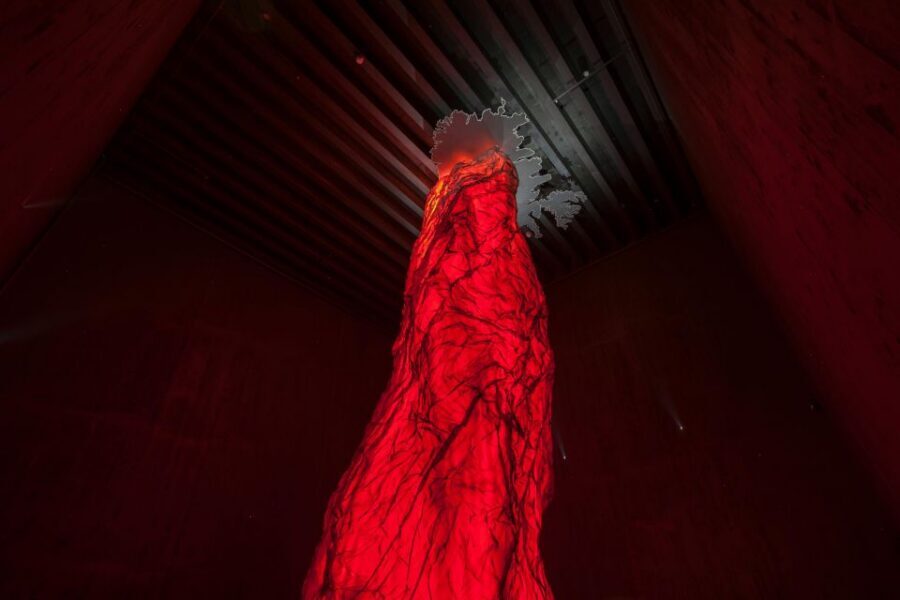
- Hands-on exhibition stations that turn volcano terms into something you can picture
- Live earthquakes on a map plus a dramatic earthquake simulator
- Fiery Heart of Iceland visuals that explain magma up-flow and a hot-spot link
- Magma Learning Center sections on volcanic structures and how tephra spreads
- Cinema and observation views tied to the latest eruptions, including Grindavík and Blue Lagoon
- Family-friendly extras like ear muffs, flashlights, and support teddy bears, plus wheelchair access
What Lava Centre is really like (and why it works)
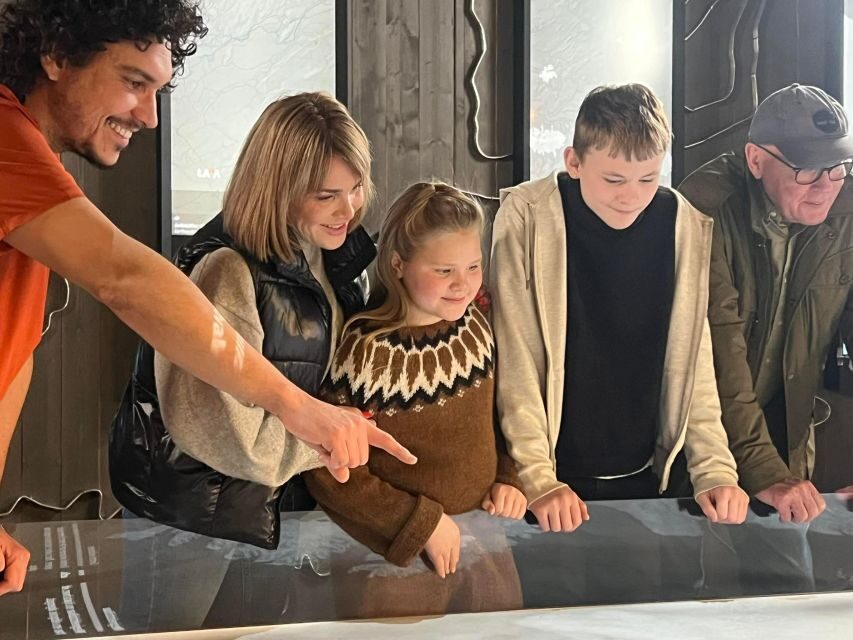
The Lava Centre experience is built for one big goal: helping you understand Iceland’s volcanoes without turning the day into a lecture. You get indoor learning that’s interactive, then you step out to connect it to real volcanoes you can point to in the south of Iceland.
For a lot of people, the best part is how quickly the museum makes the subject feel real. You’re not just reading labels. You’re watching video, using displays, and getting a sense of how magma and tephra move through the crust.
You can also read our reviews of more tours and experiences in Selfoss.
Entering the Volcano Exhibition with Eyjafjallajökull, Katla, and Hekla in view
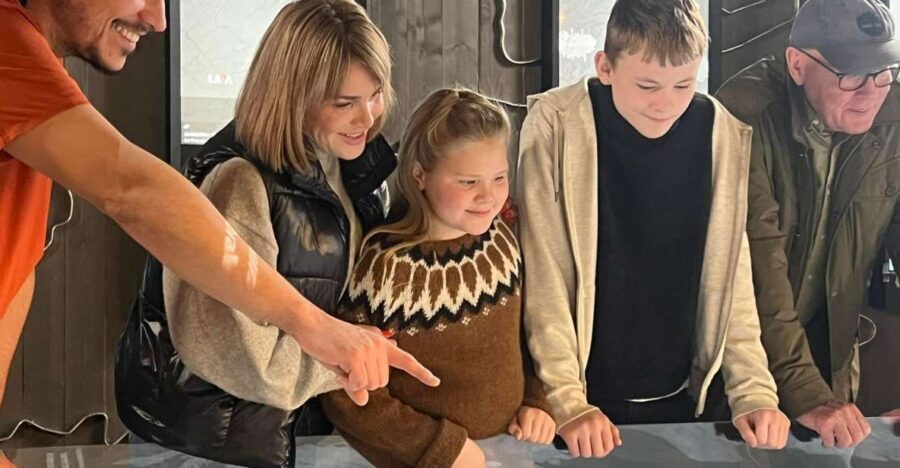
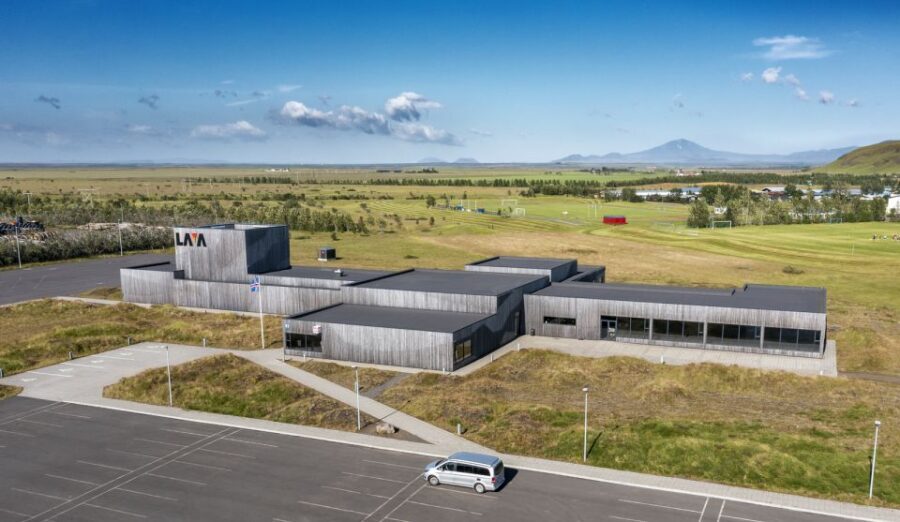
From the center, you’re in the southern region of Iceland with views tied to some of the country’s biggest names: Eyjafjallajökull, Katla, and Hekla. That matters more than you might think. When you’re learning about volcanic systems, having the nearby landmarks in the background helps you understand scale.
The exhibition is designed as a guided journey through the geological forces that shaped Iceland. You’ll work through displays and videos that connect Iceland’s volcanic activity to tectonic plate movement and magma behavior beneath the surface.
If you like learning that feels organized, this is one of those places where the layout does the work for you. You can start at one station, then naturally move to the next without losing the thread.
Fiery Heart of Iceland: magma up-flow and the hot-spot idea
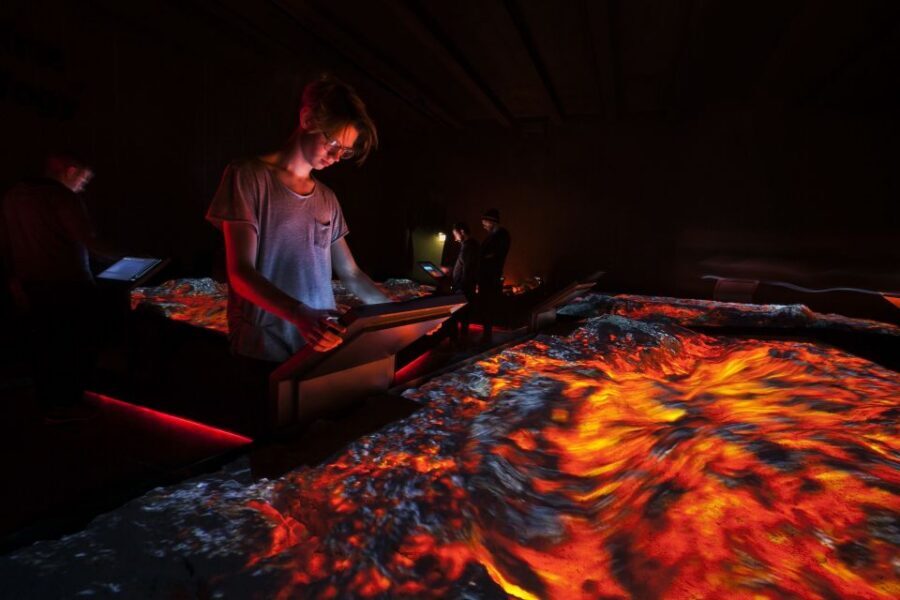
One of the core stops is the Fiery Heart of Iceland display. This is where the center explains how magma’s normal up-flow works at diverging plate boundaries. In plain terms: Iceland isn’t just a random string of volcanoes. It’s a place where the crust is actively stretching, which gives magma a path upward.
The display also connects that idea to a mantle plume, often described as a hot spot, beneath Iceland and pinpointed in the central highlands. Even if you’ve heard the general story before, seeing the visuals tied to Iceland’s specific geography makes the whole system feel more grounded.
It also clarifies basic vocabulary that makes the rest of the exhibits easier to understand:
- Magma is molten rock underground.
- When magma erupts, it’s called lava and tephra (the airborne material).
Magma Learning Center: structures you can actually recognize
Next, the Magma Learning Center pushes beyond definitions and into how volcanic structures work. You’ll see interactive learning focused on many types of structures, with an emphasis on how they relate to Iceland’s rapidly developing terrain.
The center also frames Iceland’s volcanic activity in a bigger way: there are 30 volcanic systems across the island, containing many types of volcanoes. That context is useful if you’re planning to travel around Iceland later. It helps you understand why you keep hearing different volcano names, even when the landscapes look similar at first glance.
Tephra: why it forms and why it matters
Tephra is explained as material created when magma interacts with water or ice, or when gaseous magma is very viscous. You’ll learn how the magma can break into pieces of different sizes and spread across large areas.
Even if you never plan to study geology formally, this idea helps you understand the after-effects of eruptions: what you see afterward isn’t just lava flow. There’s also airborne material and fragments that change the ground over time.
Trembling Earth: live earthquakes and the simulator hit different
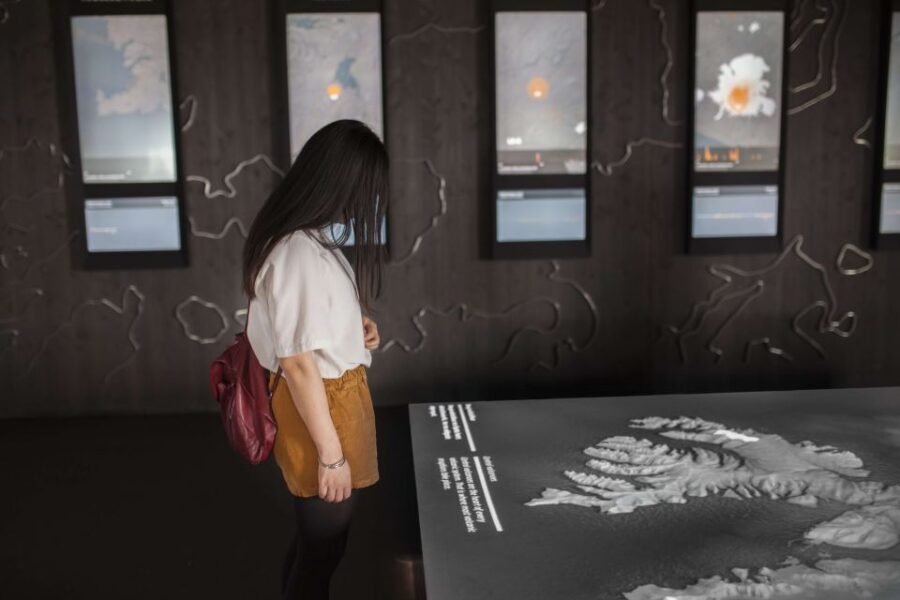
If you want the most memorable, take-home moment, it’s the Trembling Earth section. Here you learn why earthquakes are so frequent: diverging tectonic plates pull the crust apart, magma rises, and the changing pressure and movement cause shaking.
Then comes the part that turns information into a felt experience. You can see live earthquakes on a map, and you can experience a simulated earthquake. The simulation is short, dramatic, and timed to help you connect the science to what shaking means physically.
This section is a great choice if you’re traveling with kids or anyone who learns better with action. The topic is heavy, but the presentation keeps it understandable and focused.
Cinema and the latest eruptions: Grindavík and Blue Lagoon
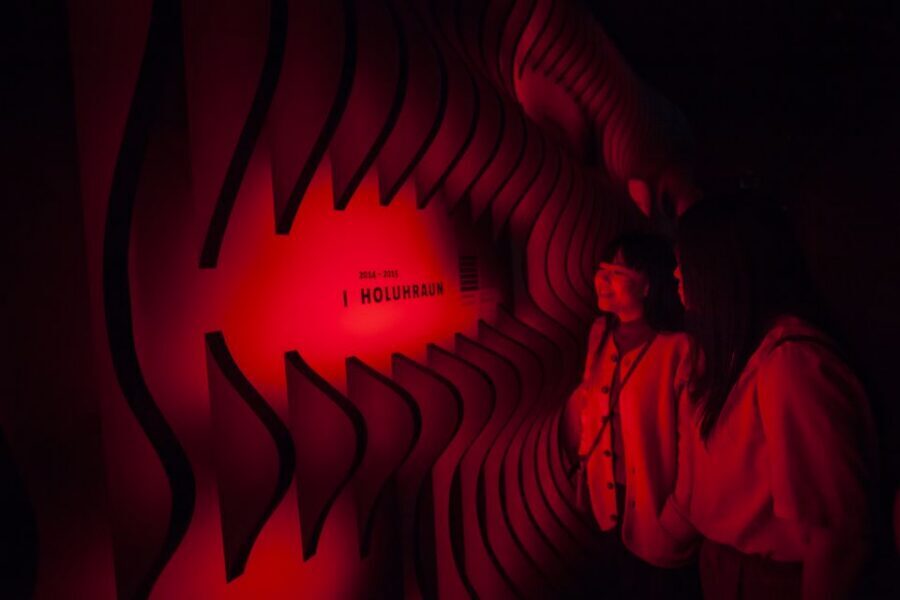
The cinema at Lava Centre is used as a learning tool, not just entertainment. You watch the latest eruptions, including the eruption in Grindavík and the Blue Lagoon area, and you connect that to what you can see from the site’s observation spaces.
Seeing eruption footage in an educational context helps you interpret what you’re looking at. You’re already primed by the displays for terms like magma, lava, and tephra, so the film doesn’t feel like disconnected visuals.
One practical reason the cinema works: it’s a controlled environment. Iceland weather can change fast, and a movie-and-exhibits setup keeps the day moving even when conditions aren’t ideal.
Observation deck panoramas: active but dormant volcanoes and volcanic islands
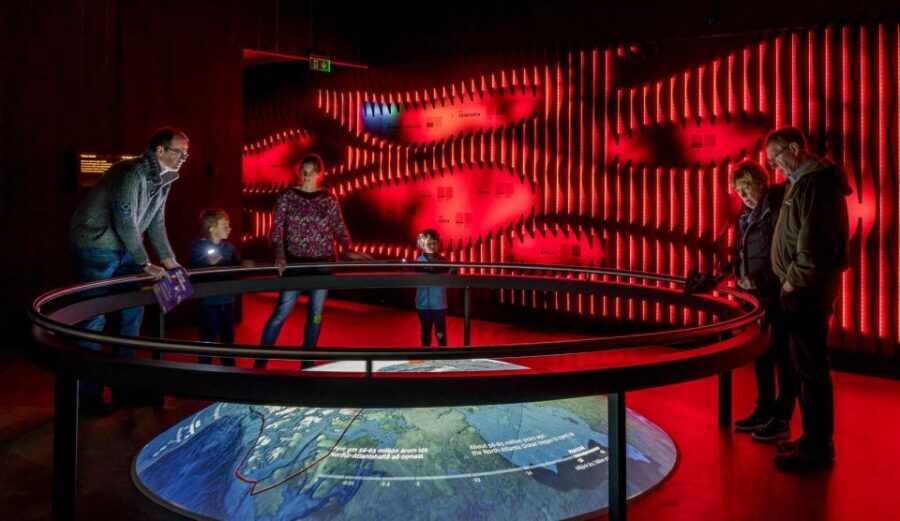
After the indoor learning, the observation part brings you back to scale. From the viewing deck, you get a panoramic look at four large active but dormant volcanoes plus a group of volcanic islands.
The center notes that each volcano type is different, and two of them are among the most active and productive in Iceland. Even without you memorizing every technical label, the visual comparison can make the geology feel more real. You’re not just learning definitions—you’re seeing that volcanic systems behave differently even in the same region.
This is also the stage where you can take a breath and orient yourself. If you’re doing other Iceland stops during the same trip, having names and shapes anchored in your mind makes those later viewpoints easier to interpret.
How long does it take, and how should you pace it?
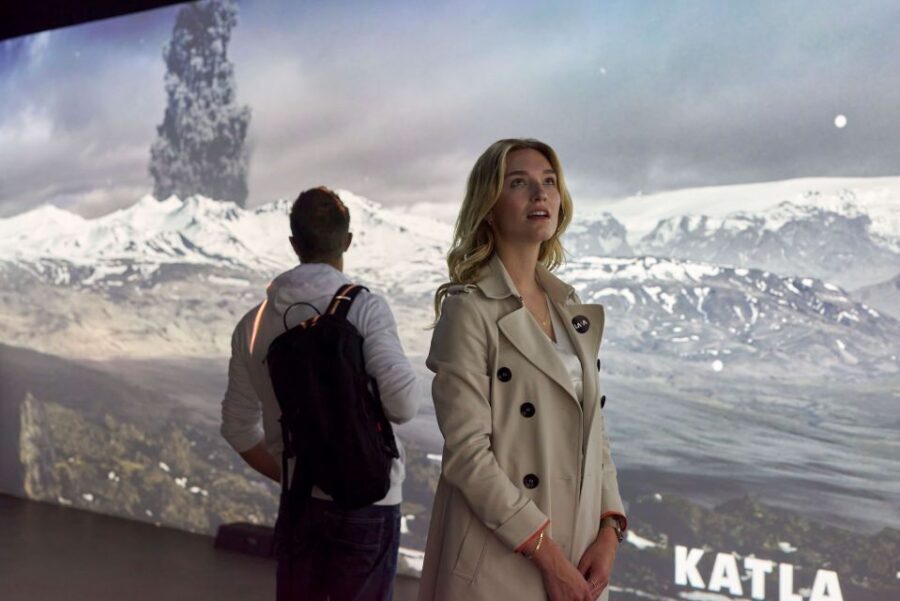
The visit is valid for one day, and you’ll choose a starting time based on availability. In practice, you can plan around about an hour if you move at a steady pace through the major stations and film, then linger at the viewing deck as long as you want.
Here’s how I’d pace it to get the most value:
- Start with the sections that explain the big system: Fiery Heart of Iceland and the basics of magma and tephra.
- Then hit Trembling Earth so the earthquake concepts land while the rest of the geology is fresh.
- Finish with the cinema and the observation deck for the payoff moment.
If you’re the type who wants to read every label, you’ll likely go slower. If you’re short on time, you can still catch the core story without rushing.
Price and value: is $42 worth it?
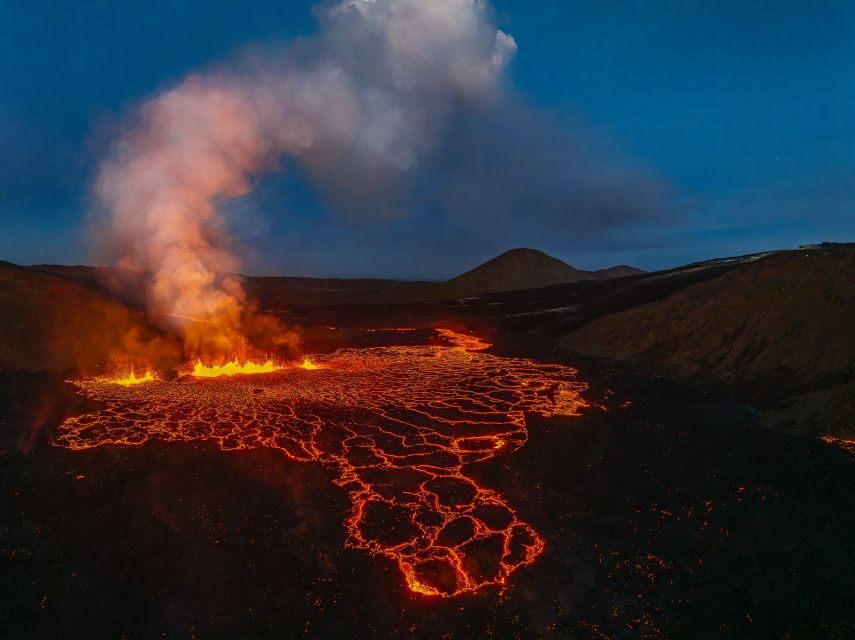
At $42 per person for a one-day ticket, the value comes from what’s included, not just the price tag. You’re paying for:
- the exhibition
- cinema
- the observation deck
- and access to hands-on experiences like the live earthquake map and earthquake simulator
That bundle matters because it’s a full learning program in one place. You’re not choosing between a museum or a viewpoint or a video. You get all three tied together around volcano science.
It also helps that the experience is built to work for different ages and attention spans. The station design makes it easy to stay engaged without needing to be a geology expert.
Who this is best for (and who might want something else)
This is a strong fit if:
- you want a weather-resistant Iceland activity that still connects to volcanoes outside
- you like learning that’s hands-on and visual
- you’re traveling with kids (ear muffs, flashlights, and support teddy bears are included)
- you want a quick, high-impact way to understand Iceland’s earthquake and eruption patterns
You might want a different style of activity if your trip goals are mainly about long outdoor hikes or if you already know a lot of geology and feel you’d prefer a field trip type of experience. Lava Centre is designed for interpretation and connection, not for heavy walking or technical instruction.
Practical tips for a smoother visit
A few small planning points make the day easier:
- Bring your own snacks or plan a meal later since food and drinks aren’t included.
- Wear shoes you’re comfortable standing in during exhibition time, since you’ll be moving between interactive displays.
- If you’re bringing kids, take advantage of the provided family items like ear muffs and support teddy bears.
Also, treat the observation deck as your chance to connect what you learned indoors to what you can see. Even brief outdoor time can make the science stick.
Should you book Lava Centre volcano exhibition and cinema?
I’d book it if you want an efficient, high-value Iceland stop that explains real volcanic activity clearly and interactively. The combination of Trembling Earth (live quakes plus a simulator), the Fiery Heart of Iceland visuals, and the cinema tied to Grindavík and Blue Lagoon makes this more than a typical museum visit.
Book it especially if you’re balancing a busy itinerary and want one solid day where the learning is organized, the presentation is engaging, and the viewpoints give you a sense of place.
If you’re trying to decide between “just a viewpoint” and “a guided-feeling learning experience,” Lava Centre leans strongly toward the second.
FAQ
How long is the Lava Centre Volcano Exhibition and Cinema visit?
The experience is listed as valid for 1 day. You can also spend around an hour if you focus on the main stations and the cinema, then take time on the observation deck.
What is included in the ticket price?
Your ticket includes entrance to the Lava Centre exhibition, the cinema, and access to the observation deck. Ear muffs, flashlights, and support teddy bears for the youngest are also included, along with wheelchairs.
Is the Volcano Exhibition and Cinema wheelchair accessible?
Yes. The activity is wheelchair accessible, and wheelchairs are included.
What languages are available?
The host or greeter speaks English and Icelandic.
Can I see or experience earthquakes during the visit?
Yes. You can see live earthquakes on a map and also experience a simulated earthquake in the Trembling Earth section.
Is food and drink included?
No. Food and drinks are not included, so plan snacks or a meal separately.
Is there free cancellation?
Yes. You can cancel up to 24 hours in advance for a full refund.