REVIEW · REYKJAVIK
Reykjavik Folklore Walking Tour: Meet the Elves, Trolls & Ghosts of Iceland
Book on Viator →Operated by Your Friend In Reykjavik · Bookable on Viator
If you like stories, Reykjavik has you covered. This walking tour threads Icelandic folklore through the oldest parts of the city, from graves dating back around the year 900 to spooky ghost lore, then finishes with guardian spirits near Alþingishúsið.
I especially like that you get two things most tours split up: real city landmarks and myth-based storytelling in the same loop. I also love the guide-led feel, with many guides leaning into character voices (trolls and elves) and keeping the walk fun, not stiff.
One thing to plan for: it’s a steady walk (and the tour can feel like a lot on your feet). If you’re sensitive to walking time or cold weather, wear good footwear and be ready for a brisk city-center stroll.
In This Review
- Key Highlights You’ll Actually Notice
- Why This Folklore Walk Works in Reykjavik
- Price and Value: What $55.63 Buys You
- Timing, Distance, and How to Plan Your Evening
- Start at Ingólfstorgi: Meeting the Group and Setting the Tone
- Stop 2: The Oldest Graveyard in Iceland (Around Year 900)
- Stop 3: Cathedral of Christ the King and the Troll–Church Angle
- Stop 4: Hólavallagarður Cemetery and the Deacon of Dark River Ghost
- Stop 5: Tjörnin Lake and Monster Stories in the Water
- Stop 6: Reykjavik City Hall and the Map of Iceland
- Stop 7: Alþingishúsið and Icelandic Guardian Spirits
- Stop 8: Austurvollur Square and the Walk’s Final Mood
- The Guide Makes the Difference (And You Can Feel It)
- What If You Want More Lore, Less Side Talk?
- Who This Tour Is Perfect For (And Who Should Skip It)
- Should You Book This Reykjavik Folklore Walk?
- FAQ
- Where do I meet for the Reykjavik Folklore Walking Tour?
- How long is the tour?
- How much does the tour cost?
- What’s included in the price?
- What language is the tour offered in?
- Is the tour outdoors? What should I wear?
- Where does the tour end?
Key Highlights You’ll Actually Notice
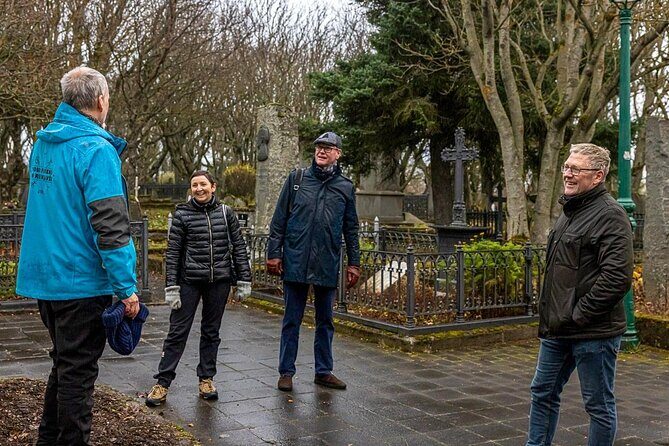
- Two cemeteries in the heart of Reykjavik, including the oldest graveyard in Iceland (around year 900) and Hólavallagarður, tied to the Deacon of Dark River
- Stop-the-story moments built around folklore locations, from the Cathedral of Christ the King to the lake of Tjörnin
- Guides with performance energy, including troll/elf voices and storytelling through song mentioned in multiple guides’ styles
- A short city-center tour loop that doubles as “getting your bearings” for first-timers
- Small freebies and at least one end-of-tour surprise spotted in reviews, like gifts or photo follow-ups
- All-weather operating style, so dressing right matters more than hoping for perfect conditions
Why This Folklore Walk Works in Reykjavik
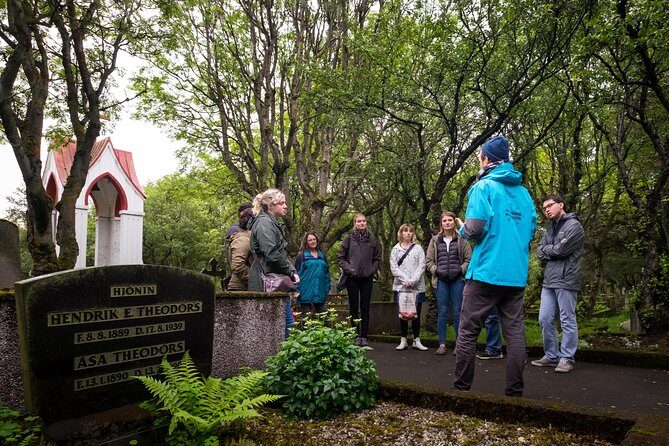
Reykjavik can feel compact at first. That’s great for sightseeing, but it can also make the city blur together. This tour slows the pace down just enough to give meaning to streets and buildings that you’d otherwise treat like background.
The magic is how the myths are tied to places you can point at. You’ll hear about elves, trolls, and ghosts in locations that match their reputation: church sites, cemeteries, and the water near the city center. It turns a normal walk into something closer to a guided story map.
You also get a practical perk. By the time you finish near Austurvollur Square, you’re not just spooked or amused. You’re oriented. You’ll know where the older parts of Reykjavik sit relative to the main squares, and you’ll have a handful of specific stops to return to later on your own.
You can also read our reviews of more walking tours in Reykjavik



Price and Value: What $55.63 Buys You
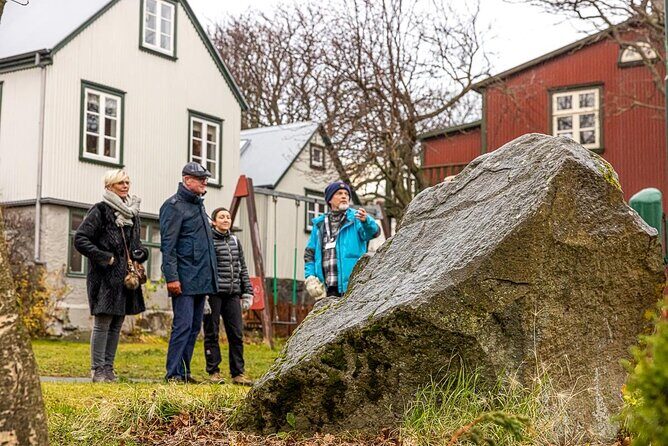
At about $55.63 per person for roughly 1 hour 30 minutes, this isn’t a bargain-style deal. But it also isn’t overpriced for what you’re getting.
Here’s why it feels like decent value:
- You’re paying for a professional guide who delivers live storytelling across multiple themed stops.
- The route hits high-interest spots without needing extra complicated transport between them.
- The experience includes live entertainment, which matters because it keeps the mythology from turning into a lecture.
Most importantly, the value is in the mix. You get the oldest graveyard context (around year 900), the infamous ghost connection at Hólavallagarður, and then water-lore around Tjörnin. That’s a lot of “story anchors” for a short walk.
Timing, Distance, and How to Plan Your Evening
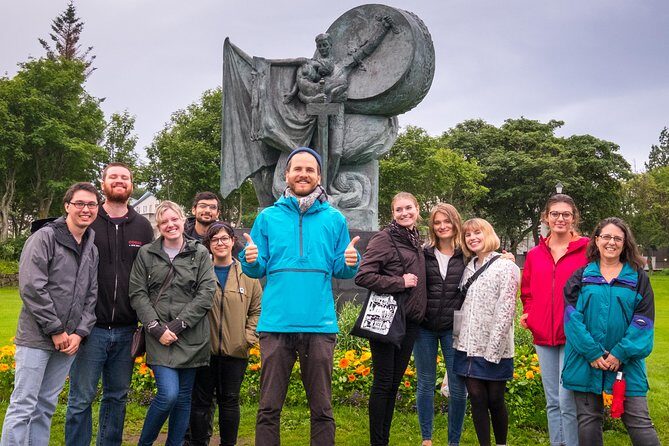
The tour runs about 90 minutes and ends close to where you start, but not exactly on top of it. Expect your feet to do some work. Multiple people flagged that the walking can be more than they expected, so plan it like an actual activity, not a casual stroll.
If you’re going out later, you’ll probably still be ready for dinner after, but build in flexibility. Reykjavik weather changes fast, and the tour operates in all weather conditions, so your comfort depends on what you wear.
Good practical moves:
- Wear waterproof shoes or at least grippy boots.
- Bring a jacket that handles wind, not just rain.
- If you’re camera-happy, pack a real battery plan. Cold can drain phones fast.
Start at Ingólfstorgi: Meeting the Group and Setting the Tone
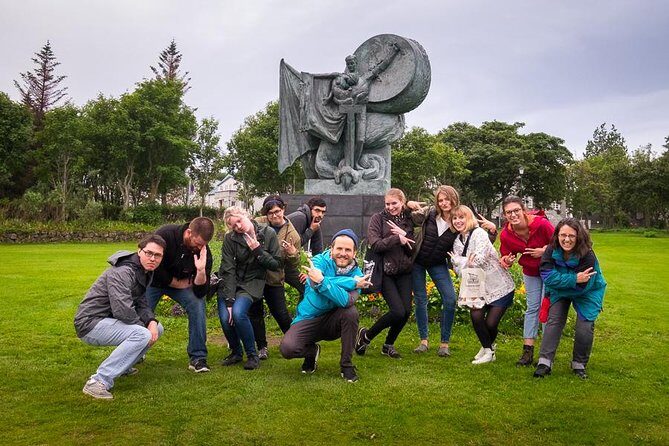
You meet at Hlöllabátar, Ingólfstorgi 1 (101 Reykjavík). The simple instruction that makes a difference: be there about 5 minutes early. Ingólfstorgi is central, but it still helps to arrive when you’re not stressed.
From the start, the tour frames what’s coming: a mythical walk with real places tied to Iceland’s old beliefs. The vibe often lands as playful and spooky at the same time, and the strongest guides use performance tools—voices, pacing, and small punchlines—to keep you listening.
Stop 1 is called Your Friend In Reykjavik. It’s basically the meet-and-greet moment that gets you into the story mode before you hit the heavier locations.
Stop 2: The Oldest Graveyard in Iceland (Around Year 900)
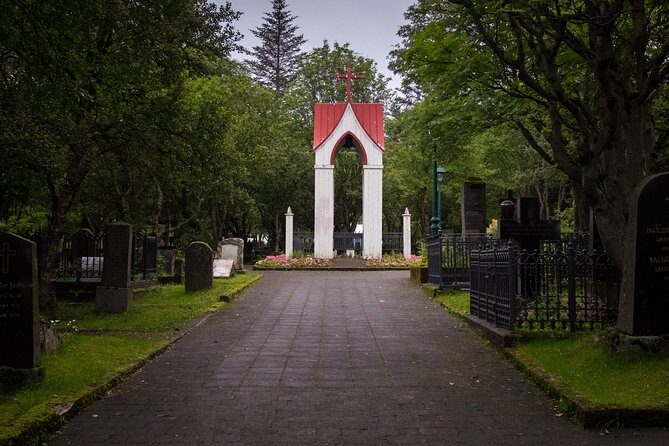
Next you go to the oldest graveyard in Iceland, dating to around the year 900. This stop is more than a history footnote. It’s the tour’s “origin anchor” for the belief system you’re hearing about.
Why it’s powerful for your experience:
- It gives weight to the myths. You’re not just hearing modern spooky tales. You’re learning how far these stories and superstitions echo back in time.
- Even if you don’t treat the supernatural literally, the setting makes the storytelling feel grounded.
One review note worth keeping in mind: some people wanted a bit more time in the cemetery to see older graves. If you’re the type who likes to slow down and look closely, you might feel slightly rushed here. Still, the trade-off is that the tour fits a lot into 90 minutes.



Stop 3: Cathedral of Christ the King and the Troll–Church Angle
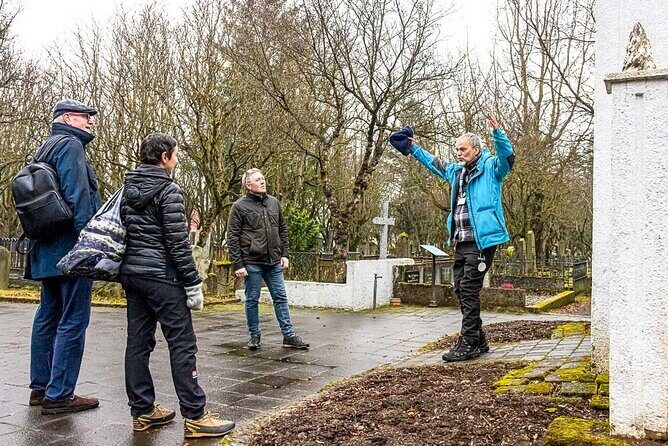
Then you swing to the Cathedral of Christ the King, where the folklore theme shifts toward conflict: the classic idea that trolls don’t like the church.
This is a smart storytelling choice. Folklore isn’t always just about magic creatures. It’s also about how communities explain right-and-wrong, sacred spaces, and threats to normal life. A church setting makes those symbolic battles easy to understand on the ground.
The short time here works well because it keeps you moving. You’re not stuck waiting while the guide covers a single topic too long.
Stop 4: Hólavallagarður Cemetery and the Deacon of Dark River Ghost
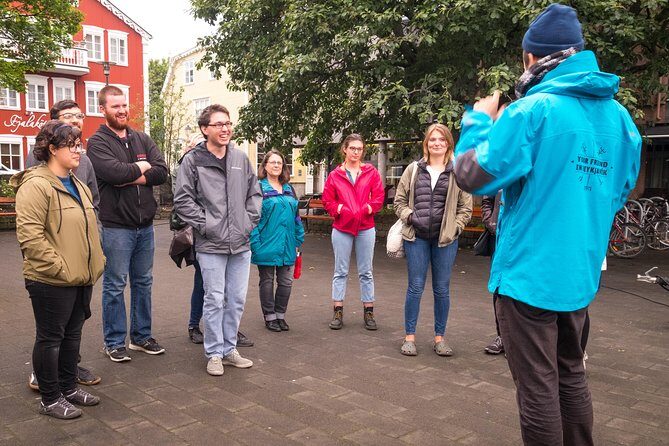
Now you reach Hólavallagarður, described as the second oldest cemetery in Reykjavik and strongly associated with the Deacon of Dark River.
This stop is usually the climax of the spook factor. The cemetery setting plus a famous ghost name creates instant atmosphere. It’s the kind of story you can remember later when you’re walking Reykjavik streets and suddenly realize you’re near a place with a very specific legend.
Some reviews bring the moment to life with details like extra spooky sensations around the cemetery. One person mentioned a friendly cat with a wreath collar appearing during the cemetery storytelling. You can’t plan for that, but you can plan for the mood: you’ll feel like you’re in a real “myth location,” not just passing by a landmark.
Stop 5: Tjörnin Lake and Monster Stories in the Water
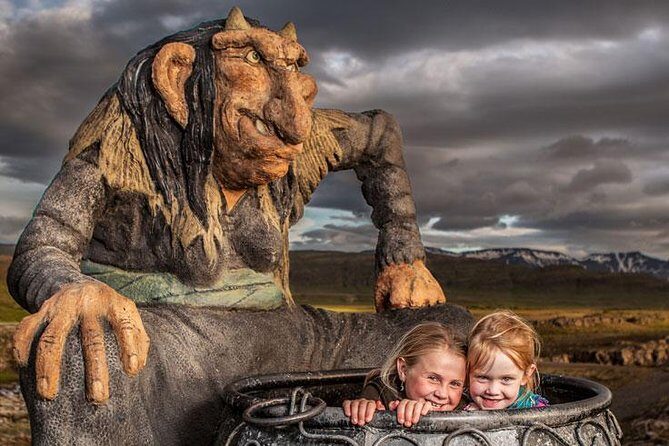
Next is Tjörnin, the lake in central Reykjavik. The tour uses this stop for monster lore—stories tied to water and what might live beneath the surface.
This is one of those “why mythology matters” moments. In many cultures, water gets myth attached to it because it’s useful, unpredictable, and sometimes dangerous. Here, it turns a scenic pause into a listening stop.
Even if you’re not a folklore believer, you’ll likely enjoy how the guide connects creatures to the behavior of the city around them—light, reflections, ducks and swans nearby, and the feeling that nature is right there inside town.
Stop 6: Reykjavik City Hall and the Map of Iceland
After the lake, you walk by Reykjavik City Hall. The interesting detail here is that the guide sometimes talks through a big map of Iceland, using it to connect the folklore to places across the country.
This is a helpful mid-tour pivot. Up to this point, you’re learning through local sites and myths attached to them. With the map moment, you get a bigger mental picture. It helps you understand that Icelandic folklore isn’t only Reykjavik mythology—it’s connected to the wider island and how people historically traveled, settled, and feared certain landscapes.
Stop 7: Alþingishúsið and Icelandic Guardian Spirits
Then you reach Alþingishúsið, where you’ll hear about Icelandic guardian spirits. This stop shifts from creepy stories to something more cultural and symbolic.
Guardian-spirit lore fits well in a civic setting because it ties the everyday life of the community to beliefs that keep showing up in art, place names, and local storytelling. It’s not random creepiness. It’s folklore as social glue.
Stop 8: Austurvollur Square and the Walk’s Final Mood
Your tour ends at Austurvollur Square, close to where you started but now near the parliament area. Ending there is convenient because it puts you near central dining and easy walking routes back to your hotel.
In reviews, people often describe this as a satisfying finish: you leave with a memory of specific places rather than just hearing general mythology. That matters because Reykjavik is small enough that you’ll keep seeing these landmarks after the tour ends.
The Guide Makes the Difference (And You Can Feel It)
This tour is guide-dependent in the best way. The mythology is only as fun as the person delivering it, and multiple reviews highlight strong guide performance.
A few patterns that show up across guides:
- Character voices: guides have used troll and elf voices to bring the stories to life.
- Song and performance storytelling: at least one guide style includes storytelling through song.
- Humor mixed with history: the best guides blend myth with small, memorable local facts without turning it into a lecture.
You’ll see guide names in reviews like Ester, Bo, Mathias, Matias, Magnus, Stefan, Dúi, Páll, Steingrímur, and Stefan I. Even if you don’t get the same guide, you can expect the core “story performer” approach.
Practical tip: if you’re the kind of person who likes asking questions, this tour can be a good setup. Reviews mention moments where people were able to chat one-on-one on smaller group dates. If you see a date with fewer bookings, your experience may feel more personal.
What If You Want More Lore, Less Side Talk?
Most people come away happy. But a few reviews include fair cautions that you should take seriously.
Here are the main “watch-outs”:
- Some people said the guide could be a bit scattered, with more personal narrative than folklore in certain stretches.
- A few mentioned they wanted more time in the cemetery, since it’s where the oldest graves and the strongest ghost atmosphere are.
- One review flagged religious discomfort during the experience. That’s rare, but it’s a reminder that storytelling tours sometimes reflect the guide’s own framing. If you’re sensitive about religious tone, go into it expecting myths, but also keep an eye on how the guide connects folklore to belief.
The good news: the structure of the walk gives you plenty of focused story stops (cemeteries, lake, specific buildings). Even if one segment feels lighter to you, the tour still hits its main folklore anchors.
Who This Tour Is Perfect For (And Who Should Skip It)
This is a great fit if:
- You want an easy first night in Reykjavik that doubles as orientation.
- You like folklore tied to real places you can later revisit.
- You enjoy storytelling with humor, voices, or a bit of performance.
You might pass if:
- You hate walking for any reason beyond a quick stroll.
- You need a strictly factual, dates-only style tour. This one is built around myth, mood, and narration.
- You’re easily put off by spooky cemetery settings. The atmosphere is part of the point.
Should You Book This Reykjavik Folklore Walk?
I think you should book it if you want Reykjavik to feel like more than a grid of streets. The mix of old cemeteries, Tjörnin monster lore, and guardian spirit stories makes the city feel alive in a way that photos alone can’t capture.
It’s also strong value if you want a single activity that gives you both cultural context and a map-like understanding of where things are. Just be honest with yourself about your walking tolerance, dress for cold wind, and arrive on time at Ingólfstorgi so you can get into the story without rushing.
If you’re aiming to meet the city through myth, this is an efficient, memorable way to do it.
FAQ
Where do I meet for the Reykjavik Folklore Walking Tour?
You meet at Hlöllabátar, Ingólfstorgi 1, 101 Reykjavík. Plan to be there about 5 minutes before the start time.
How long is the tour?
The tour runs about 1 hour 30 minutes (approximately).
How much does the tour cost?
The price is $55.63 per person.
What’s included in the price?
You get a professional guide and live entertainment. The stops listed in the itinerary note admission ticket free.
What language is the tour offered in?
The tour is offered in English.
Is the tour outdoors? What should I wear?
It operates in all weather conditions, so dress appropriately for the weather. Reykjavik can be windy and cold even when it is not raining.
Where does the tour end?
You finish in the Austurvollur Square area, near the Parliament building at Austurvöllur public square.