REVIEW · VATNAJOKULL NATIONAL PARK
Skaftafell: Blue Ice Cave & Glacier Hike on Vatnajökull
Book on GetYourGuide →Operated by Arctic Adventures · Bookable on GetYourGuide
Blue ice turns glacier walking into a sci-fi day. This tour takes you into a real ice cave on Falljökull, where the light turns electric-blue and the shapes shift as the glacier changes. I love that you get time to look, breathe, and take photos, not just a quick in-and-out.
I also like that you show up at Skaftafell and leave with the right glacier gear already sorted: crampons, helmet, harness, and an ice axe. You hike with an English-speaking glacier guide, and the group stays small at up to 12 guests, which makes the pace and safety feel more controlled.
The main watch-out is that the ice cave is never guaranteed in the exact form you imagine. The operator picks the cave based on what’s safe and walkable that day, and there are strict shoe requirements (minimum age 8, and crampons only for EU sizes 35–50).
In This Review
- Key highlights worth caring about
- Skaftafell to Falljökull: the setting that makes this feel real
- Getting the gear right: crampons, helmets, harness, and shoe rules
- The blue ice cave: why it looks magical and why it might be small
- Hike across Falljökull: crevasses, ridges, and those moulins
- How the guide makes or breaks the experience
- Small group size and timing: what 4 hours feels like on the ground
- Price and value: is $163 worth it?
- Clothing and comfort: your checklist for staying warm and steady
- When to book, and who this suits best
- Should you book the Skaftafell blue ice cave and glacier hike?
- FAQ
- How long is the Skaftafell blue ice cave and glacier hike?
- Where do I meet for the tour?
- What gear is included?
- Are meals included?
- What shoes do I need, and who can participate?
- Is the ice cave guaranteed to be the same every time?
Key highlights worth caring about
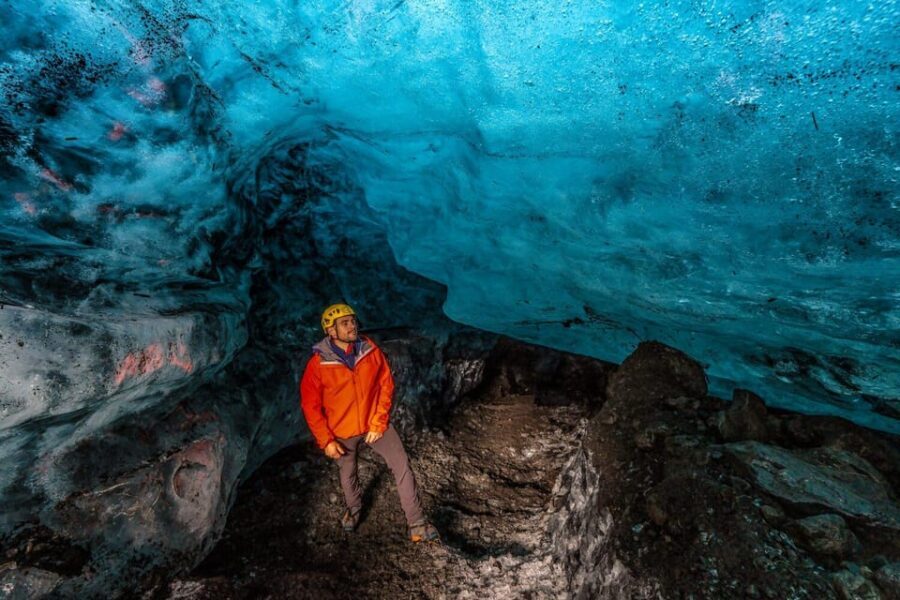
- Real blue ice inside a natural cave: the color comes from how light travels through ice, and the cave is different year to year
- Small group (max 12 per guide): easier communication, better pacing, and less waiting around
- Full safety setup on the spot: crampons, helmet, ice axe, harness, and hands-on instruction
- Off-road transport from Skaftafell: a 4×4 bus gets you to the glacier foot fast
- A hike that teaches you what you’re seeing: crevasses, ridges, and moulins (ice shafts) explained by the guide
- Moderate walking on uneven ice: “easy hiking” in glacier terms, but it’s still ice—your footing matters
Skaftafell to Falljökull: the setting that makes this feel real
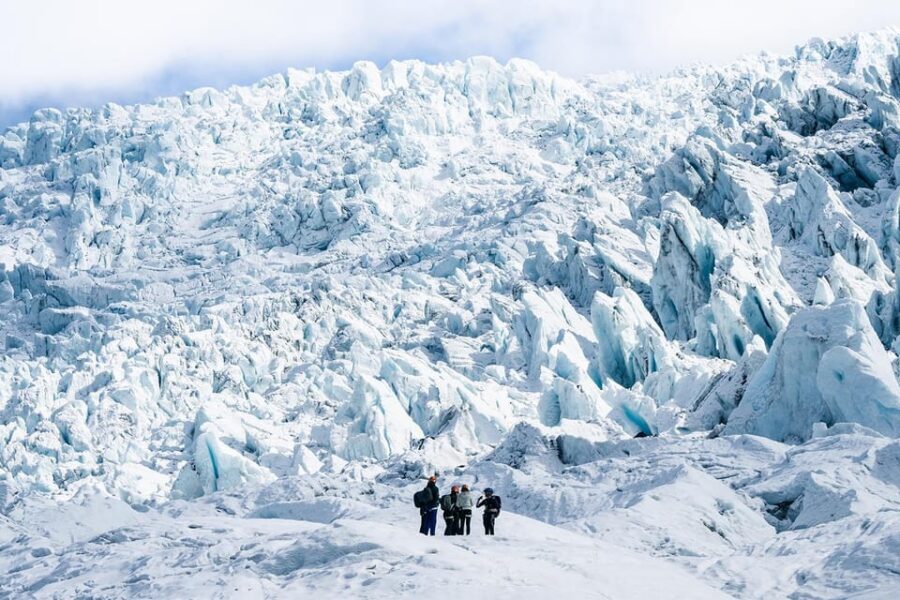
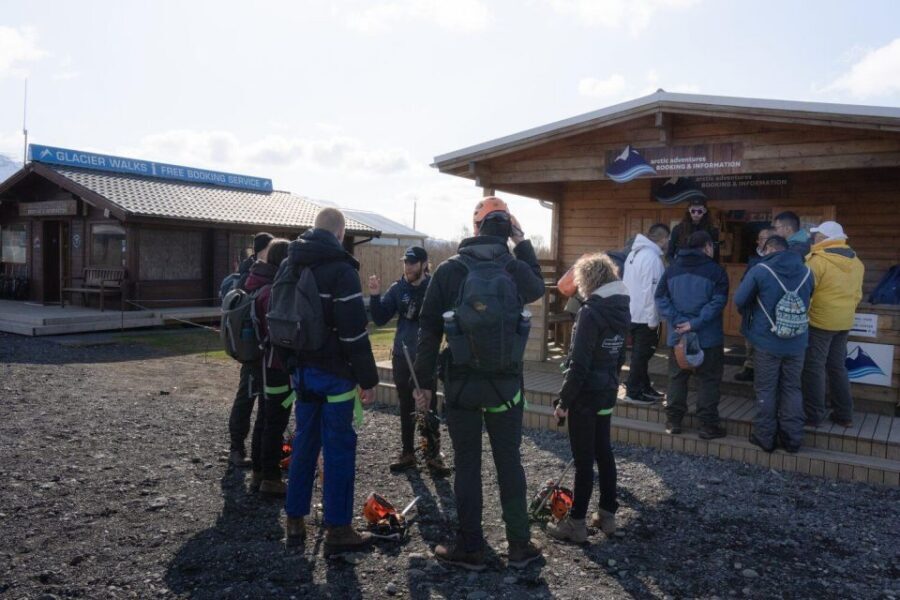
Vatnajökull National Park is famous for scale, but this tour’s magic is how quickly the day shifts from visitor-area calm into actual glacier terrain. You start at Skaftafell Base Camp with Arctic Adventures, then head out by 4×4 bus for about 20 minutes to the foot of Falljökull, a glacier that feeds the bigger Vatnajökull ice cap system.
That short drive matters. It trims the time you spend in transit and concentrates your effort on the ice walk itself. On days with fresh snow, you may find the glacier looks quieter and less crowded visually, even if it’s the same frozen world underneath.
The other big reason this feels grounded is the guide-led approach. You’re not just dropped off at a viewpoint and told to wander. You’re set up, briefed, and guided through the ice on purpose—so you know why you’re walking where you’re walking.
You can also read our reviews of more hiking tours in Vatnajokull National Park
Getting the gear right: crampons, helmets, harness, and shoe rules
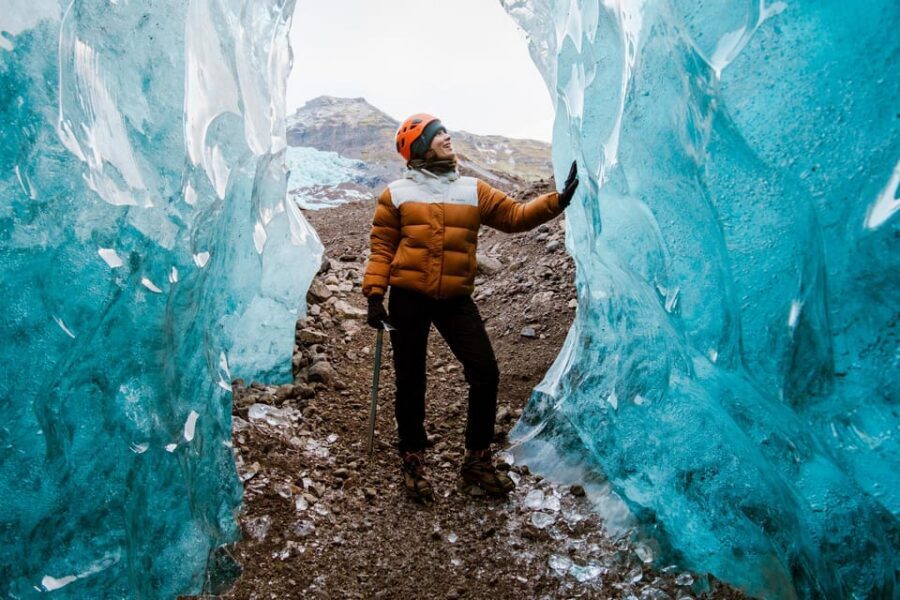
This is one of the most practical glacier tours you’ll find because the equipment comes with the experience. At the start, you’ll be issued the glacier safety gear: crampons, a helmet, a walking ice axe, and a harness. The tour is built around making the ice feel manageable, even if you’ve never walked on glacier before.
Now the shoe rules are serious, and you should treat them as part of the trip design:
- You must bring hiking shoes
- High-heeled shoes and open-toed shoes are not allowed
- Sturdy boots with ankle support are mandatory
- Crampons are only available for EU shoe sizes 35–50
- Minimum shoe size is EU 35, and minimum age is 8
If you rent gear, hiking boots with ankle support are available to rent for a fee, but the tour still expects you to come prepared. In real life, this is what prevents the day from turning uncomfortable. Boots that lock your ankle help your balance when the ground tilts or turns slick.
Packing tip that actually helps: bring a warm, waterproof jacket and pants plus gloves and headwear. Glacier weather can feel sharp and sudden, and you don’t want cold hands when you’re trying to learn where to place your feet.
The blue ice cave: why it looks magical and why it might be small
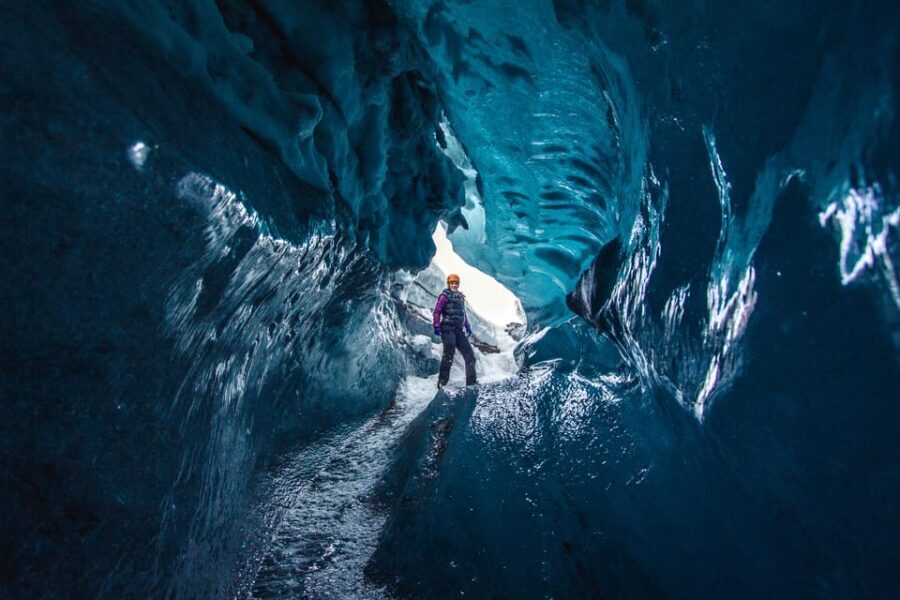
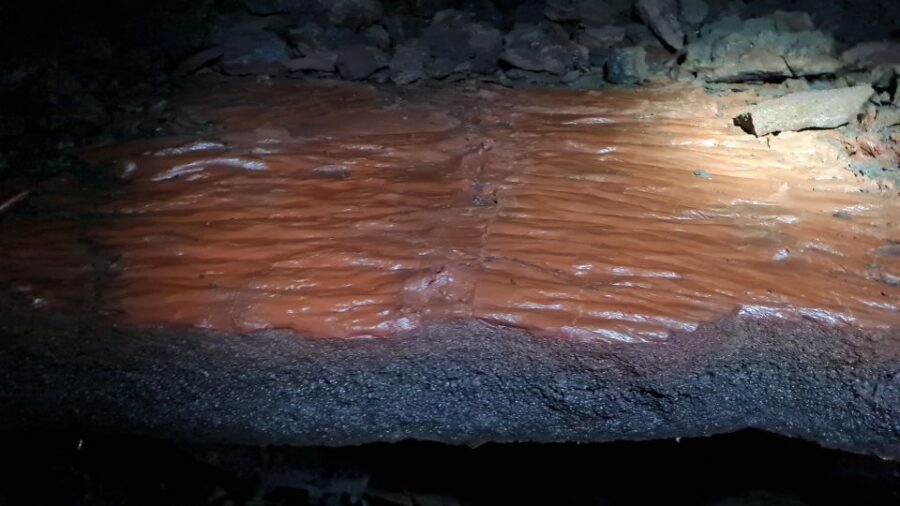
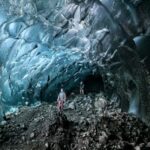
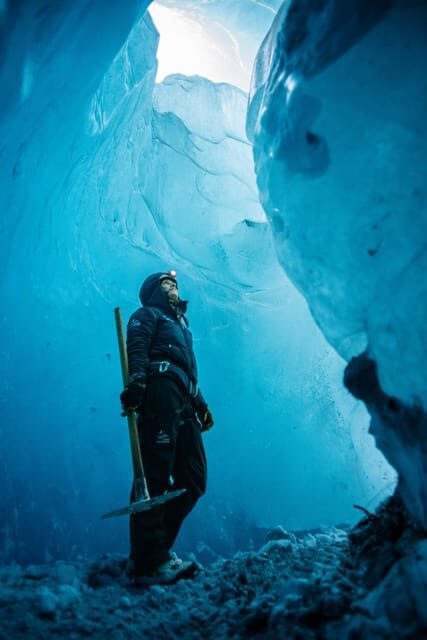
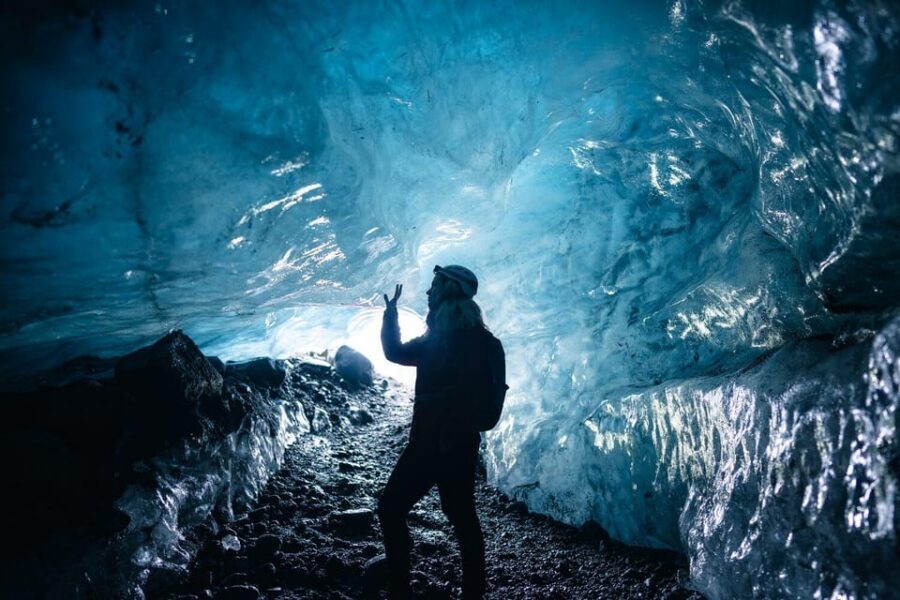
The ice cave is the headline for a reason. Inside, the walls can glow with natural blue tones that don’t look like a photo filter. This color comes from how light behaves in ice—especially where the ice is dense and structured enough to channel it.
Two things to keep in mind:
- The cave you visit is chosen based on conditions and safety, because the glacier is always changing.
- The cave may not be huge. Several experiences describe it as short, with a tunnel-like entry or a smaller space once you get inside.
So, set your expectations around wonder, not size. If you go looking for a massive cathedral, you might feel a bit underwhelmed. If you go looking for color, texture, and the strange geometry of natural blue ice, you’ll likely love it.
You’ll also have photo time. The guide usually steers you to good angles and keeps the group moving at a pace that lets you actually see what’s in front of you.
Hike across Falljökull: crevasses, ridges, and those moulins
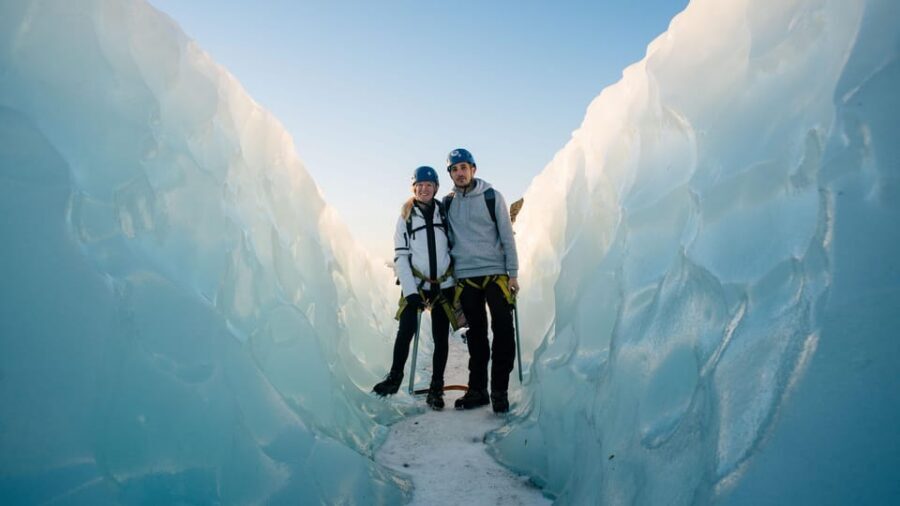
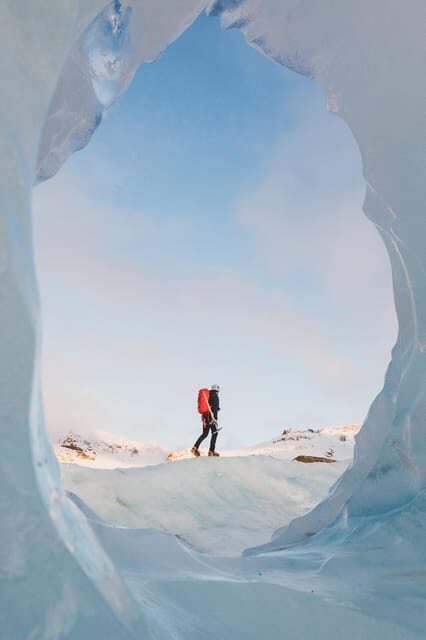
Once you’re on the glacier, the walking part is where the day becomes memorable. You’ll cross a mix of frozen ridges and areas with deep blue features that can signal crevasses. The terrain is uneven—this is not a flat snowfield walk.
Here’s what you’re meant to notice while you walk:
- Crevasses: gaps and cracks that look dramatic up close, even if you’re staying within safe routes
- Jagged ridges: rough ice surfaces that help you understand how glaciers shape land over time
- Moulins: deep ice shafts that form as meltwater channels through the glacier system
The guide’s stories turn the walk from visual to educational. They explain how massive glaciers formed and how they’re changing today. You also get safety instruction on how to use the axe and how to move with your crampons so you’re not white-knuckling the whole day.
The pace is described as a mix of easy hiking and jaw-dropping scenery, which is the honest wording you should look for. It’s not a sprint. It is still a hike on ice, so your best move is simple: walk steadily, keep your weight controlled, and listen when your guide points out where the ground is firmest.
How the guide makes or breaks the experience
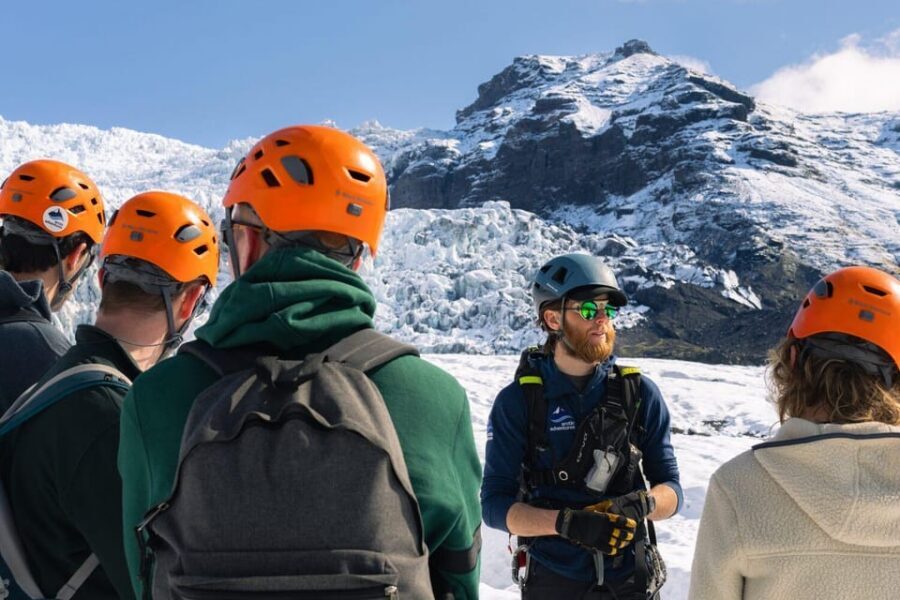
In a small-group glacier tour, the guide isn’t a bonus. They’re the product. This tour is built around an experienced English-speaking glacier guide, and the reviews highlight a consistent pattern: people feel safe and learn real glacier facts.
Some guide names that have led this experience include Ola, Albin, James, Marketa, Maya, Tin, Martin, Anya, Ivon, Annie, Lucy, Kristjan, Jacek, and Dragon/Alby. Seeing names like these matters because you’re looking for someone who can explain the ice in a way that still feels fun, not like a lecture.
Also, a bunch of guides are noted for helping with beginner confidence—gear use, where to step, and how to enjoy the walk without fear taking over. That’s a big deal on a glacier, where your brain naturally wants to worry.
One practical detail: on some departures, guides help with group photos on the ice and inside the cave. If photography matters to you, this is the kind of small service that prevents you from spending the day stuck doing selfies.
Small group size and timing: what 4 hours feels like on the ground
The total duration is about 4 hours, with a short 20-minute ride in each direction. Most of your active time is the glacier hike, roughly 2.5 hours spent walking, stopping for photos, and exploring the ice cave.
Because the group size is capped at 12 per guide, the time flow tends to work better than on big tours. You’re less likely to get stuck behind a slow-moving person. You also get more individualized attention if crampons feel awkward at first.
A note on weather: even with heavy snowfall reported by some participants, the glacier hike still worked—and in some cases the glacier looked better, with fewer people around visually. That said, the company adjusts based on safety and conditions, including which cave is visited.
Price and value: is $163 worth it?
At $163 per person, you’re paying for more than access. You’re paying for:
- A professional guide who manages glacier risk
- Specialized safety gear (crampons, helmet, harness, ice axe)
- Transport in a 4×4 bus from Skaftafell to the glacier foot
- A structured glacier experience (not just a walking permit)
If you tried to DIY this day, you’d quickly hit expensive and complicated steps: renting crampons and axes, figuring out safe routes, and managing cold-weather logistics. Here, the tour handles the safety system and the route planning for you.
So the real question isn’t only cost. It’s whether you want someone else managing the risk and timing. If yes, the price starts to look reasonable. If you’re traveling tight on budget, this is one of those Iceland tours that cuts closer to the bone because it’s very gear- and guide-intensive.
Also, food and drinks are not included. That’s normal for a 4-hour adventure, but it does mean you should plan a snack plan (and warm hydration). You’ll feel better on the ice.
Clothing and comfort: your checklist for staying warm and steady
This tour clearly expects cold-weather readiness. I’d treat your packing list as part of the safety plan:
- Bring a warm waterproof jacket and pants
- Wear gloves and headwear
- Wear hiking boots with ankle support
- Bring water (a reusable bottle helps)
Footwear matters most. With crampons attached, any slip becomes harder to correct. If your boots don’t fit well or your ankle support is weak, you’ll feel it.
One more small thought: some people mention getting dizzy or shaky if they didn’t eat properly beforehand. That’s not a glacier rule, just basic human biology. Eat beforehand, even if you’re only planning a short breakfast.
When to book, and who this suits best
This is a great fit if you want:
- A guided ice cave visit (natural blue ice, not a photo stop)
- An introduction to glacier walking with safety gear
- A small group setting that keeps things moving and communicative
It’s also a strong choice for first-timers who want instruction on crampons and ice axe basics. Multiple experiences describe beginners feeling confident because the guide teaches step-by-step.
It may not be the best match if:
- You can’t meet the shoe size range (crampons are only for EU 35–50)
- You’re traveling with open-toed or non-ankle-support footwear options
- You have a strong mobility limitation and can’t handle uneven ice walking (the hike is not described as brutal, but it is still on glacier terrain)
Should you book the Skaftafell blue ice cave and glacier hike?
Yes, if you want a short, high-impact glacier day with real blue ice and actual glacier hiking—guided, gear-provided, and done in a small group. This is the kind of experience where the time on the ice is the point, and the guide keeps it safe without draining the fun.
Consider alternatives if you’re very sensitive to cold, don’t have the right boots, or you need a guaranteed specific cave size or exact cave shape. Since the cave is chosen based on safety and conditions, the glacier sets the terms.
If you can meet the gear requirements and you’re up for a steady walk on ice, this is a book-it-early kind of tour from Skaftafell.
FAQ
How long is the Skaftafell blue ice cave and glacier hike?
The tour lasts about 4 hours, including a short 20-minute 4×4 bus ride each way and about 2.5 hours on the glacier.
Where do I meet for the tour?
You meet at the Arctic Adventures hut in Vatnajökull National Park near the Skaftafell visitor centre.
What gear is included?
The tour includes glacier safety gear: glacier crampons, a helmet, a walking ice axe, and a harness.
Are meals included?
Food and drinks are not included, so plan to bring what you need for a short day on the glacier.
What shoes do I need, and who can participate?
You must wear hiking shoes with ankle support. High heels and open-toed shoes are not allowed. Minimum age is 8, and crampons are only available for EU shoe sizes 35–50.
Is the ice cave guaranteed to be the same every time?
No. Ice caves are an ever-changing natural phenomenon, and the cave you visit is selected based on conditions and safety.