REVIEW · SKAFTAFELL
Skaftafell National Park: Falljokull Glacier Advanced Hike
Book on GetYourGuide →Operated by Troll .is · Bookable on GetYourGuide
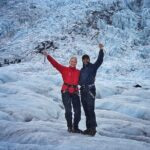
One step onto Falljökull and you get that wow feeling fast. This is an advanced glacier hike in Skaftafell where you actually walk on Vatnajökull, with a certified guide keeping you safe while you explore rare ice formations. You’ll learn how glaciers form, how crevasses and moulins develop, and why the ice you’re standing on is changing.
Two things I really love: first, the tour includes the full safety setup and the guide teaches you how to use it, not just hand it to you. Second, the longer 5-hour option gives you time to walk farther into the icefall area, so the scenery feels bigger and the experience feels less rushed. In the real world, guides like Filip, Rik, and Paula show up ready to keep the group moving while still stopping for the cool ice details.
The main drawback to consider is simple: this is work, not a casual stroll. You need warm, waterproof layers, steady footing, and good stamina for climbing and descending on glacier surfaces. Also, it’s not designed for kids under 12, and food isn’t included beyond coffee and chocolates.
In This Review
- Key things I’d bet on
- Why Skaftafell and Falljökull Feel Otherworldly
- The 5-Hour Schedule: From Troll Bus to Real Glacier Time
- Gear You Actually Use: Helmet, Harness, Crampons, Ice Axe
- What You’ll Walk Over: Crevasses, Moulins, and Blue Ice Possibilities
- Views From the Icefall: Skaftafell’s Big Sky, Filmed Backdrops, and Photo Stops
- Weather, Fitness, and Foot-Smart Tips for Glacier Walking
- Price and Value: Is $167 Worth It?
- Who Should Choose This Advanced Falljökull Hike
- Should You Book the Falljökull Advanced Hike?
- FAQ
- How long is the tour, and how much time is spent on the glacier?
- What glacier gear is included?
- Is food included?
- What should I bring?
- Are waterproof boots and jackets available if I don’t have my own?
- Is this tour suitable for children?
- What’s the group size and language?
- Ending Note
Key things I’d bet on
- Certified guidance on the ice with crampon and ice-axe know-how, plus strict safety pacing
- About 3 hours on the glacier for real exploration time, not just a photo stop
- Falljökull icefall features like crevasses and moulins, plus chances to spot blue ice in winter conditions
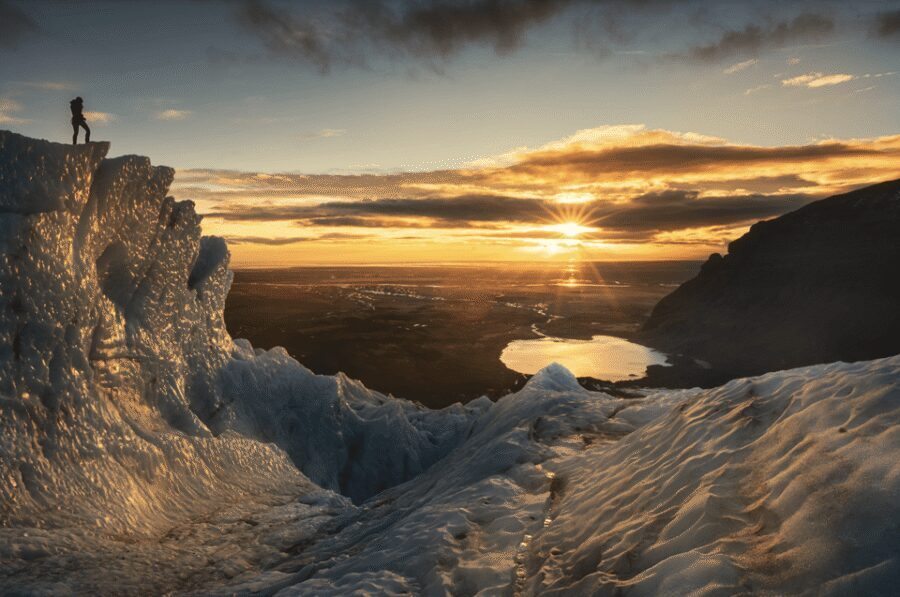
- Skaftafell’s film-famous views as you gain elevation high enough to look far out across the reserve
- Warm-up breaks with coffee and chocolates, which matter when the wind starts up
Why Skaftafell and Falljökull Feel Otherworldly
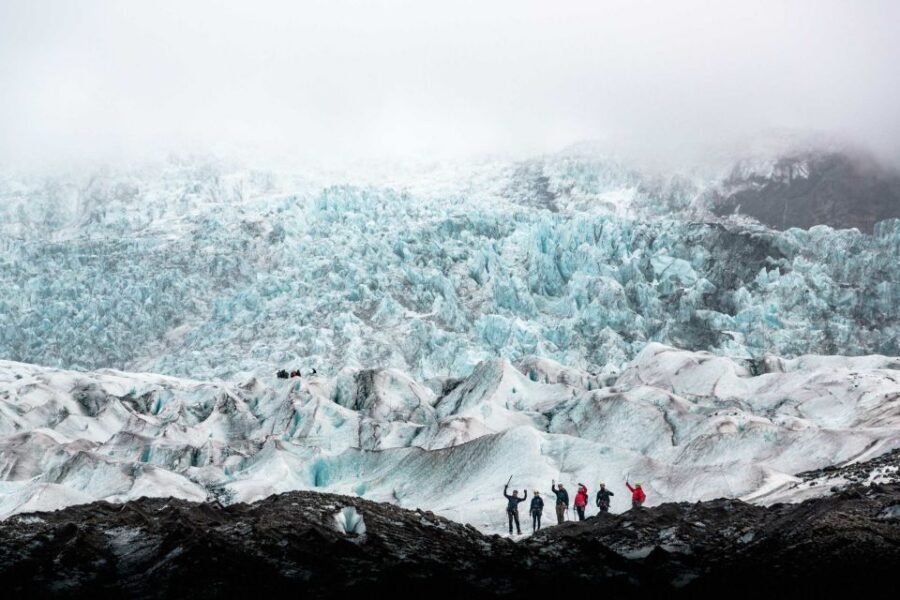
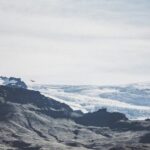
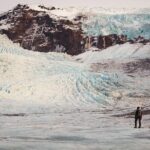
Skaftafell sits in southeast Iceland and earns its reputation because it’s packed with wild terrain. This hike takes you to an outlet glacier of Vatnajökull, Iceland’s largest ice cap, specifically Falljökull, whose name translates roughly to the falling glacier. You’re not wandering beside ice. You’re walking across it, guided step-by-step.
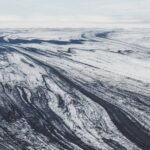
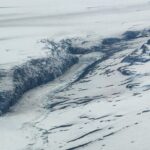
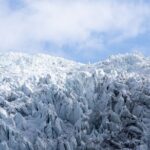
The most compelling part is that the ice here isn’t just pretty. It’s dynamic. As the ice moves and melts, you get structures you normally only see in science diagrams. On this hike you’ll encounter crevasses, deep fissures across the surface, and moulins—vertical shafts formed when meltwater finds cracks and channels down through the glacier. It’s the kind of geology you can stand on, which makes the lesson stick.
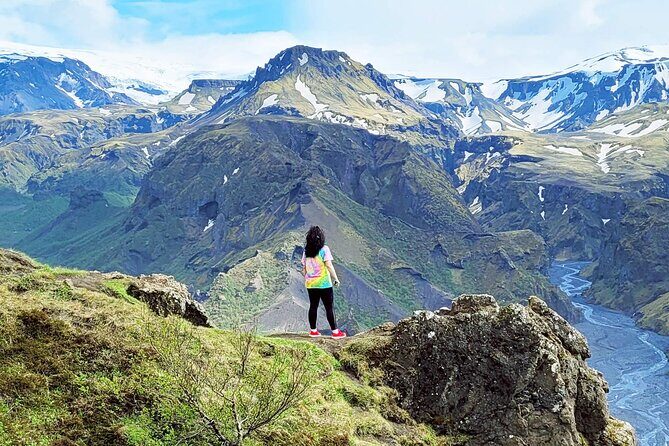
And yes, the scenery around you is also cinematic. When you climb high enough on the icefall, you can look back across Skaftafell National Park, a place known in recent years as a backdrop for major productions like James Bond, Interstellar, Batman, and Game of Thrones. Even if you’re not there for movie trivia, the scale hits you fast.
You can also read our reviews of more hiking tours in Skaftafell
The 5-Hour Schedule: From Troll Bus to Real Glacier Time
The day runs about 5 hours total, and the timing is built to balance travel time, safety training, and actual hiking on the ice. Here’s how it plays out on the ground.
First, you meet at the Troll meeting point at Troll.is in Skaftafell. From there, you load up for a bus ride (about 30 minutes) to reach the glacier area. The ride matters more than you might think. It keeps the day efficient so you spend your limited time on ice where it counts.
Next comes a safety briefing (about 30 minutes). This isn’t theater. It’s where you get the practical rules: how to walk on glacier surfaces, how to move with an ice axe and crampons, and what to pay attention to when the ground changes underfoot. Then there’s a short transfer walk—around 10 minutes in total ride-and-walk time before you’re actually on the ice (the day uses a bus branded as the Tröll Bus).
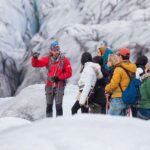
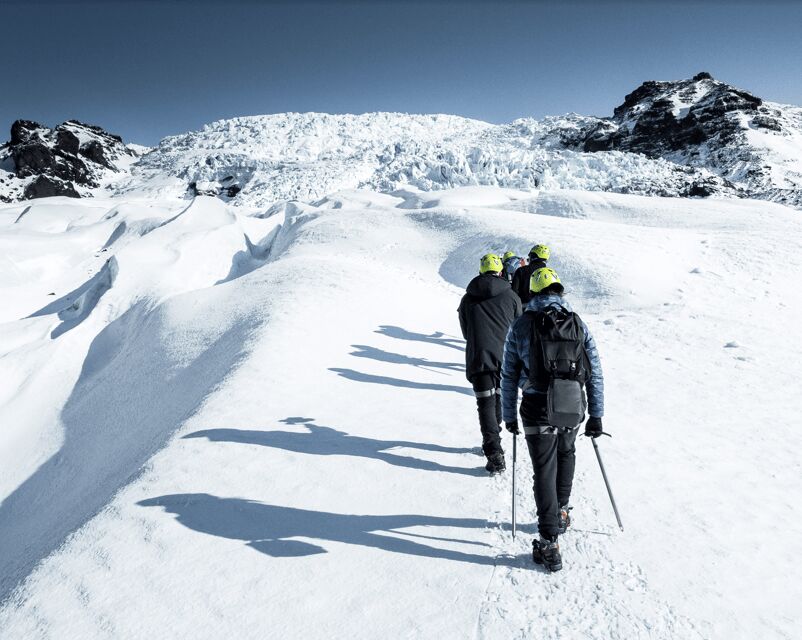
You’ll then spend roughly 3 hours on the glacier. That’s the heart of the trip: you’re not just touring the edge. You’re moving along the icefall area, stopping to look at features, and climbing high enough to see broad views of Skaftafell National Park. You’ll also get guidance on hazards and glacier formation along the way, plus discussion of what global warming means for glaciers like Vatnajökull.
After the main ice time, the schedule includes a short walk (about 30 minutes) and then a return coach ride (about 30 minutes) back to the meeting point. It’s enough time to feel like you did a proper hike, not a quick excursion, but not so long that you feel stranded when you’re done.
Gear You Actually Use: Helmet, Harness, Crampons, Ice Axe
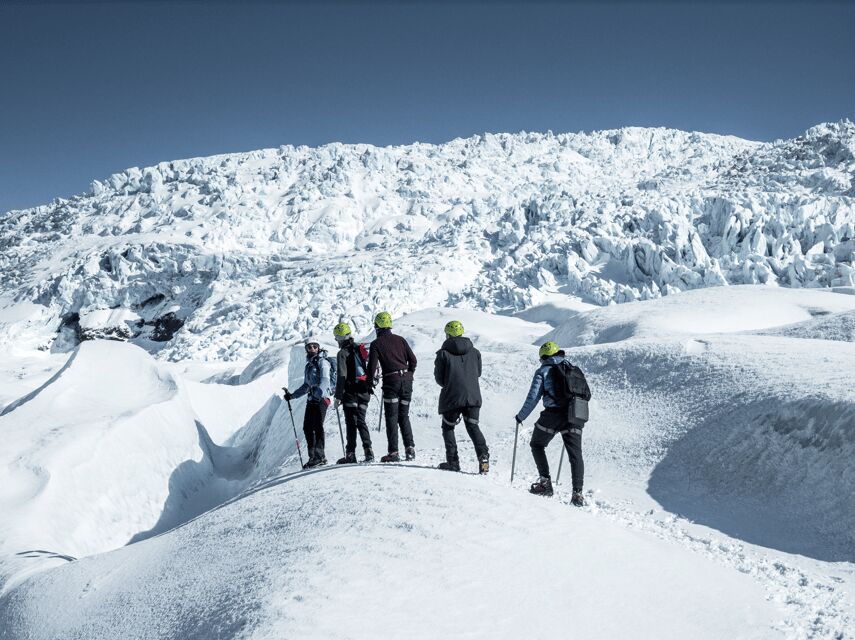
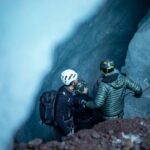
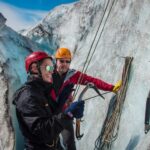
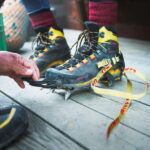
A glacier hike stands or falls on equipment and instruction. The good news here is that the tour provides the core glacier gear: a helmet, harness, crampons, and an ice axe.
The helmet is not optional fluff. Ice routes involve risk from falling ice chunks and slip-prone surfaces, so wearing it is part of the system. In this kind of terrain, your guide wants your head protected before your feet hit the ice.
Crampons are your traction. You’ll learn how to walk without stomping or fighting the step. You also learn how to manage balance on uneven, slanted ice. Several people doing this tour note that the instruction makes it feel more possible even on steep bits.
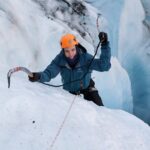
The harness and rope system (when used) adds a layer of security for trickier sections. Depending on conditions and group level, you may even get a chance at more technical movement, with some optional vertical climbing reported by past groups. That kind of moment is exciting, but the point is still control: you’re learning how your body should move when the ice stops behaving like a flat surface.
Finally, you’ll get coffee and chocolates as part of the experience. Sounds small until you’re cold and you realize it’s one of those smart human touches that helps you reset before the return.
What You’ll Walk Over: Crevasses, Moulins, and Blue Ice Possibilities
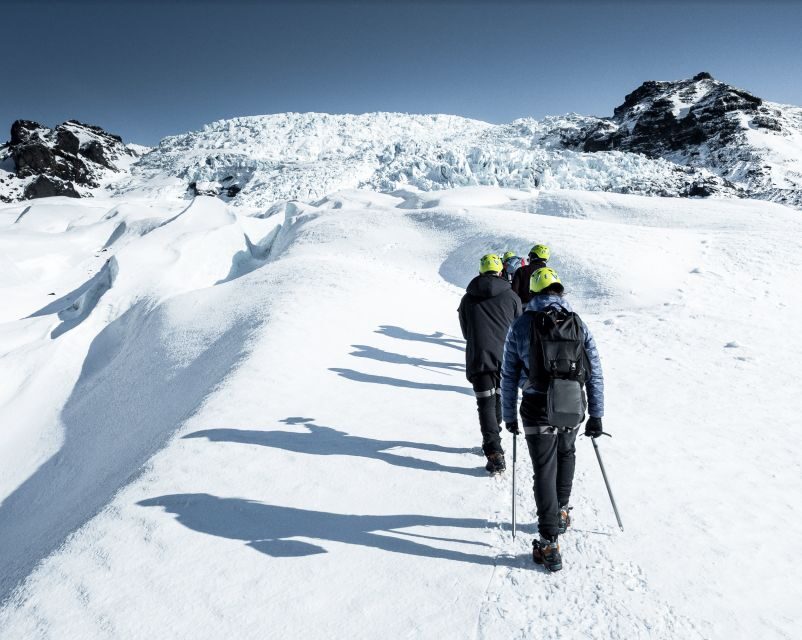
On the ice, you’re studying a living surface. The glacier isn’t uniform; it changes in texture, slope, and structure, and your guide helps you read it like a map.
Crevasses are the obvious dramatic features—deep openings or cracks where the glacier has split. Your path won’t be random, though. You’ll follow the safe route the guide chooses based on conditions. That’s why the safety briefing and gear instruction matters.
Fissures are part of the same story but less dramatic up close. They show you where the ice has stress lines and where meltwater and temperature changes can influence the surface.
Then there are moulins. These vertical shafts form when meltwater seeps into cracks and channels downward through the glacier. If you’re the type who likes your scenery with an explanation, this is where the tour starts to feel personal. The ice isn’t just a set of visuals. It’s a system doing physics in real time.
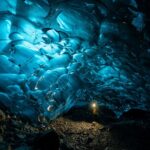
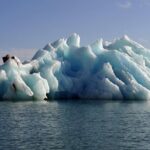
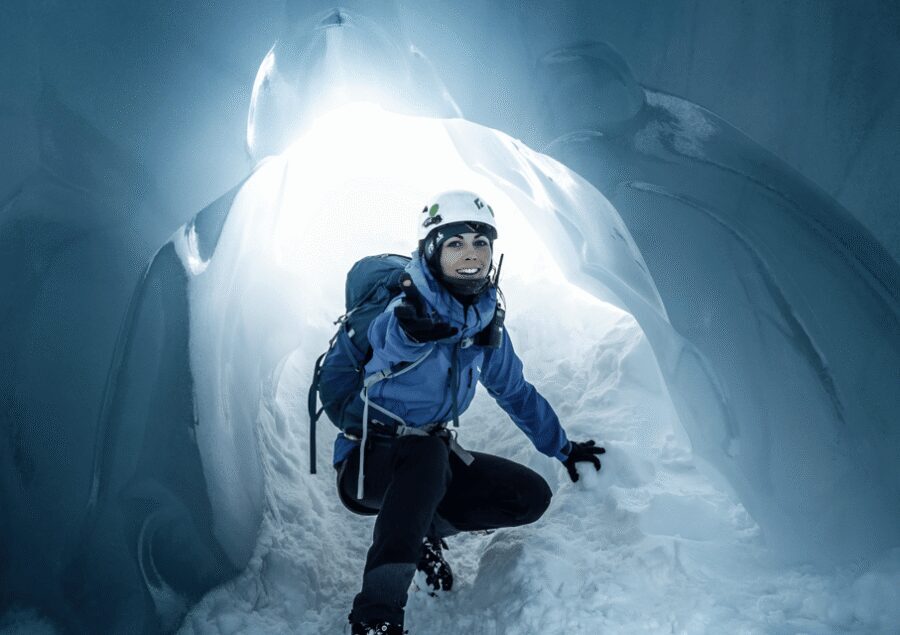
Blue ice is another highlight, and it’s one people keep hoping to spot. Winter can reveal a deeper blue heart of ice through small ice tunnels. The tour experience you get will depend on time of year and weather, but the guide will point out where blue ice shows up and how it forms.
You’ll also hear glacier basics that connect to current events: how glaciers form over time, how ice behaves as it thickens, and how warming affects glacier stability and retreat. This isn’t just doom talk. The way it’s explained is meant to help you connect the glacier you’re walking on to what you’ll read about later.
Views From the Icefall: Skaftafell’s Big Sky, Filmed Backdrops, and Photo Stops
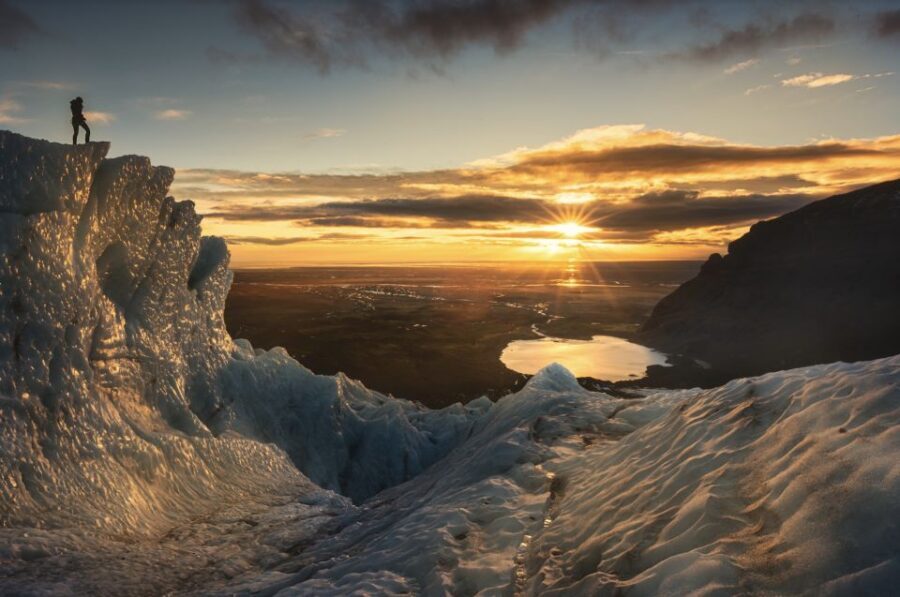
The longer 5-hour hike is designed for people who want more than a short walk. As you go higher toward the icefall sections, the view opens up. You’re no longer stuck staring only at your feet and your steps. You start looking outward across Skaftafell National Park.
This is one of those places where weather can change what you experience from hour to hour. In clear conditions, you get sweeping sightlines; in fog, you’ll rely more on the ice texture and the guide’s directions to keep the route meaningful. Either way, the guide stops often enough to let you see the formations, not just pass through them.
Past groups often mention that the 5-hour option feels worth it because you can go further than shorter alternatives. Even when you’re not trying to optimize for “crowd levels,” walking higher naturally means fewer people in your immediate area. The feeling becomes less like a sightseeing line and more like your own route through the ice.
You’ll also get time for photos during the climb and stops. The guide can also help you with positioning, especially when you’re trying to photograph blue ice, deep crevasse edges, or dramatic ice walls where the slope forces you to find stable ground.
Weather, Fitness, and Foot-Smart Tips for Glacier Walking
Iceland weather is not a suggestion. It’s a factor in how your day feels, and glacier hikes make that more intense because the surface is slick and cold.
Plan for warm, waterproof layers. Dressing in layers matters because you’ll warm up while climbing and then cool fast when you stop. Waterproof pants and a waterproof jacket are ideal. If you don’t have the right boots, the tour offers rental waterproof pants, jackets, and hiking boots.
Fitness-wise, this is an advanced hike for a reason. Even fit hikers report it as physical work: climbing and descending on an uneven glacier surface uses your legs and challenges your balance. People also point out to take care of your knees and ankles. If you’ve had ankle issues before, be extra cautious and let the guide know at the start.
A helpful mindset: treat it like a technical hike, not a normal trail walk. Stretch afterward, and give your body time to recover. The day is short enough that you can enjoy it, but hard enough that you’ll feel it later.
One more weather note: if conditions get too rough, the hike length can change. Some past groups experienced shorter time on the ice due to wind, and that’s exactly the kind of safety-first call a glacier guide has to make.
Price and Value: Is $167 Worth It?
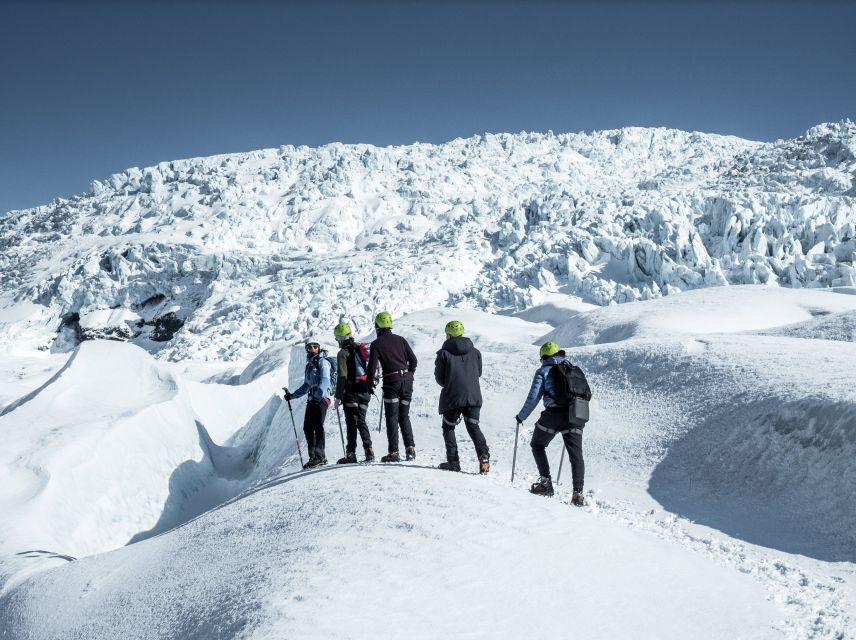
At $167 per person for about 5 hours, this isn’t a budget activity. But glacier hikes aren’t cheap because they’re resource-heavy: you’re paying for certified guidance, safety equipment, and time spent teaching you how to move safely.
Here’s what makes the value work in your favor:
- Full glacier gear is included (helmet, harness, crampons, ice axe), so you’re not paying extra for rentals you’d need anyway.
- You get about 3 hours on the glacier, which is where the experience lives. Short tours can feel like a taste; this one aims for a fuller meal.
- Parking is included, and the day is structured to minimize wasted time so your hike time stays meaningful.
- Coffee and chocolates are included, and those simple comfort breaks help your energy on cold days.
What’s not included matters too: food isn’t included, and there’s no hotel pickup/drop-off. So you’ll want to handle your meal planning around the trip. If you’re already driving yourself through the Ring Road area, that’s usually manageable.
Overall, I see this as good value if you truly want to walk on the ice and learn what you’re seeing. If you just want views, you might choose a less advanced option and spend less. But if you want the hands-on glacier experience, the price starts to make sense fast.
Who Should Choose This Advanced Falljökull Hike
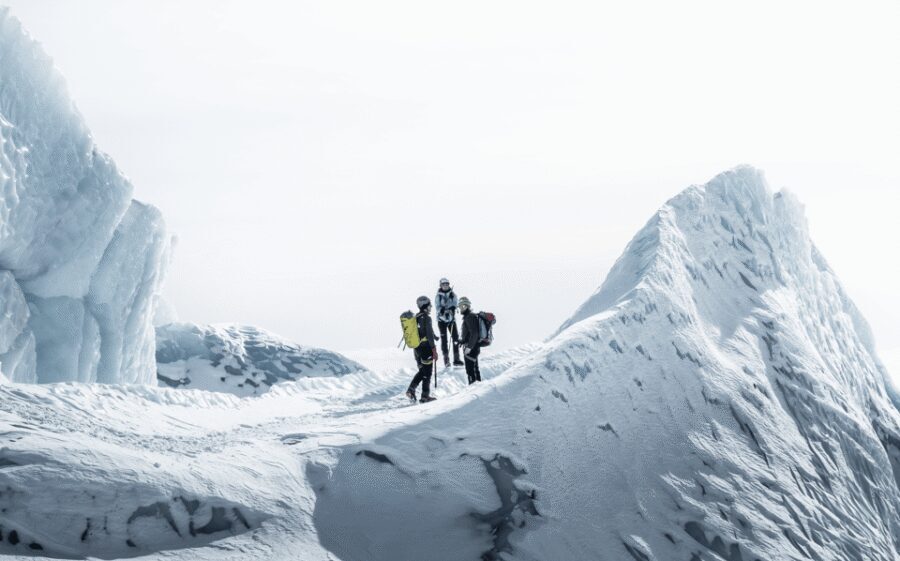
This tour fits best if you want an active day and you’re comfortable with cold, wet terrain.
It’s especially good for:
- People who can hike for hours on steep or uneven ground
- First-timers who are willing to learn glacier walking techniques and follow instructions closely
- Travelers who want the learning part: glacier formation, ice features, and why global warming changes what you see
It’s not a match if:
- You’re looking for a gentle, flat walk
- You’re traveling with children under 12
- You have limitations that make technical steps risky (ankle issues, balance problems, or concerns about exertion)
The small group size helps. The tour limits groups to 10 participants, which gives the guide room to watch footwork, adjust pacing, and offer help when someone is struggling in a tricky section.
Should You Book the Falljökull Advanced Hike?
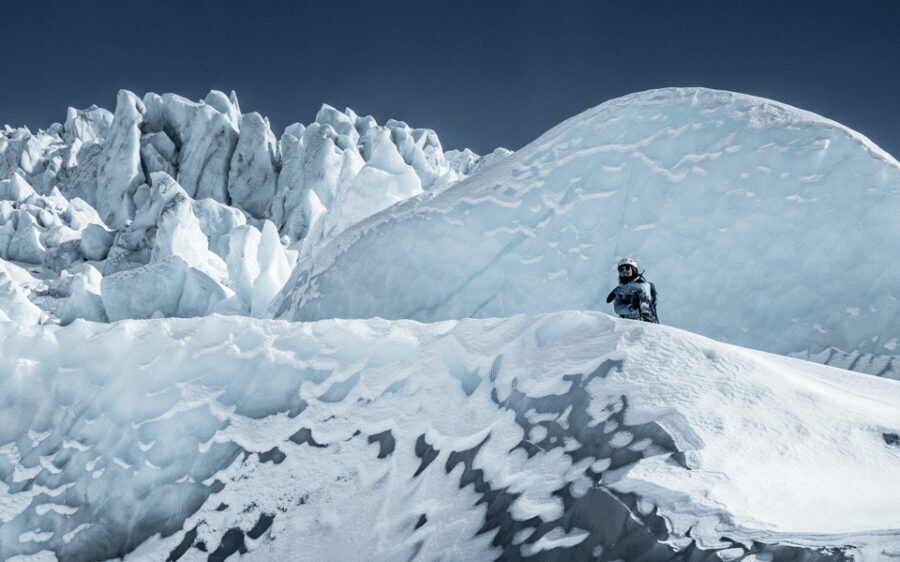
If you’re choosing between glacier options, I’d book this one when you want the real deal: proper time on the ice, full gear, and a guide who’s focused on safety while still showing you the interesting parts of the glacier.
Choose it if:
- You can handle a moderately strenuous hike
- You want to learn what you’re standing on (crevasses, moulins, and how glaciers form)
- You want enough time to walk higher on Falljökull and enjoy broader views back across Skaftafell
Skip it or pick a gentler option if:
- You’re hoping for a casual experience
- You don’t want to manage cold-wet conditions and technical footing
- Your schedule can’t handle a full 5 hours
With the equipment included and the glacier time built into the plan, this is one of those Iceland activities that feels like it earns its ticket price.
FAQ
How long is the tour, and how much time is spent on the glacier?
The total duration is 5 hours, and you spend about 3 hours on the glacier.
What glacier gear is included?
The tour includes a helmet, harness, crampons, and an ice axe.
Is food included?
Coffee and chocolates are included, but food is not included.
What should I bring?
Bring warm clothing. The tour also notes that warm waterproof clothing in layers is important.
Are waterproof boots and jackets available if I don’t have my own?
Yes. Waterproof pants, jackets, and hiking boots are available for rent if you don’t have your own.
Is this tour suitable for children?
No. It is not suitable for children under 12 years.
What’s the group size and language?
It’s a small group limited to 10 participants, and the live tour guide speaks English.
Ending Note
This is one of the few experiences in Iceland where you don’t just look at ice—you learn how it works and then walk across it. If you’re up for a tougher hike and you want glacier education with real-world payoff, Falljökull on the 5-hour advanced route is a strong choice.