REVIEW · REYKJAVIK
Dive the Divide: Silfra Fissure Scuba Tour | Reykjavik Pickup
Book on Viator →Operated by Arctic Adventures · Bookable on Viator
Silfra turns geology into a personal experience. You’ll swim inside a glacial fissure where two tectonic plates sit on opposite sides. I love that this tour is built for a small group and gives you time to actually take in the visuals, not just rush through.
Two things I like a lot: round-trip hotel pickup from select spots makes the day easier, and the water visibility is often described as extreme. A possible drawback is that this is not a casual try-it session. You must have dry-suit certification and be ready for a bit of a physical workout with heavy gear.
In This Review
- Key points before you go
- Reykjavik Pickup To Thingvellir: why the drive is part of the experience
- Þingvellir National Park: start with the tectonic story on land
- Silfra session plan: Deep Crack to Cathedral to Lagoon
- Cold-water reality: dry suit skills you can’t skip
- Gear and instruction: what you get with a small group
- Timing, walks, and comfort between land and water
- Price and value: is $344.67 worth it?
- Who should book this Silfra scuba tour (and who should skip it)
- Should you book this tour?
- FAQ
- How long is the Silfra experience with Reykjavik pickup?
- Where do I get picked up?
- What dry suit experience do I need?
- What scuba gear is included?
- What do I need for glasses or eyesight?
- How cold is the water and what visibility should I expect?
- How deep does the Silfra session go?
- What does the price include, and what’s not included?
- Is free cancellation available?
Key points before you go
- Small group size (max 3 travelers) means more attention in cold-water setup and in-water guidance.
- Thingvellir first: you start on land with UNESCO scenery and tectonics before you head underwater.
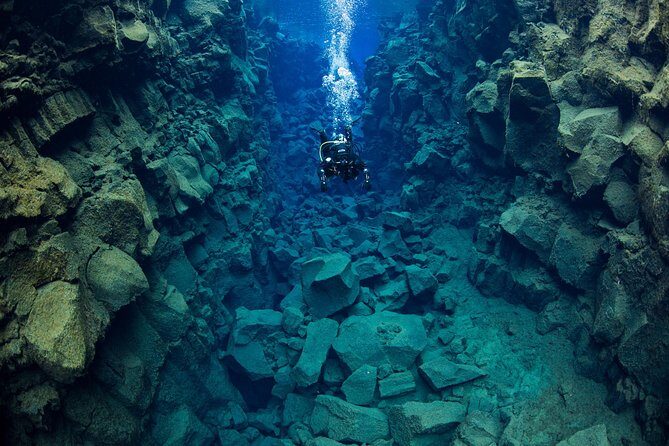
- Four Silfra sections: Deep Crack, Hall, Cathedral (down to 22m), then Lagoon.
- 2–3°C water is the norm: dry suits help a lot, but you should still expect cold stress management.
- Walking with gear matters: there’s a short ramp walk and then about a 300m walk back after exiting.
Reykjavik Pickup To Thingvellir: why the drive is part of the experience
Your day starts with pickup from a list of select Reykjavík hotels and accommodations. Pickup can take up to 30 minutes, so plan to be ready and relaxed when the call time comes. Then you transfer toward Þingvellir (Thingvellir) National Park, the UNESCO site that sets the stage for what you’ll see later under the water.
This long, scenic transfer is more than just transport. It gives you time to get your head in the right place. Silfra is special because it’s not a normal location with familiar marine life. It’s about structure, plate boundaries, and visibility.
A practical note: you’ll be dry-suit ready by the time you reach Silfra, but your ability to handle cold and equipment work still matters. If you’re the kind of person who gets cranky when there’s a wait, keep that in mind when the day is busy.
You can also read our reviews of more scuba diving tours in Reykjavik
Þingvellir National Park: start with the tectonic story on land
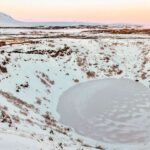
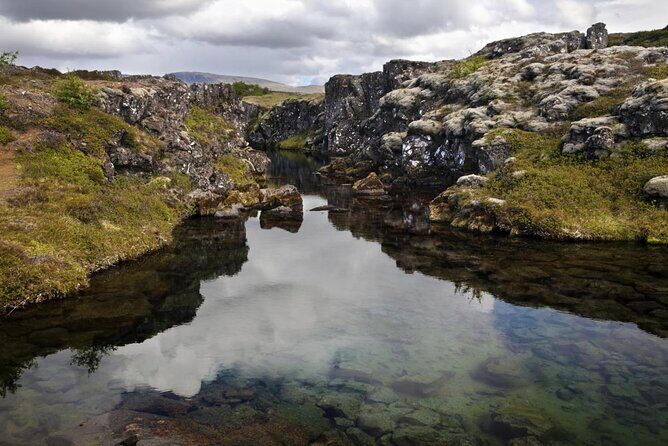
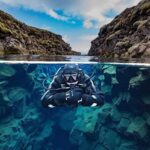
You’ll spend about four hours at Þingvellir, and that time is well used. The park sits between the North American and Eurasian tectonic plates, so even before you gear up, you’re looking at the same big forces that shape Silfra.
What I find valuable here is the context. When you later see the fissure below, you understand what you’re looking at: a crack in the Earth’s skin filled with glacial water. Þingvellir also includes the Þingvallavatn lake area and the historic Alþingi site, tied to Iceland’s early parliament around 930 AD. That mix of natural features and human history makes the day feel more complete than a straight transfer-and-water-only plan.
A small consideration: Þingvellir can be lively, especially in busy times. If you’re the type who wants everything to feel calm and quiet, you might notice crowds more on land than underwater.
Silfra session plan: Deep Crack to Cathedral to Lagoon
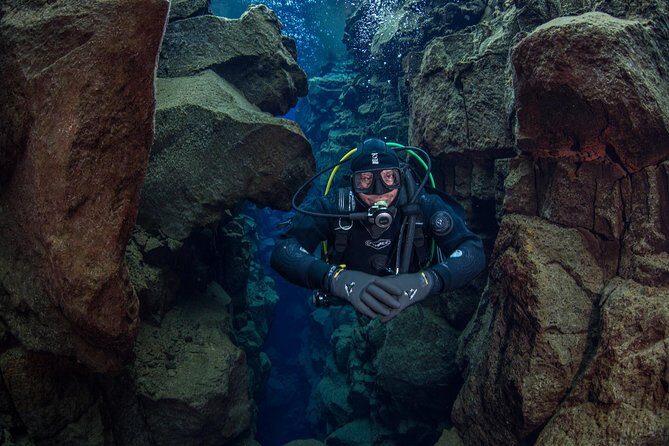
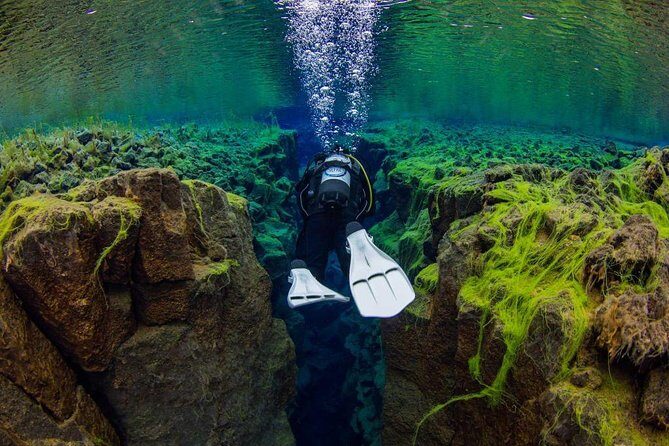
At the Silfra site, your group meets your guide and you go through a safety briefing. Then comes the part that makes this tour famous: suiting up in a dry suit and going into Silfra’s clear water.
You’ll explore the four main sections:
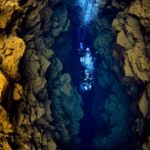
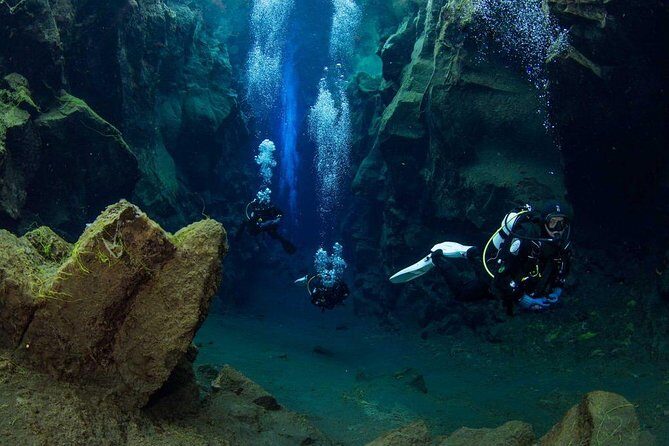
- Silfra Deep Crack: a narrow, winding passage near the entrance where you learn the feel of moving through tight geometry.
- Silfra Hall: the crack opens up, which helps your breathing and buoyancy settle into a smoother rhythm.
- Silfra Cathedral: the deepest point on this route at 22 meters (72 feet).
- Silfra Lagoon: the final section that leads you toward the exit platform.
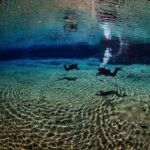
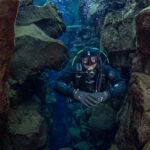
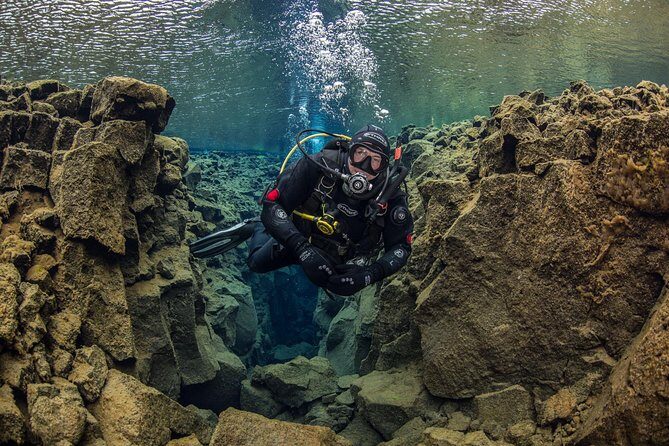
What you should expect in the water is a gentle experience compared with many cold-water sites. The current is described as gentle and visibility as exceptionally clear. In plain terms: you can focus on the geology, not on fighting conditions the whole time.
I also love the progression of it. Starting narrow, then widening, then hitting the deeper point, then finishing in a broader space gives your brain a storyline. It feels less like a single spot and more like a route through a frozen science exhibit.
Cold-water reality: dry suit skills you can’t skip
This isn’t just “wear a dry suit and hope for the best.” The tour requires previous dry-suit experience. Your guide will ask to see your certification card, or a logbook that shows you’ve completed at least 10 dry-suit sessions.
There’s also a physical side. You’ll need a strong fitness level and the ability to carry heavy equipment up to 400 meters (about 1300 feet). That’s not about swimming power. It’s about handling gear on land and managing the workload while you’re already dealing with cold conditions.
One more practical rule: because you’ll use a mask underwater, you can’t wear glasses underneath it. That means no regular eyeglasses under the mask. Bring contact lenses or your own prescription goggles.
If you’re thinking, Great, I’m certified, I’m set, pause for a second. Dry suits change buoyancy and movement. More than one participant note points out that neoprene behaves differently than a typical wetsuit. If you’re rusty, make sure you practice dry-suit buoyancy before your trip day.
Gear and instruction: what you get with a small group
The tour includes scuba gear designed for cold water, including a thermal undersuit, dry suit, BCD, regulator, tanks, hood and gloves, mask, and fins. You don’t need to rent gear separately, which is one big part of why the price makes sense for a specialized Iceland experience.
You’ll also have PADI-certified leadership in the water. The group size is capped at three travelers, which is a big deal in a place where conditions are demanding and the setup routine is complex. Fewer people means more time for fitting, adjustments, and watching your technique.
Guide styles can vary, and that matters here. Some participants highlight very attentive, patient guides—people like Maciek are mentioned as attentive, and Arturo is described as great. Others mention that an instructor’s focus wasn’t what they wanted, especially around timing and photo stops at iconic points. My advice: if you want specific photo moments or you’re hoping for a more coaching-heavy experience, say so during the briefing. Don’t wait until you’re already underwater.
Also, equipment should work. But one participant reported problems with the BCD hose velcro and a weight belt release during their session. You can’t control gear wear, but you can control your first-minute checks: confirm valve access, check weight belt security, and make sure your setup feels stable before you enter the water.


Timing, walks, and comfort between land and water
The plan is roughly six hours total. A key chunk is time at Þingvellir (about four hours), and then about 1.5 hours is allocated for the Silfra section.
After you exit the water, there’s help with removing fins, then a walk of about 300 meters (984 feet) back to the car park. If needed, the team can remove weights or gear to make the walk easier. There’s also an option to rest at the visitor entrance along the way.
This walk is the part people underestimate. You’re cold, you’ve carried gear, and your legs may feel it. One participant described the return walk with extra weight as unpleasant. So yes, plan to be comfortable with short-but-tough movement even when the water part goes smoothly.
Once you’re back, you’ll dry off, talk through what you experienced, and then ride back to your original departure point. Hot chocolate and cookies are included, which helps you warm up in a very practical way.
Price and value: is $344.67 worth it?
At $344.67 per person, you’re paying for several things that add up fast for a remote, specialized activity:
- hotel pickup and round-trip transport
- Þingvellir admission
- full dry-suit scuba gear
- cold-water hot chocolate and cookies
- PADI-certified leadership
- a small group experience (max 3)
What’s not included is food and drinks, so you’ll want to budget for a meal on your own.
Is it expensive? In Iceland, yes, but it’s not a random add-on. Silfra is a premium setting with strict requirements, and dry suits plus trained leadership plus transport aren’t cheap. I think the value improves if you’re comparing it against piecing together gear, transport, and cold-water instruction separately.
The biggest value driver is group size. If you get only a few people, you spend less time waiting for attention and more time getting help that matters when you’re dealing with cold, visibility, and buoyancy.
Who should book this Silfra scuba tour (and who should skip it)
This experience fits best if you:
- have dry-suit certification and at least 10 dry-suit sessions in your logbook
- feel comfortable carrying heavy gear on land
- are comfortable with cold-water conditions (water is often reported around 2–3°C)
- like science-meets-adventure travel—tectonics, fissures, and unusual underwater geometry
You should likely skip it if you’re still learning dry-suit fundamentals or you only have basic open-water skills without that dry-suit background. Also, if you have any vision limitations that require special eyewear, plan ahead for mask compatibility.
Should you book this tour?
I’d book it if you want the classic Silfra experience with pickup, dry-suit gear, and small-group attention, and you genuinely meet the dry-suit requirement. The reward is that rare kind of underwater travel where the main attraction isn’t fish or reefs. It’s a boundary in the Earth itself, with visibility that can feel like you’re flying through clear glass.
I’d hesitate if you’re hoping for an easy first attempt, or if you’re relying on last-minute flexibility with certification. In this environment, rules aren’t there to be annoying. They keep the day workable and safer for everyone.
If you do go, show up rested, check your gear carefully, and communicate what you want during the briefing. That small step can make a big difference in how smooth the day feels.
FAQ
How long is the Silfra experience with Reykjavik pickup?
The full tour is about 6 hours. It includes time in Þingvellir (about 4 hours) and about 1 hour 30 minutes for the Silfra session.
Where do I get picked up?
You’ll be picked up from specified pickup locations in Reykjavík. Pickup can take up to 30 minutes, and only locations on the pickup list are served.
What dry suit experience do I need?
You need previous dry-suit scuba experience. Your guide will ask to see your dry-suit certification card, or proof in your logbook showing at least 10 dry-suit dives/sessions.
What scuba gear is included?
Gear included covers thermal undersuit, dry suit, BCD, regulator, weight, tanks, hood and gloves, mask, and fins.
What do I need for glasses or eyesight?
You can’t wear glasses underneath the mask. You’ll need contact lenses or prescription goggles you bring.
How cold is the water and what visibility should I expect?
Water temperature is reported around 2–3°C. Visibility is described as extremely clear, with people saying they could see far.
How deep does the Silfra session go?
The deepest point is Silfra Cathedral at 22 meters (72 feet).
What does the price include, and what’s not included?
The price includes small-group service, scuba gear, PADI-certified leadership, round-trip transportation, Þingvellir admission, and hot chocolate and cookies. Food and drinks aren’t included.
Is free cancellation available?
Yes. You can cancel for a full refund up to 24 hours in advance, and you’ll also be offered a different date or a full refund if the experience is canceled due to poor weather.