REVIEW · REYKJAVIK
RIB Whale Watching Small-Group Boat Tour from Reykjavik
Book on Viator →Operated by Whale Safari · Bookable on Viator
Sea-level whale watching beats the big boats. This small-group RIB tour from Reykjavik’s Old Harbour lets you scan a large area and still watch whales from very close to the waterline. I also love that a marine biologist guide runs the hunt and you get warm coveralls for the North Atlantic. The main drawback is simple: the ride can feel choppy, and it’s not a great fit if you have knee problems or are very sensitive to motion.
If you’re visiting in puffin season (early May to late August), you’ll also get quick visits to puffin islands just outside Reykjavik, with stops built in for sea birds near the city. After the wildlife time, the boat heads back past Reykjavík’s waterfront landmarks, so you get sea views that feel different from the usual walking-route photos.
In This Review
- Key things I’d bank on before you go
- Reykjavik RIB whale watching: what makes this tour different
- Where you start: Ægisgarður 5d and the Old Harbour vibe
- Puffin island stop in season: Akurey, Engey, or Lundey
- Faxaflói Bay whale search: why the RIB hunt works
- Comfort and safety on a fast boat: coveralls, gloves, and seats
- The ride back: Sea views, Sun Voyager, and Harpa from the water
- How the small-group size changes your experience
- What you can realistically expect to see
- Price and value: is $208.09 worth it?
- Who this tour is best for (and who should think twice)
- Practical tips so your outing goes smoothly
- Should you book this Reykjavík RIB whale watching tour?
- FAQ
- How long is the RIB whale watching tour from Reykjavik?
- Where does the tour start and end?
- What species can I expect to see?
- Do you see puffins?
- What’s included in the price?
- What should I wear?
- What if there are no wildlife sightings?
- Is this tour suitable for children or people with knee problems?
Key things I’d bank on before you go

- Max 12 travelers keeps the search focused and the boat feel personal
- Sea-level viewing from a small speedboat gets you closer to whales and dolphins
- Puffins in season with short, practical stops near Akurey, Engey, or Lundey
- Warm coveralls and safety gear reduce the hassle of dressing for spray and wind
- High-performance suspension seats help with comfort on rougher water
- If no sightings, you’ll get an alternative tour ticket instead of a shrug
Reykjavik RIB whale watching: what makes this tour different
This isn’t the classic big-boat, sit-and-wait experience. It’s a small RIB setup with a tight group, which changes the whole rhythm of the hunt. A faster boat can cover more water, and that matters because whales don’t schedule themselves for your vacation calendar.
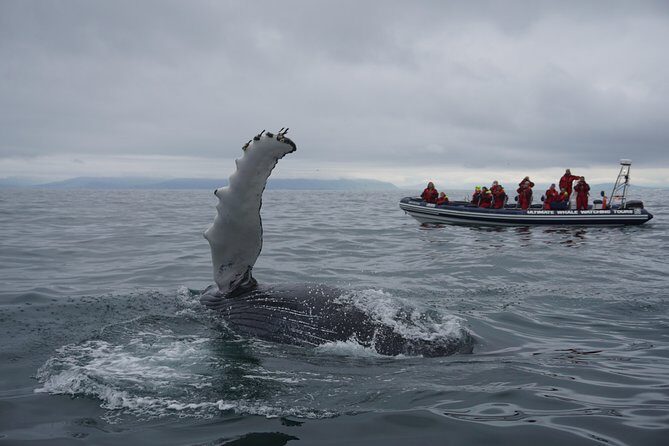
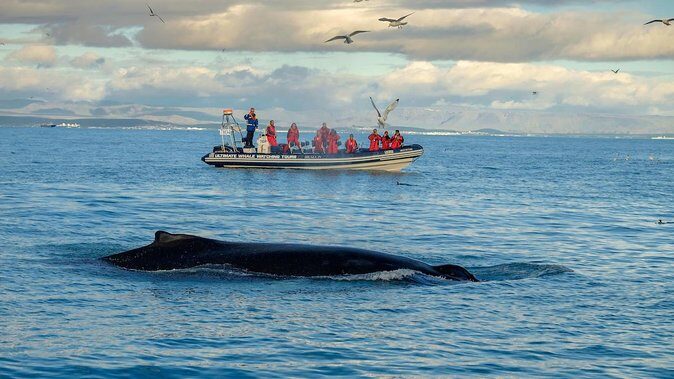
You also feel closer to wildlife. When you’re watching from sea level instead of several decks up, the behavior looks more real: a wake line, a spout cutting the air, fins surfacing near the boat. Even when you’re not getting constant action, you’re not stuck watching a distant horizon like it’s a video game loading screen.
The tour is about two hours total, and it’s built around two main goals: see puffins in season, then focus on whales and dolphins. A professional marine biologist guides the experience, which is a big deal when you want more than just sightings. You’ll hear what you’re looking at and why it’s there.
You can also read our reviews of more boat tours in Reykjavik


Where you start: Ægisgarður 5d and the Old Harbour vibe
You’ll meet at Ægisgarður 5d in Reykjavík, and the tour operates from the Old Harbour area. That matters because you’re not starting your day with a long transfer. You’re already in the right place to feel like you’re going “out and over,” not commuting to a dock somewhere else.
On departure, you’ll get a sense of what to expect from the conditions. The wind and wave size can change fast in Iceland, and the boat’s job is to get you out where the wildlife is. Some days feel smooth. Other days remind you you’re on the North Atlantic, not a lake.
One practical win: you travel as a small group. With fewer people, the crew can move the group’s attention quickly when they spot something—pointing, explaining, then letting you watch without chaos.
Puffin island stop in season: Akurey, Engey, or Lundey
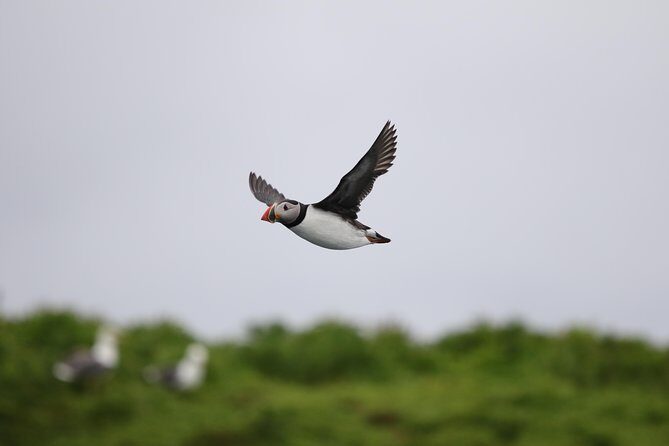
If you book between early May and the end of August, you’ll have a planned puffin stop after getting oriented. The islands are just outside Reykjavík—think Akurey, Engey, or Lundey—and the stop is short, about 5 to 10 minutes.
Don’t expect a long bird-watching hike. This is a quick, efficient boat moment where you look at puffins in their natural habitat and sea birds on the cliffs. The skies and rocky edges can be dramatic, and you’ll often see puffins along with other sea birds like auks and gannets.
The value here is that you’re not forcing puffins to fit into your itinerary. They’re part of the route, which helps you get multiple species in one outing—whales and dolphins plus the smaller, iconic birds.
Faxaflói Bay whale search: why the RIB hunt works
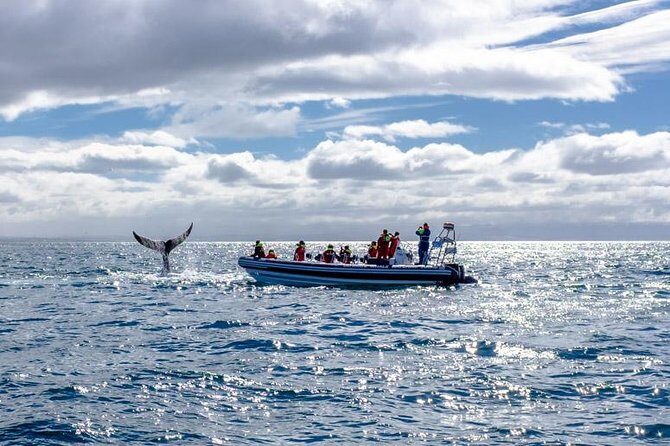
After the puffin segment (when it’s in season), the tour heads to the whale-search area in Faxaflói Bay. This is the big block, about 1 hour 30 minutes of searching and watching.
Here’s what I like about how this is set up. A small RIB can cover a large search area without losing the “close-up” feel. That boosts your odds, because you’re not stuck waiting in one spot for something to appear. The crew is scanning, repositioning, and bringing you into range when they find whales, dolphins, and bird activity.
You’ll also get the benefit of the boat design. The seats use high-performance suspension, which helps absorb shocks. That doesn’t make the sea entirely polite, but it does reduce fatigue and makes it easier to stay focused on spotting.
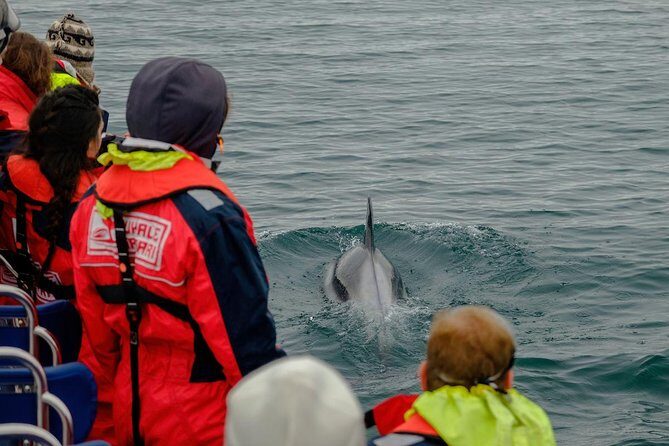
Species-wise, your experience can vary. Based on what people have shared from past outings with this operator, you may see humpbacks and minke whales, plus dolphins (including white-beaked dolphins) and porpoises. Some trips have even included a basking shark. You’re not guaranteed specific species, but this is a tour that goes looking in the right places with the right kind of boat.
Comfort and safety on a fast boat: coveralls, gloves, and seats
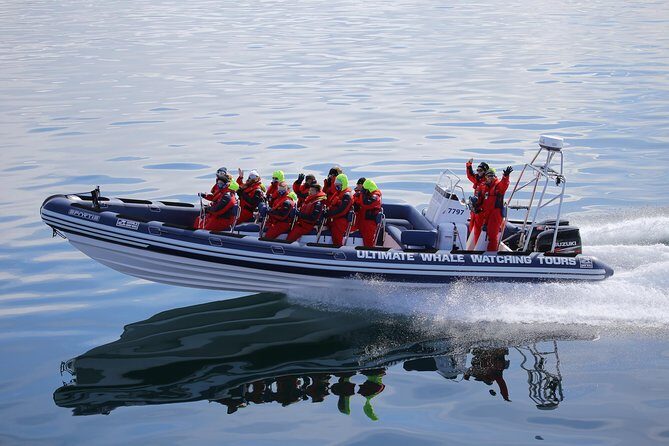
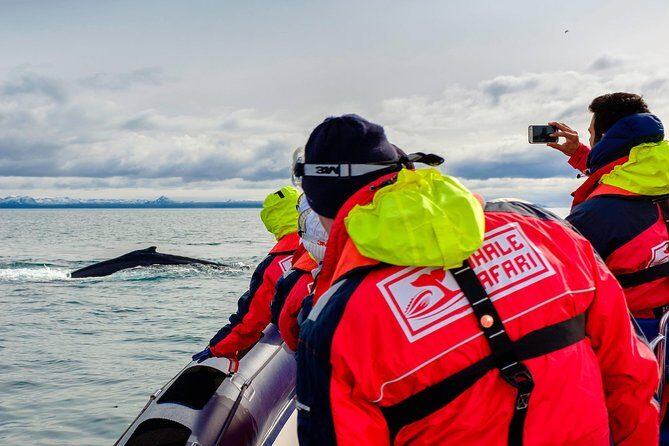
Let’s talk gear, because it’s one of the reasons this tour feels good even when the weather is doing its thing. You get coveralls plus necessary safety equipment. The goal is simple: keep wind and spray off your body so you can enjoy the hunt instead of shivering through it.
Sturdy footwear matters. You’ll want shoes that grip on wet surfaces at the dock and keep your feet stable during boarding. Bring layers under the coveralls if you run cold. A hat and gloves are worth it too, because your hands are the first thing to freeze.
A lot of people rave about being warm and dry in the provided suits, and that’s not fluff. Iceland weather doesn’t care about your plans, but proper gear makes a real difference.
You can also read our reviews of more whale watching tours in Reykjavik


The ride back: Sea views, Sun Voyager, and Harpa from the water
Once the whale safari portion is done, you head back toward Reykjavík. You’ll get a short shoreline cruise with panoramic sea views that feel different from the standard city stroll.
A highlight is passing the Sun Voyager sculpture along the seafront. It’s one of those landmarks that looks best when you’re actually out on the water and can frame it against the harbor.
You’ll also go by Harpa Concert Hall and Conference Centre, Reykjavík’s famous glass-and-steel building. That stop is brief, but the payoff is the view from the water. You get the building, the harbor, and the coastline in a single sweep—perfect photo timing if the light is decent.
This part can be calming after the excitement of whale searching. You’re not staring at the horizon hoping for a spout. You’re just enjoying the ride and the scenery.
How the small-group size changes your experience
Maximum group size is 12 travelers. That’s a big deal on a boat for two reasons.
First, the crew can manage attention. When they spot wildlife, you can actually hear what they’re saying without fighting over space. Second, you’re not packed shoulder-to-shoulder like a commuter ferry. That makes it easier to turn your head, reposition for sight lines, and stay comfortable.
It also tends to make the experience feel more like a guided outing than a mass activity. You’ll be briefed, equipped, then brought into the search, with enough personal space that the whole thing feels lively but not crowded.
What you can realistically expect to see
Wildlife watching has two rules: conditions change, and animals choose their own schedule.
That said, this tour is built around a solid mix of targets:
- Puffins and other seabirds during puffin season
- Whales and dolphins during the main hunt in Faxaflói Bay
- Bird activity along the route that often travels with the same food sources
What people have described on past trips includes multiple humpback sightings, minke whales, dolphins alongside the boat, and porpoises surfacing near the action. Some days include spectacular breach behavior; other days are more about patient, repeated sightings.
If weather or sea state is rough, your view may come and go. It’s still worth going because the experience is designed for close, sea-level viewing, not just scanning from far away.
Price and value: is $208.09 worth it?
At about $208.09 per person for roughly two hours, this isn’t a bargain activity. But it’s also not a random impulse buy.
Here’s why the price can make sense:
- You’re paying for a small RIB that can search faster and look closer than big boats
- The guide is a professional marine biologist, which you feel in the way the time is used
- Gear is included (coveralls and safety equipment), which saves you time and shopping hassle
- The group limit helps keep the experience personal, which you notice when wildlife appears
If your goal is whale watching while you’re in Reykjavík and you only want to do it once, this kind of setup can be the difference between seeing something from far away and seeing it up close, multiple times.
On the other hand, if you’re traveling on a strict budget, you might compare it to other whale tours. But if you care about the closeness and the smaller-group feel, this one leans hard into that value.
Who this tour is best for (and who should think twice)
This is a great match if you:
- Want close-to-the-water wildlife action
- Like guided explanations from a marine biologist
- Are comfortable dressing warmly and standing/sitting for the duration
- Prefer a smaller group (max 12)
You may want to rethink it if:
- You have knee problems. The tour notes it’s not recommended in that case.
- You have very young kids. Children must be over age 10 and over 145 cm tall.
- You’re highly sensitive to motion or seasickness. Some people say it’s not too rough for them, while others note choppier rides on certain routes. If you’re cautious, plan for that reality.
Fitness level is listed as moderate. That usually means you should be fine walking on uneven dock areas and staying in position on the boat, but it isn’t a strenuous hike.
Practical tips so your outing goes smoothly
A few things I’d do to make this day easier:
- Dress in layers, then use the provided coveralls. Keep warm gear for your head and hands.
- Wear sturdy footwear with grip. Wet docks are real.
- If you get seasick, consider preparing before you board. The ride can be rough on some days, so plan for that instead of reacting late.
- If you care about photos, remember you’ll be bundled up and watching; in some past outings, crew members have taken photos or shared group photos after.
Also, keep your expectations flexible on wildlife count. Some days are whales galore. Some days give fewer sightings but still deliver the best part: watching at sea level.
Should you book this Reykjavík RIB whale watching tour?
If you want the closest, most active style of whale watching from Reykjavík—and you’re visiting during the May to August puffin window—this is an easy yes.
Book it if small-group energy, sea-level viewing, warm gear, and a marine biologist guide are your priorities. It’s especially strong when you want to pack whales, dolphins, and puffins into one outing.
Skip it or choose another option if you have knee issues or you know you react badly to choppy water. In Iceland, the sea has the final word, and this tour leans into the RIB experience, not the cozy comfort of a large vessel.
If you’re on the fence, pick the day with the best weather you can find. Then show up dressed for wind, and give the crew time to find the animals. When it clicks, it feels like you’re watching wildlife from inside the story, not from the sidelines.
FAQ
How long is the RIB whale watching tour from Reykjavik?
It runs for about 2 hours, with the main time spent searching at sea.
Where does the tour start and end?
It starts at Ægisgarður 5d, 101 Reykjavík, Iceland, and it ends back at the same meeting point.
What species can I expect to see?
You’re looking for whales and dolphins during the main whale search, and seabirds during puffin season. On previous trips, guests have reported humpbacks, minke whales, dolphins, and porpoises.
Do you see puffins?
Yes, during puffin season (early May through the end of August), the tour includes short visits to puffin islands just outside Reykjavík, such as Akurey, Engey, or Lundey.
What’s included in the price?
Included are a professional marine biologist guide, coveralls, and all necessary safety equipment.
What should I wear?
Dress warmly with wool or fleece layers, a hat, gloves, and sturdy footwear. You’ll also be given coveralls.
What if there are no wildlife sightings?
In the case of no sightings, you’ll be given a ticket for an alternative tour.
Is this tour suitable for children or people with knee problems?
Children must be over age 10 and over 145 centimeters tall. It’s not recommended for travelers with knee problems or for young children.