REVIEW · REYKJAVIK
Whale Watching & Dolphin Yacht Cruise
Book on Viator →Operated by Harpa Yachts · Bookable on Viator
Whales in Reykjavik feel unreal. This 3-hour yacht cruise from the Old Harbor targets whales and dolphins in Faxafloi Bay, with guides who explain what you’re seeing (some departures shine thanks to guides like Lucky). I love the observation deck for long, mostly uninterrupted wildlife viewing, and the onboard Wi‑Fi so you can share live photos right away. One drawback to keep in mind: the North Atlantic can get bouncy, so dress for wind and cold and expect some motion.
I also like the practical touches that make the trip easier—warm blankets, cozy indoor spots, and a bar area if you need a hot drink or sea-sickness help. And if you truly get skunked on sightings, this operator includes a second free tour. It’s a great setup for families and first-timers, as long as you go in knowing that wild animals set the agenda, not a schedule.
In This Review
- Key takeaways before you go
- Old Harbour House To Faxafloi Bay: what your 3 hours are really like
- Harpa or Amelia Rose: deck space, warmth, and viewing angles that matter
- Wildlife spotting in Reykjavik’s Faxafloi Bay: whales, dolphins, and puffins
- Guide commentary: why it can be brilliant (and when it might feel thin)
- Wi‑Fi live photos and onboard extras: small details that save your day
- Seasickness, rough water, and cold-weather prep you can’t skip
- Price and value at $108.61: what you’re really paying for
- Who this cruise fits best (and who should adjust expectations)
- Final call: should you book Harpa Yachts in Reykjavik?
- FAQ
- How long is the whale watching and dolphin yacht cruise?
- Where do we meet in Reykjavik?
- Which boats does this tour use?
- What kind of wildlife might I see?
- Is there onboard Wi‑Fi and can I share photos?
- What if no wildlife is spotted on my trip?
- Is there help for seasickness?
- What is the group size like?
Key takeaways before you go
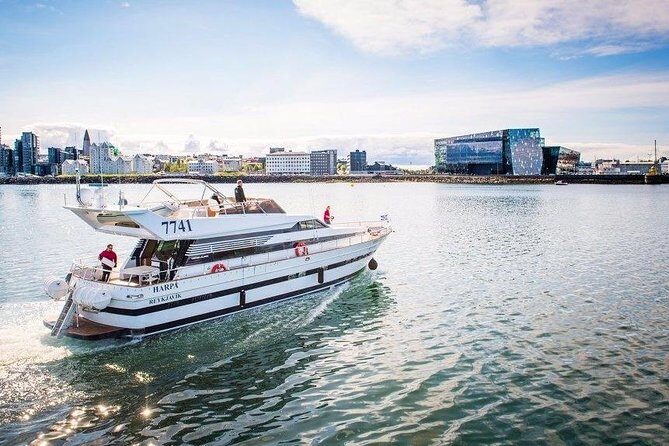
- Faxafloi Bay wildlife focus with a guide pointing out what matters when you spot spouts and surfacing blows
- Live photo sharing on onboard Wi‑Fi, so you don’t have to wait until you’re back on land
- Warm blankets + indoor deck options, which matters more than you think when the wind kicks up
- Sea-sickness support (including tablets available on board) and a boat designed to handle waves
- A free second tour if no wildlife shows, which adds real value in unpredictable conditions
- Group cap up to 95 people, so you’ll share viewing space on busy days
Old Harbour House To Faxafloi Bay: what your 3 hours are really like
Your adventure starts at Old Harbour House (Ægisgarður 2) in Reykjavik’s Old Harbor. From there, you’ll head out into Faxafloi Bay, where the goal is simple: find marine life and enjoy the views of the coastline, islands, and Reykjavik landmarks from the water.
The timing is tight in the best way. About three hours doesn’t leave room for a long sightseeing tour where you mostly stare at coastlines and hope. Instead, the day is organized around cruising patterns that help the crew locate wildlife and then keep you in the right viewing zone when animals surface.
The part that makes this trip feel special is that it’s not just a “go look for whales” outing. You get onboard guidance intended to help you read the sea quickly—what to watch for, how surfacing works, and how whales and dolphins use the bay area. Even when nature is quiet, you still come back with a stronger sense of what you were seeing out there.
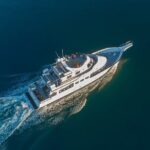
A practical note: depending on sea conditions, you might sail on Harpa or Amelia Rose. If the ocean is behaving badly, a different yacht can make the ride smoother. Either way, you’re using a real marine-focused vessel designed for observation rather than a cramped sightseeing boat.
You can also read our reviews of more boat tours in Reykjavik


Harpa or Amelia Rose: deck space, warmth, and viewing angles that matter
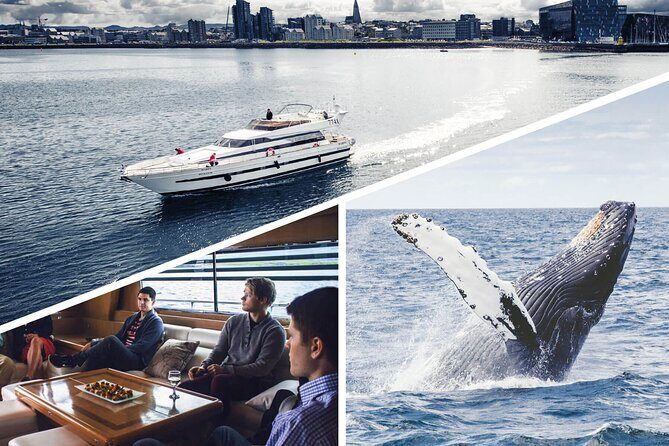
Cold in Reykjavik doesn’t need imagination. It arrives fast, especially once the wind hits you at the harbor mouth and you’re out in open water.
This cruise is designed around the idea that you’ll bounce between perspectives:
- Outdoor observation areas for watching spouts, surfacing lines, and quick dolphin movement
- Indoor spaces to warm up without missing the action
- Warm blankets provided onboard, which is a big deal on a windy day
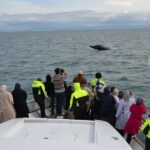
From the way the yacht is set up, you can keep your eyes on the water instead of constantly asking yourself if you should run inside to feel human again. One review highlights how multiple viewing levels help you keep a good line of sight, and another calls out that the bar and indoor decks are great for warming up.
You’ll also find onboard services that make motion days easier. The bar area is where people often gravitate when the weather turns or when you want a hot drink. And if you’re prone to seasickness, the cruise includes free sea-sickness tablets available on board, plus staff let you know if conditions are rough at check-in.
If you’re wondering about comfort expectations: the vibe here is not “dinghy, hang on, good luck.” It’s a more comfortable yacht format with multiple ways to watch, warm options, and crew support. That matters for families and for anyone who gets cold faster than they planned.
Wildlife spotting in Reykjavik’s Faxafloi Bay: whales, dolphins, and puffins
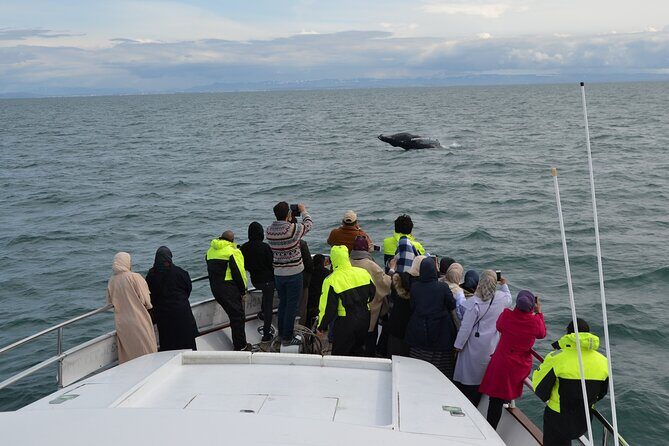
Faxafloi Bay is the kind of place where wildlife can show up in bursts. One minute it’s flat-ish and quiet; the next minute you’re spotting surfacing blows and tight turns from dolphins.
Here’s what you may see on this cruise:
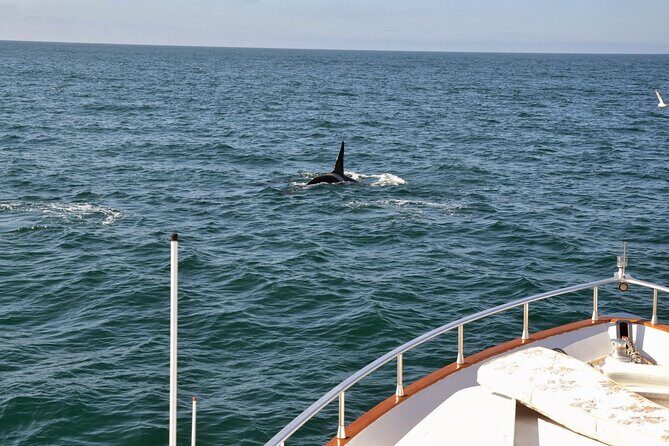
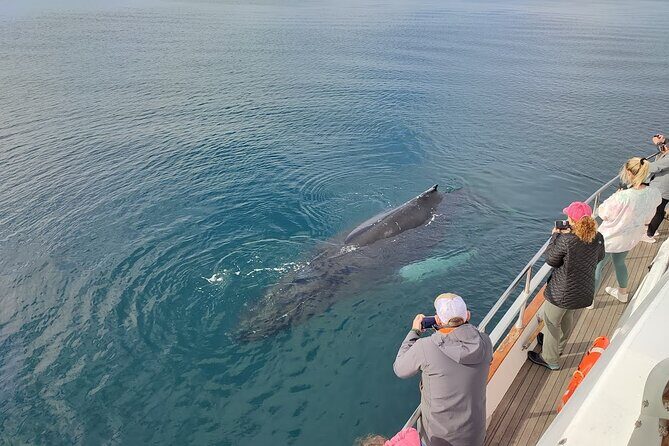
- Whales, including minke whales and humpback whales
- Dolphins (including pods of dolphins)
- Porpoises
- In season, puffins may appear
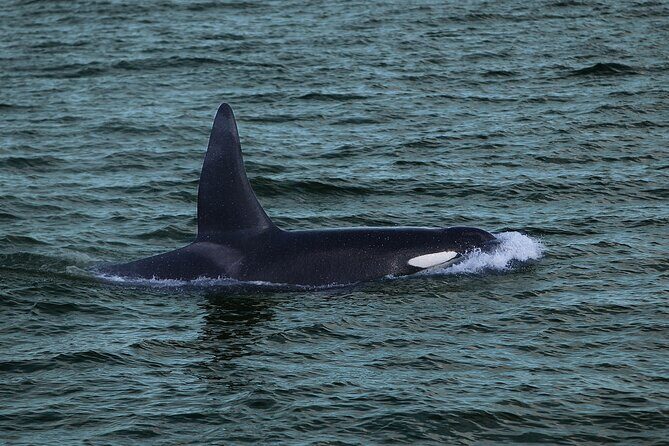
- On some outings, killer whales (orca) have been spotted
The crew’s job is to turn those possibilities into a better shot at real encounters. The best departures feel like guided tracking: you’re not just watching the horizon, you’re learning what to do when you get signs—like changes in wave patterns, timing of surfacing, and where animals appear relative to the boat.
You’ll also get onboard explanation while you’re out there. Some guests specifically mention guides giving very informative commentary about whales and their environment, plus help pinpointing where to look fast once animals are spotted. One standout example from the feedback: guides can describe locations using practical references like a clock face and distance (for instance, relative direction and how far away the animal is). That helps you avoid the classic first-timer problem: seeing movement but not knowing what direction to stare in.
Still, I want to be honest about the one thing you can’t control: the ocean and the animals. On whale tours, you can have days where you spot whales quickly and other days where you work hard for a single sighting. The upside here is that the operator offers a second free tour if you don’t get wildlife sightings.
Guide commentary: why it can be brilliant (and when it might feel thin)
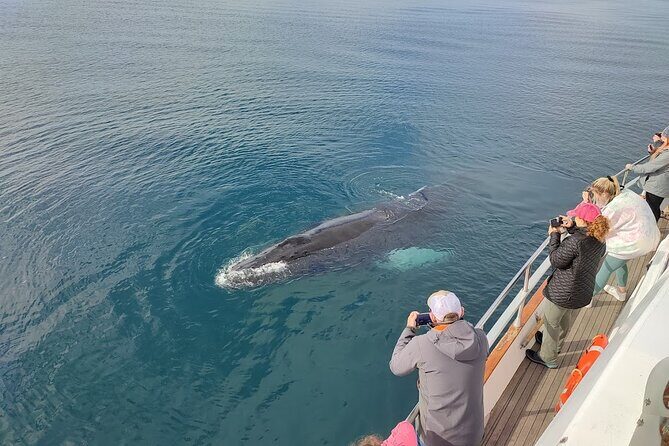
The onboard guides are a core part of the value. The idea is that you’re not just lucky—you’re learning how to interpret the sea. When it clicks, you end the tour feeling like you understand how whales and dolphins use the bay and what their behaviors mean.
In the strongest examples, guides are described as enthusiastic and well-versed in:
- types of whales and dolphins
- habits and environment
- how the crew finds animals
Some feedback also praises guides for actively keeping everyone oriented while tracking. If you want a tour where the guide’s voice is part of the fun—not just a background soundtrack—this can deliver.
But there’s also a caution. One guest felt the commentary was minimal and that they weren’t hearing much for long stretches while the boat searched. That doesn’t mean the tour is always like that. It does mean you should adjust expectations: whale watching includes long search times sometimes, and when the wildlife is quiet, guide narration may not fill every minute.
My practical take: if you care a lot about learning, listen closely when the guide talks at the beginning and again when animals appear. When sightings start, the most useful info usually arrives fast—how to view the animal, what to watch for, and what the behavior likely means.
Wi‑Fi live photos and onboard extras: small details that save your day
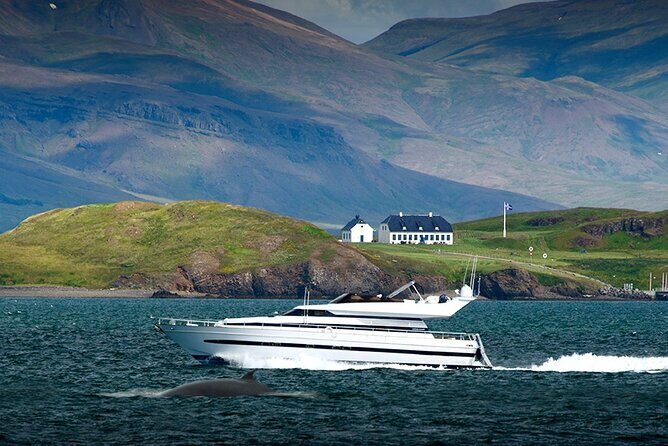
This cruise includes onboard Wi‑Fi designed for sharing. The standout promise is that you can share live photos from the water, which is a real comfort in 2026 travel life. You’re not waiting until you’re back on shore to show your group what you saw.
Even if you don’t care about social sharing, live photo access helps you in a more personal way. You can capture quick, proof-of-life moments (a spout, a surfacing, dolphin movement) and then immediately keep the moment in context—especially if your travel party is separating to get different angles.
Warmth features also do more than “add comfort.” They make it easier to stay outside longer. Blinds cold people from stepping away at the wrong time. And stepping away during a rare surfacing can feel heartbreaking.
A few onboard extras show up in guest notes:
- hot drinks and snacks in warm spaces
- a bar for warming up
- blankets for wind protection
If you like the classic whale-watching ritual—cocoa in one hand, watching in the other—this is the kind of tour that supports it. You’ll still need cold-weather gear, but the boat reduces the penalty for getting chilled.
You can also read our reviews of more sailing experiences in Reykjavik

Seasickness, rough water, and cold-weather prep you can’t skip
The fastest way to ruin a whale cruise is to show up underdressed. Reykjavik can be icy and windy, and out on the water, wind chill turns your fingertips into regrets.
Here’s the best advice based on what’s been said in the feedback:
- Wear a windbreaker
- Bring gloves
- Don’t forget sunglasses (glare off the water is real)
- Expect motion; pack for it
If you get motion sickness easily, you’re not stuck. The cruise provides free sea-sickness tablets on board, and the crew lets people know if conditions are rough at check-in. One guest even notes the boat is in good shape for waves and that fewer people get sick than on some other operators.
You also need a basic crowd-logic reality check. When whales are spotted, people rush to the same best spots. One review calls out the importance of being patient about blocking views. You’ll get better viewing if you move early, not late, and if you respect other passengers’ sightlines when everyone is excited.
Price and value at $108.61: what you’re really paying for
At $108.61 per person for about three hours, the price can look steep at first glance. But you’re paying for several things that matter on the water:
- A real guide-driven search that helps you spot and interpret wildlife
- Observation-focused boat design with indoor and outdoor viewing options
- Warmth support, including blankets and access to warm cabin areas
- Onboard Wi‑Fi and live photo sharing
- And the biggest “value lever”: a second free tour if you don’t see wildlife
That last part shifts the math. Whale watching in Iceland is never a guarantee. When the day goes quiet, a free return is not a marketing gimmick—it’s a direct way to protect your money.
So the real question isn’t whether you’ll see whales. It’s whether you want the best odds plus comfort plus a backup plan. This tour is built for that.
One more value detail: group size is capped at 95 travelers. That’s not a private yacht experience, but it’s also not the mega-boat experience where you feel like a dot on a map. Expect a lively crowd during sightings, but there’s enough deck space to keep most people viewing without constant elbow-to-elbow chaos.
Who this cruise fits best (and who should adjust expectations)
This is a strong match for:
- First-time whale watchers in Reykjavik who want a guided experience
- Families with kids who need warmth options and plenty of deck viewing
- Travelers who value comfort and support (blankets, warm spaces, sea-sickness tablets)
- People who want the convenience of live photo sharing
It may be less ideal if:
- You hate crowds. Since the cap can reach 95 travelers, busy days can feel crowded at peak sightings.
- You need nonstop storytelling the entire time. Whale searches can include quiet stretches.
- You’re very sensitive to motion. Most people manage fine with the support onboard, but bumpy water can still happen.
If you’re unsure, think about your tolerance for uncertainty. Wildlife tours work because the sea is alive and unpredictable. The best strategy is to treat this as a “go enjoy the bay with a serious search,” not as a promise that whales will perform on cue.
Final call: should you book Harpa Yachts in Reykjavik?
My advice: book it if you want a comfortable, guide-led shot at whales and dolphins from Reykjavik’s Old Harbor and you’d appreciate warmth, onboard support, and easy photo sharing. The free second tour is a big confidence boost for anyone worried about an empty outing.
Before you go, do two things:
- Pack for wind and cold like it’s a weather mission—windbreaker, gloves, warm layers.
- Keep your expectations realistic. Wild animals decide. Your job is to stay warm, stay alert, and move calmly to the best viewing spot when the crew calls a sighting.
If you do that, this cruise gives you exactly what you want from Reykjavik whale watching: a real chance at memorable wildlife plus the comfort to enjoy the experience even when the ocean is doing its own thing.
FAQ
How long is the whale watching and dolphin yacht cruise?
The cruise runs about 3 hours.
Where do we meet in Reykjavik?
You’ll meet at Old Harbour House (Ægisgarður 2, 101 Reykjavík, Iceland).
Which boats does this tour use?
The cruise sails on Harpa or Amelia Rose.
What kind of wildlife might I see?
You may see whales and dolphins, and in summer months puffins can also be spotted.
Is there onboard Wi‑Fi and can I share photos?
Yes. The experience includes onboard Wi‑Fi and lets you share live photos during the cruise.
What if no wildlife is spotted on my trip?
If no wildlife sightings happen, you receive a second free tour.
Is there help for seasickness?
Sea-sickness tablets are available on board (at the bar area), and the crew can also let you know if conditions are rough at check-in.
What is the group size like?
The tour has a maximum of 95 travelers.